KitchenAidRepair Miami

Described the way you would describe it

What your KitchenAid is doing, and what it usually means.

You do not need to know which part has stopped. Find the description that sounds like yours, read the free check at the top of the page, and if that does not settle it, the likely causes and what each repair starts at are on the same page. No page here asks you to book before it tells you anything.

  • 37 complaints with a page of their own
  • free the first check on every one of them
  • 12 appliance types covered
  • from $95 diagnostic, credited to the repair

Book a visit

Book a diagnostic visit

Your model number and a line about what it is doing is enough to get started. We will confirm the earliest slot we can genuinely keep.

  • Diagnostic from $95, credited toward the repair when you go ahead
  • The work and the price in writing before anything is opened
  • A warranty on our workmanship
  • Miami-Dade, Broward and Palm Beach counties
  1. 01 You tell us the model and what the unit is doing. A photo of the display helps.
  2. 02 We come back with the earliest slot we can genuinely keep, not the earliest one that sounds good.
  3. 03 Diagnosis on site, then the scope and the price in writing before anything is opened.

Your details stay private. No spam, ever.

Loading the booking form…

The booking form is taking longer than it should. Call (305) 306-1328 and we will book the visit with you.

By symptom

Find the one that sounds like yours

Each page opens with the thing to try before calling anybody, then lists what the behavior usually turns out to be, cheapest cause first, with the figure that repair starts at.

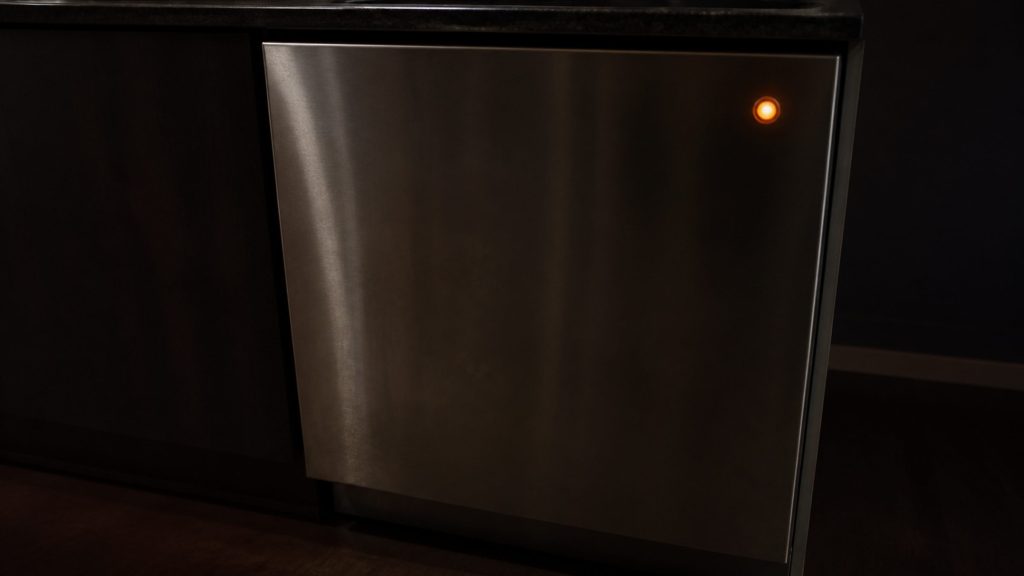
  • A stainless dishwasher door at counter height in a dim kitchen, one small round indicator glowing warm orange on the otherwise blank steel.
    That blinking is a code

    The Clean light is blinking

    The most searched complaint on this whole make, and the one most people throw away by canceling it. A blinking Clean light is not a general complaint — it is the same error code a machine with a display would print, delivered as flashes because yours has no numbers to print it on.

    • Clean blinking a set number of times, over and over
    • Blinking and beeping together
    • It blinks, and the cycle will not start
    What it usually means
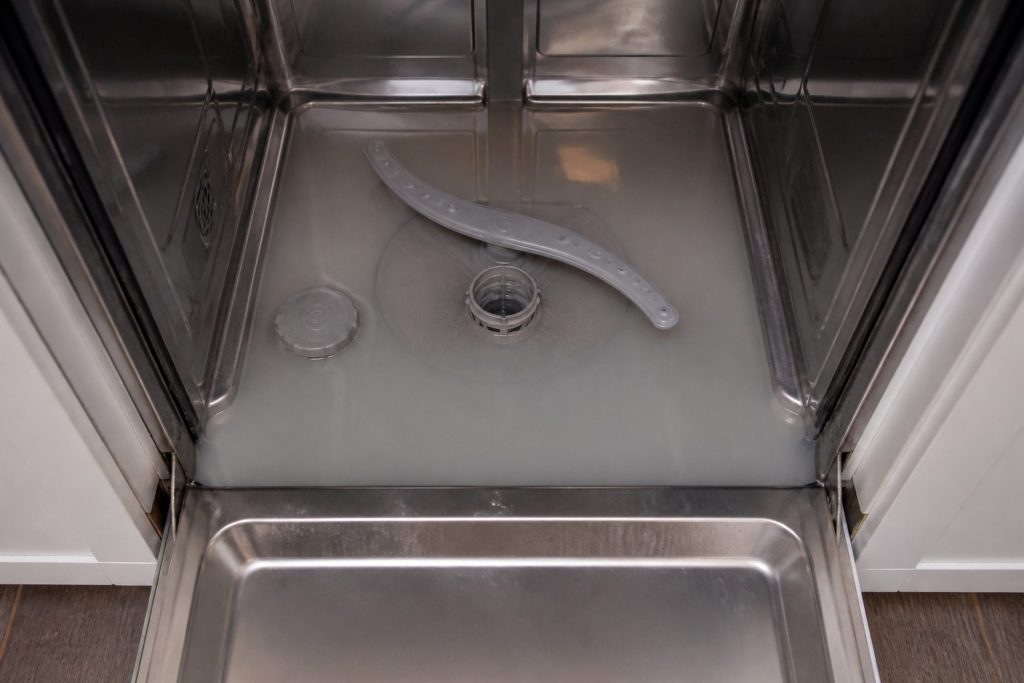
  • Looking down into the bottom of an open dishwasher tub with two inches of grey standing water covering the floor of it, the lower rack lifted out and set aside.
    Water still in the tub

    Dishwasher will not drain

    A cycle that finishes — or stops — with water standing in the bottom of the tub. Four of the five things that cause this are outside the machine or free to clear, which is why this one is worth ten minutes before it is worth a visit.

    • Standing water at the end of every cycle
    • You can hear the pump trying
    • It drains if you run it again
    What it usually means
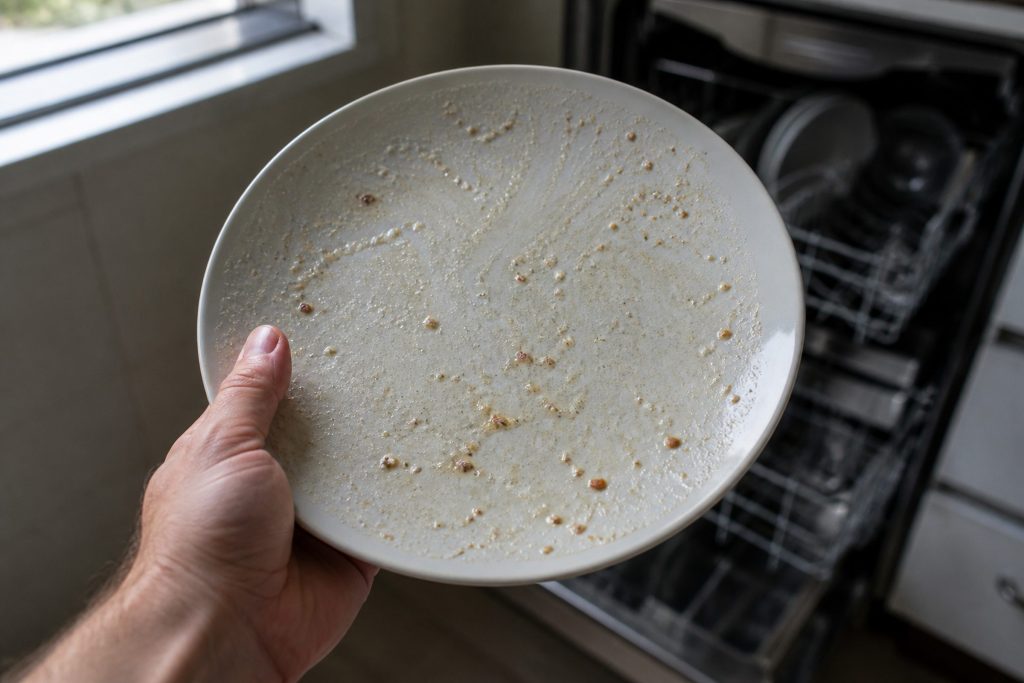
  • A plate held up to the light with dried food still stuck to it and a gritty film across the surface, an open dishwasher soft in the background.
    Gritty, filmed or still soiled

    Dishes are coming out dirty

    Three different complaints hide under one sentence: food still on the plates, grit deposited on them, and a white film on glassware that is not soil at all. They have different causes and only one of them is usually a repair.

    • Grit on plates that went in clean-ish
    • A white film on glasses that will not wipe off
    • The top rack fine and the bottom rack dirty
    What it usually means
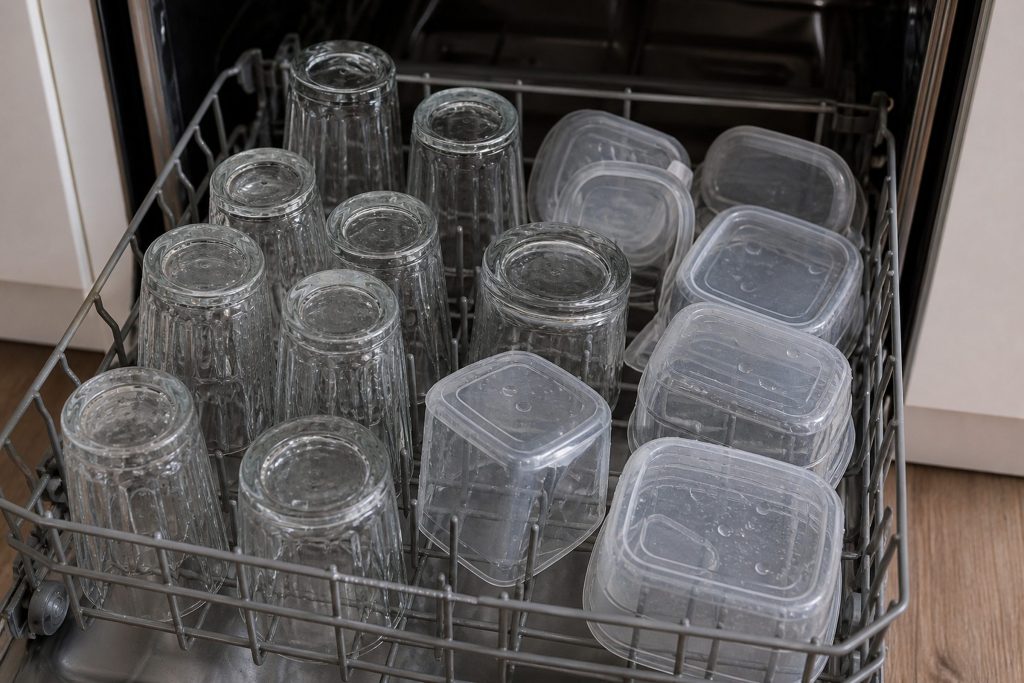
  • An open dishwasher rack of upturned glasses and plastic containers with water still pooled in every hollow, steam gone, close from slightly above.
    Usually not a breakdown

    Everything is clean and nothing is dry

    One of the few pages here that mostly exists to save you a service call. These machines dry with a fan and residual heat rather than by baking the load, and three of the four usual causes are free to fix at the sink.

    • Plastics wet, everything else nearly dry
    • Water pooled in the bottom of upturned cups
    • It dried fine until a few weeks ago
    What it usually means
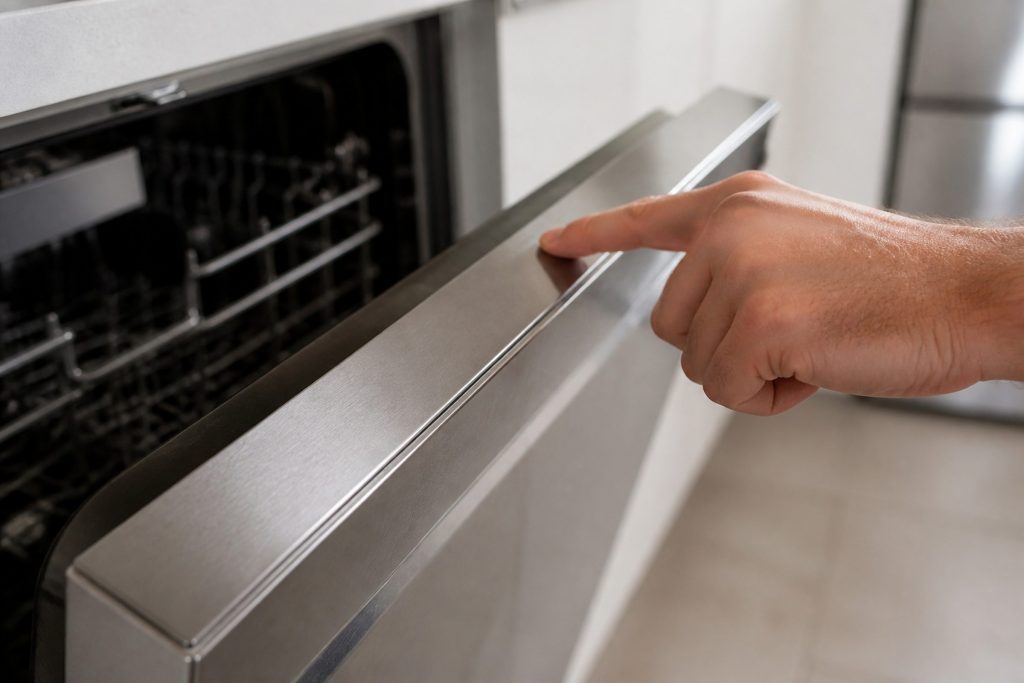
  • A hand pressing a blank brushed steel control strip along the top edge of an open dishwasher door, nothing lit anywhere on it.
    Lights on, nothing happens

    Dishwasher will not start

    A machine with power that will not begin a cycle is a much shorter problem than a dead one. On these dishwashers it is nearly always the door, the control lock, a delay setting nobody meant to press, or a code the machine is quietly flashing at you.

    • The panel lights up and the cycle never begins
    • It beeps when you press start and does nothing
    • The Clean light is blinking a count
    What it usually means
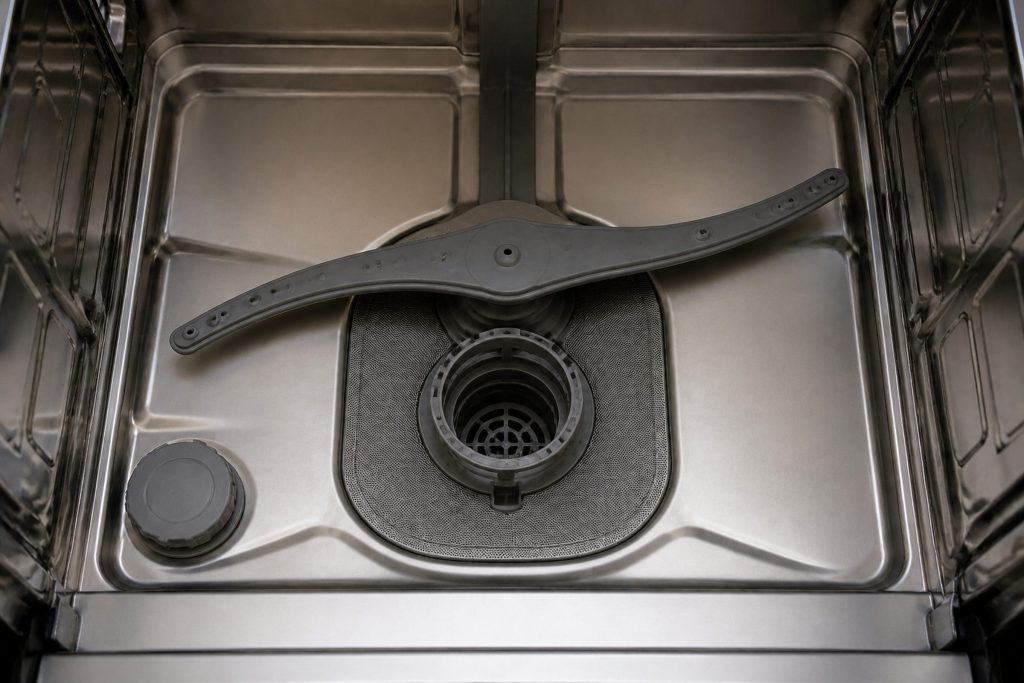
  • A completely dry dishwasher tub floor with the filter cylinder in the middle of it, no water anywhere, the spray arm still.
    It runs, nothing sprays

    Dishwasher is not filling with water

    A machine that starts a cycle and never takes water, or takes so little that nothing sprays properly. The supply side is short, mostly outside the appliance, and easy to work through in order.

    • The cycle runs and the tub stays dry
    • It fills slowly and washes badly
    • Filling but not spraying
    What it usually means
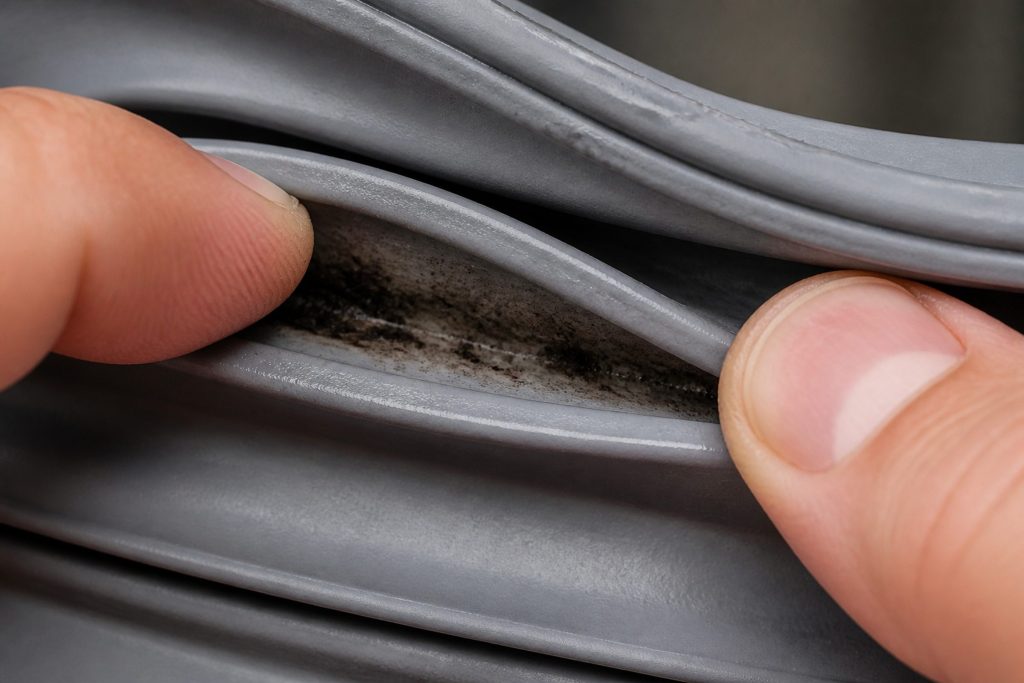
  • Two fingers holding open the fold of a grey rubber door seal, dark residue visible in the crease.
    And what the smell is telling you

    The dishwasher smells

    Most dishwasher smells are housekeeping rather than a breakdown — but two of them are not, and knowing which is which matters. A burning smell and a sewer smell are both worth stopping for.

    • A stale or fishy smell when the door opens
    • A rotten-egg smell from the drain side
    • A hot plastic or burning smell during a cycle
    What it usually means
  • A dim kitchen at night with a refrigerator door panel glowing warm out of focus in the middle distance, a shopping list magnet sharp in the foreground.
    A power outage message

    The display is showing PO

    The message South Florida sees in waves, always a day or two after a storm. PO is not a failure and not a broken part — it is the cabinet telling you it lost power for long enough to get warm inside, and asking somebody to acknowledge that.

    • PO flashing on the display after an outage
    • An alarm tone you cannot silence
    • Everything else looks and sounds normal
    What it usually means
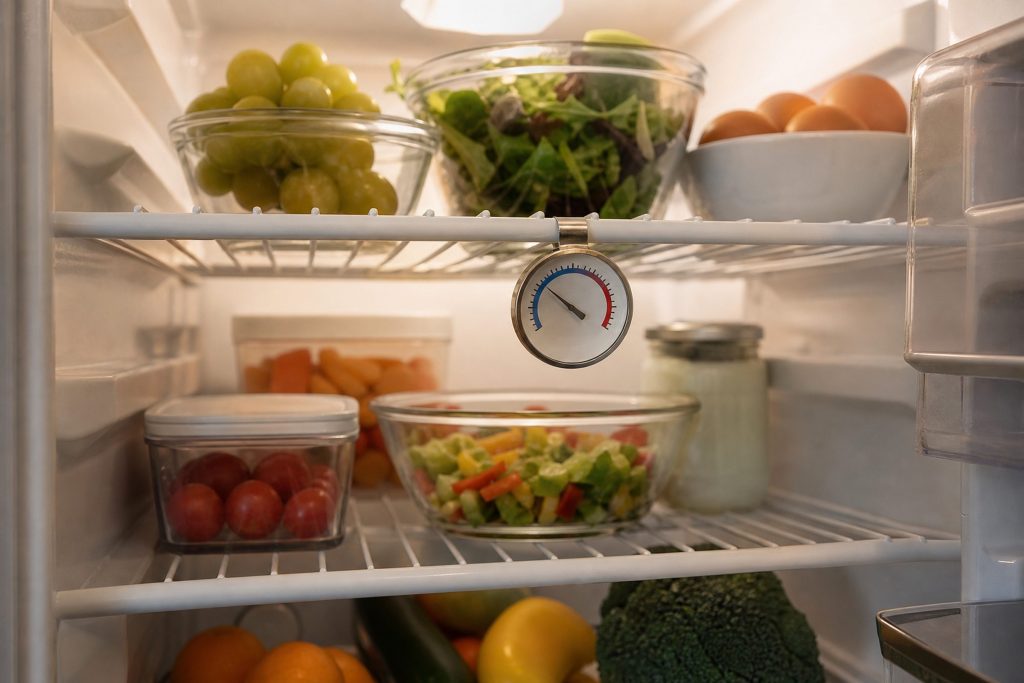
  • An open refrigerator seen from inside at shelf level, food on the shelves, a small thermometer clipped to a wire shelf, everything lit by the interior light.
    And the freezer is still cold

    Refrigerator not cooling

    The most diagnostic sentence in this whole catalog is "the fridge is warm and the freezer is fine". In these cabinets the freezer does the cooling and air is moved into the fresh food side, so that combination almost always means air, not refrigerant.

    • Fresh food side warm, freezer normal
    • Both sides warm and the compressor running
    • It got worse over a week rather than overnight
    What it usually means
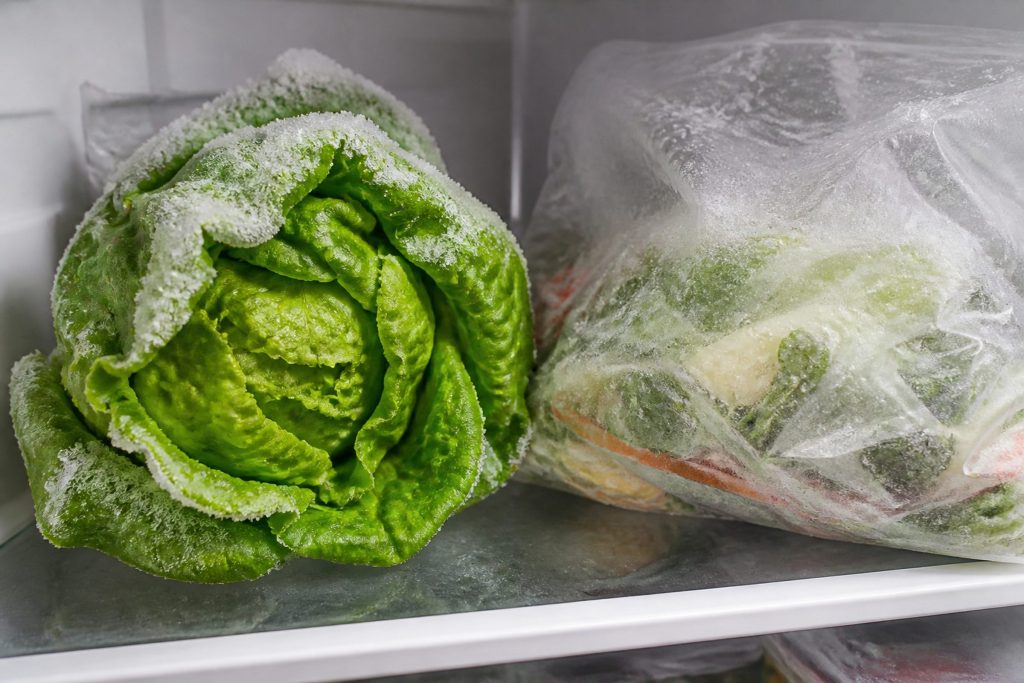
  • A head of lettuce and a bag of salad on a refrigerator shelf with ice crystals across the leaves and frost on the bag.
    Too cold, not too warm

    The refrigerator is freezing everything

    Lettuce with ice crystals in it and milk with a slush layer on top. Running too cold is a real complaint with its own short list of causes, and it is nearly always about where the air is going rather than about the setting on the panel.

    • Ice crystals on food at the back of the shelf
    • Drinks freezing in the fresh food section
    • The freezer is over-freezing too
    What it usually means
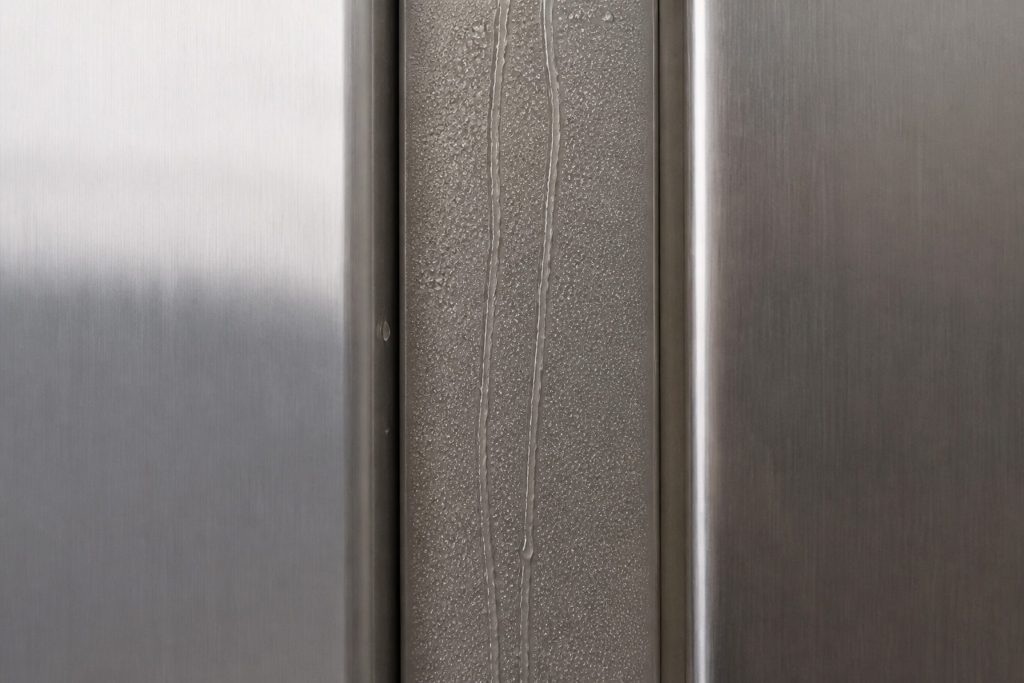
  • The narrow vertical strip between two refrigerator doors, beaded with condensation, water running down it in two thin lines.
    Often normal here in August

    The refrigerator is sweating

    Moisture down the strip between the two doors of a French-door cabinet, or on the interior walls and food packages. In a South Florida summer the manufacturer itself calls a minimal amount of this normal — and names a switch to try before anybody replaces a gasket.

    • A wet strip down the middle between the doors
    • Condensation on interior walls or on packages
    • Worst in August, and worse without air conditioning
    What it usually means
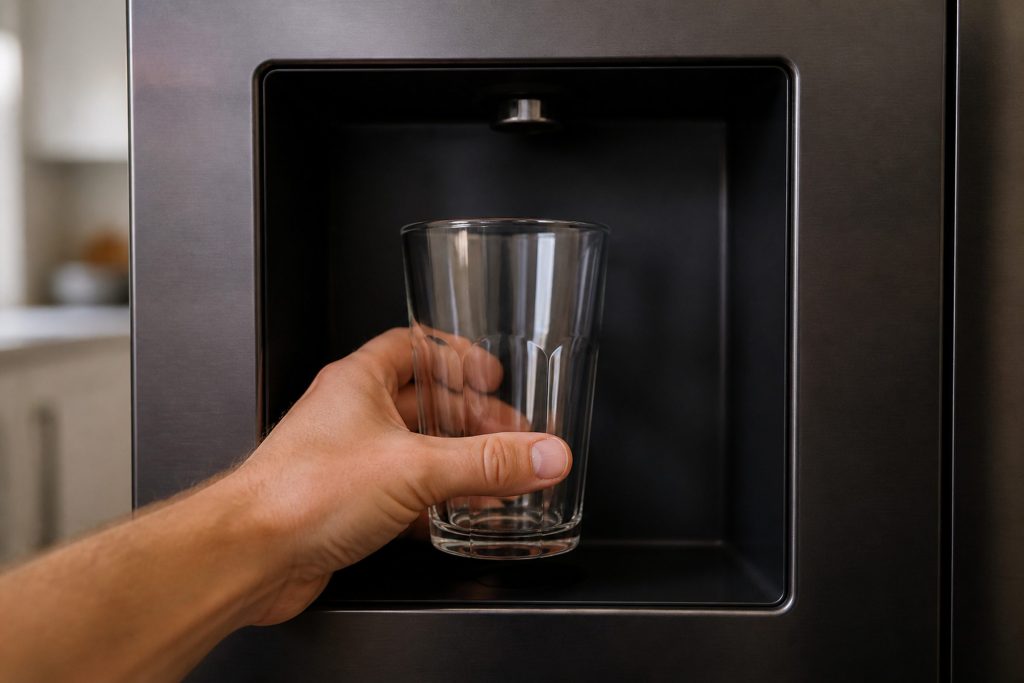
  • A glass held under a recessed in-door water dispenser with nothing coming out, a hand steadying the glass.
    No water, or a trickle

    The water dispenser has stopped

    No water at the door, a slow trickle where there used to be a stream, or water that stopped the day the filter was changed. The water side of these cabinets is short, ordered, and mostly checkable without tools.

    • Nothing at all from the dispenser
    • A trickle instead of a stream
    • It stopped right after a filter change
    What it usually means
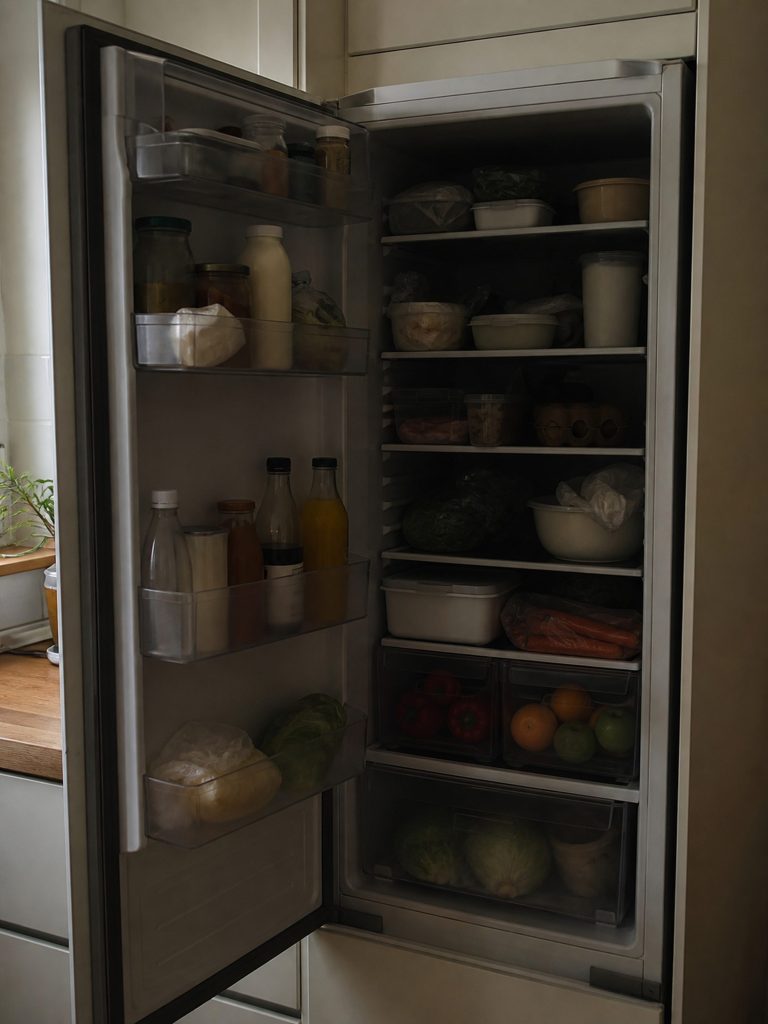
  • An open refrigerator standing dark inside, full of food, lit only by kitchen light spilling in from the left so most of the interior is in shadow.
    Dark cabinet, cold contents

    The lights inside have stopped

    A cabinet that is cooling perfectly and is dark inside. It is a small complaint with a couple of large possibilities behind it, and the one thing worth knowing is that on these cabinets the light is not a bulb you change.

    • The upper lights out, the lower ones fine
    • All lights out and the cabinet still cold
    • Lights out and the dispenser dead as well
    What it usually means
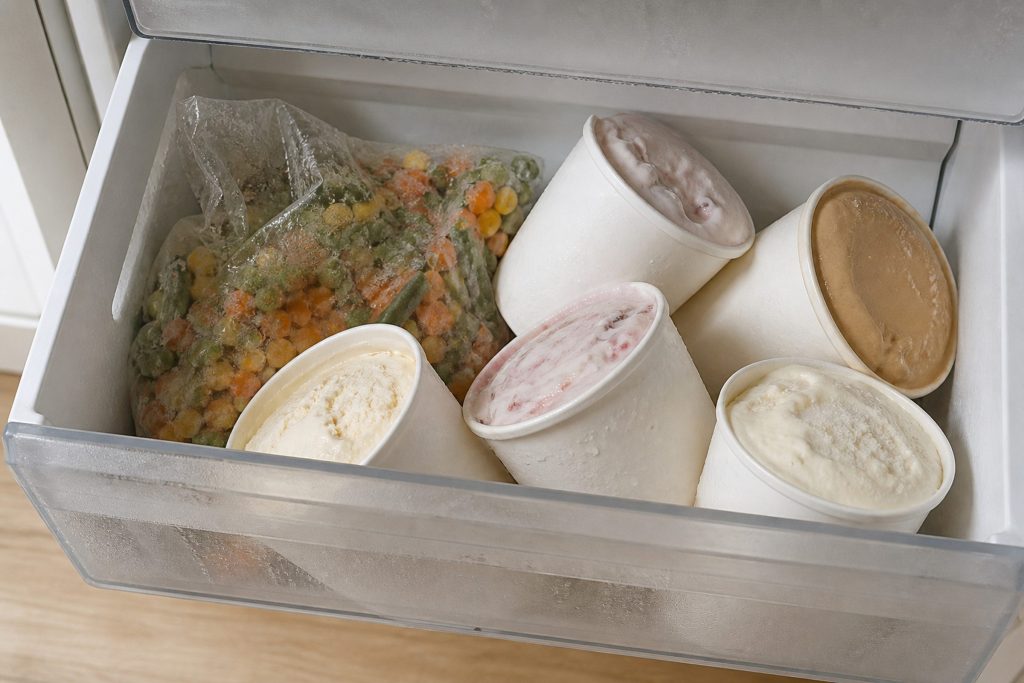
  • An open freezer drawer with tubs of ice cream slumped soft and a bag of vegetables collapsed, moisture on the packaging.
    Soft ice cream, soft meat

    Freezer is cold but not freezing

    A freezer holding somewhere around twenty degrees instead of zero is a different problem from one at room temperature, and usually a better one. It is still cooling and failing to keep up, and that narrows the list considerably.

    • Ice cream soft, everything else borderline
    • Frost on the walls and a compartment that will not hold
    • The refrigerator side is fine
    What it usually means
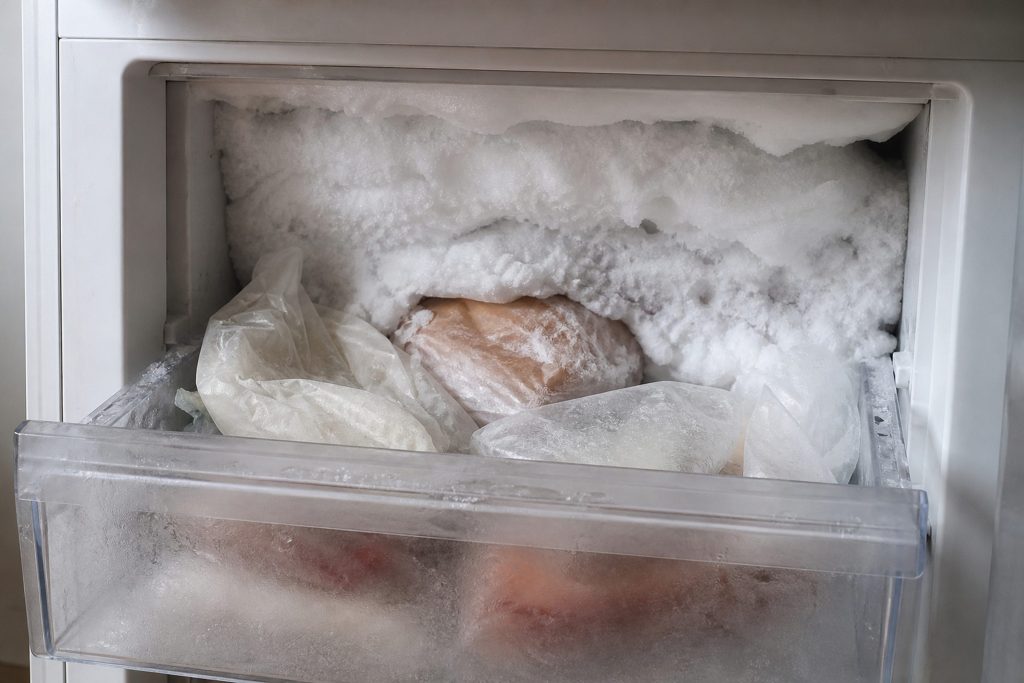
  • The back wall of a freezer compartment carrying a thick white ridge of frost, packages half buried in it, the drawer pulled forward.
    And ice under the drawer

    Frost is building in the freezer

    Frost-free does not mean frost never forms — it means the cabinet melts its own frost on a timer. When you can see frost building, that timer is not finishing the job, and there is a sheet of ice under the drawer to prove it.

    • A sheet of ice on the floor under the drawer
    • Frost on the back wall that keeps coming back
    • A drawer that will not close because ice is holding it
    What it usually means
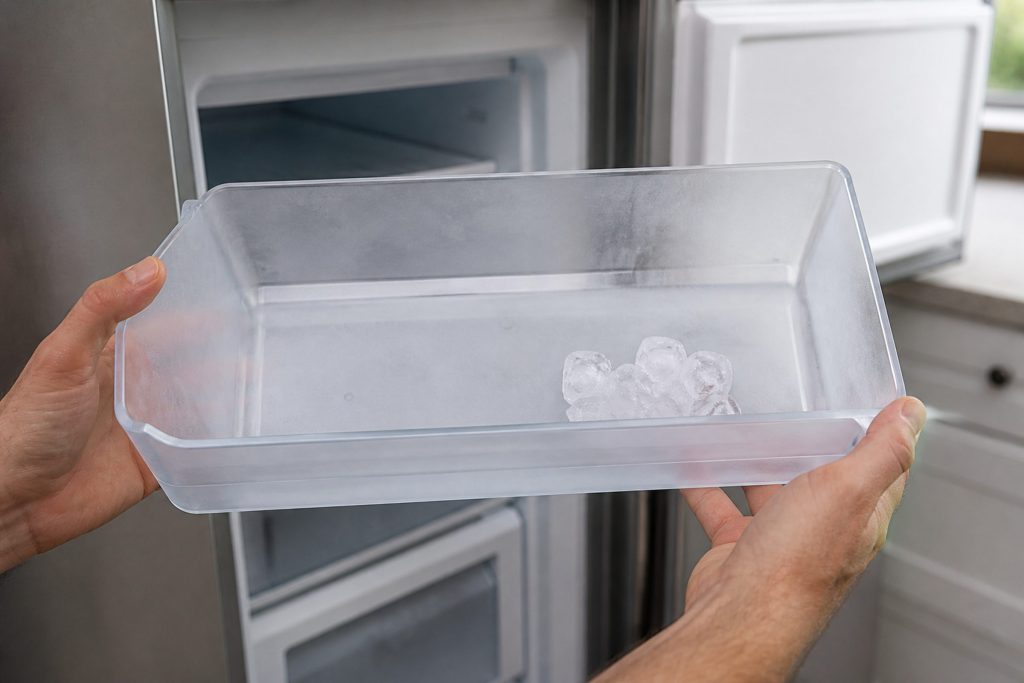
  • An empty ice bin pulled out and held level, a few loose cubes fused into a lump in one corner and the rest bare plastic.
    No ice, slow ice, small ice

    The ice maker has stopped

    The single most serviced part of a modern French-door refrigerator, and a separate appliance entirely if yours is the undercounter machine. Which one you have changes almost everything about this call.

    • No ice at all and water still dispensing
    • Half the ice it used to make
    • It stopped after a filter change or a cleaning
    What it usually means
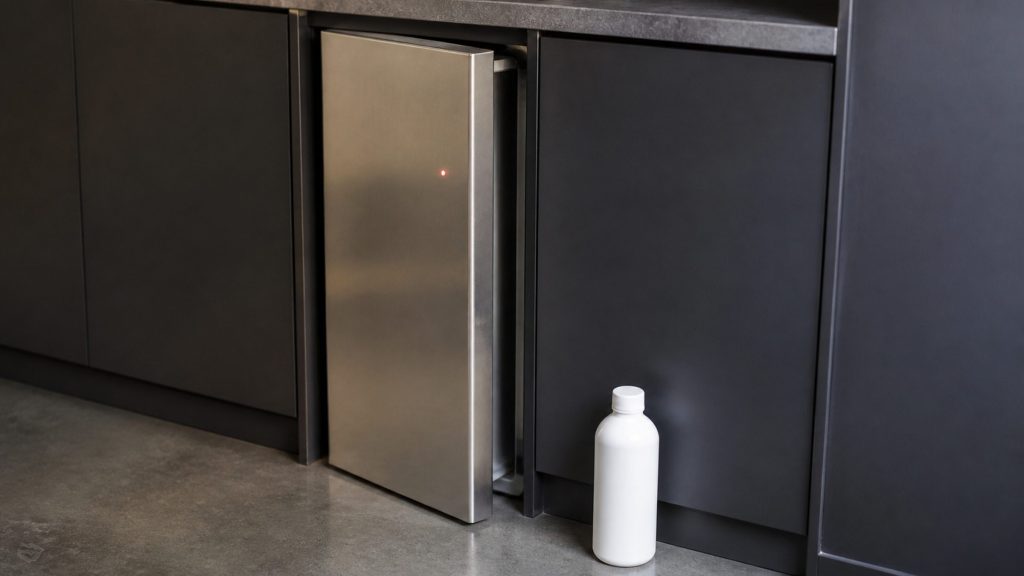
  • A narrow stainless door ajar in dark cabinetry with one small red light on the blank fascia, a plain white bottle on the floor beside it.
    Or a light blinking red

    The ice machine will not restart after cleaning

    Common on the undercounter machines and usually not a failure at all. A cleaning cycle that has not been completed and acknowledged leaves the machine sitting there with a light blinking at you, doing nothing.

    • A red light blinking after a cleaning cycle
    • The power button flashing and no ice
    • It ran the cleaning cycle and then stopped
    What it usually means
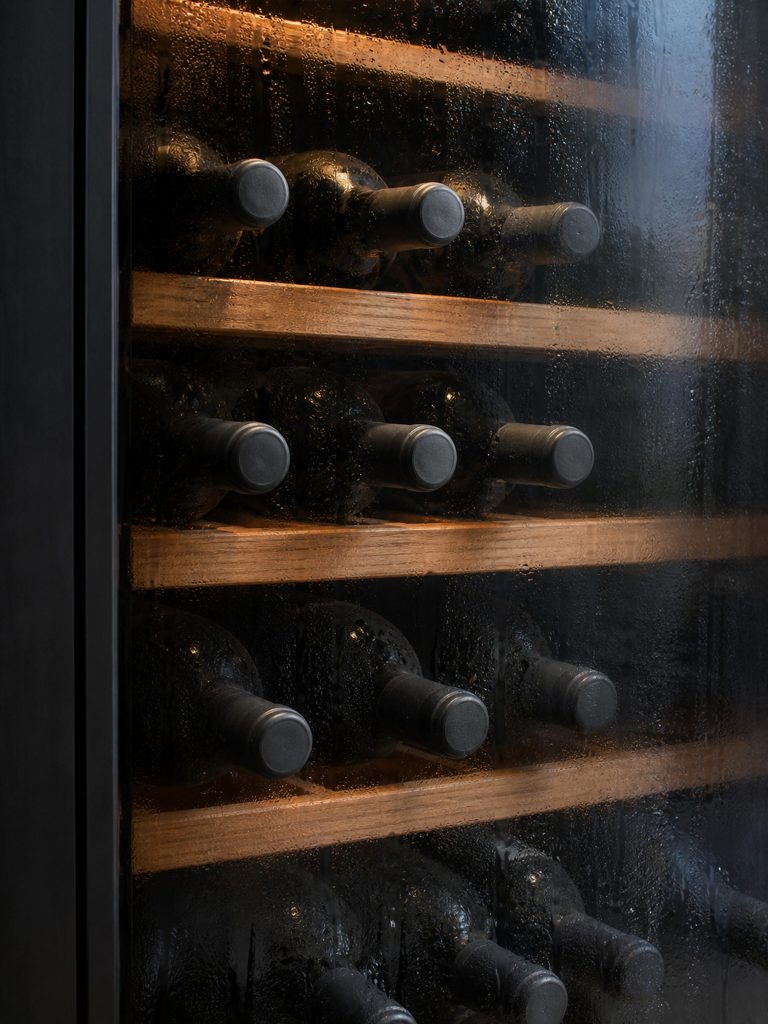
  • Wine bottles lying on wooden shelves behind smoked glass, the inside of the glass fogged with condensation.
    Drifting, or one zone wrong

    Wine cellar not holding temperature

    A small cabinet with an expensive job, usually installed somewhere with very little air. Most of the wine cabinets we are called to in South Florida are not failing so much as losing an argument with where they were fitted.

    • One zone right and the other drifting
    • Reads correctly on the display and feels wrong inside
    • Worse in the afternoon, better overnight
    What it usually means
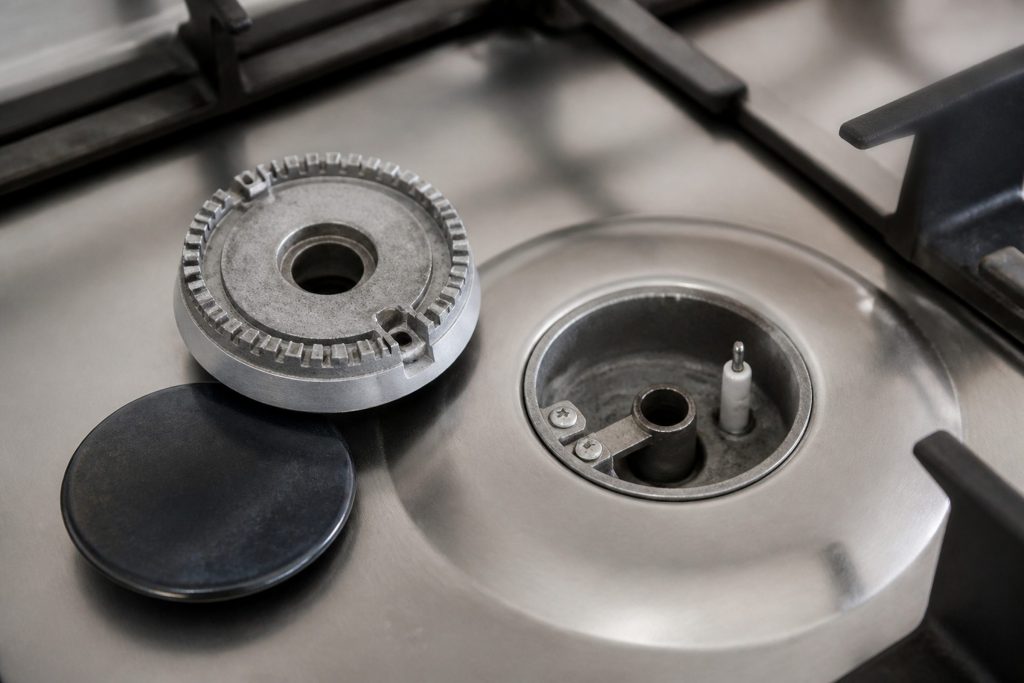
  • A gas burner head and cap lifted off and set on the cooktop beside its empty well, the igniter electrode visible in the well.
    Clicking, and no flame

    A gas burner will not light

    Clicking with no flame, one burner out while the rest are fine, or a burner that lights and then goes out. Most of this list is a boil-over that has not been cleaned up properly, and most of it is free to put right.

    • It clicks and clicks and never lights
    • One burner dead, the others normal
    • It lights and then goes straight out
    What it usually means
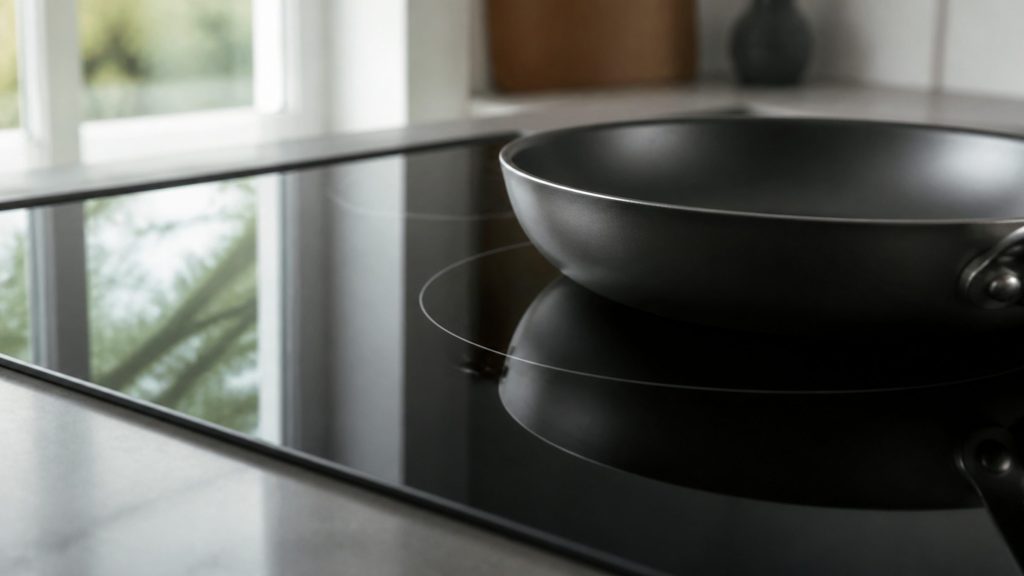
  • A smooth black ceramic cooktop surface photographed at a low angle, one cooking zone outline visible, a pan sitting cold on it, no glow anywhere
    Electric radiant or induction

    One cooktop zone has stopped

    On an electric or induction top a single dead zone means something different from a whole surface going out. Both are diagnosable from the front, and on induction there is a pan question worth asking before anything else.

    • One zone dead, the others fine
    • A zone that shuts itself off after a few minutes
    • The whole surface unresponsive
    What it usually means
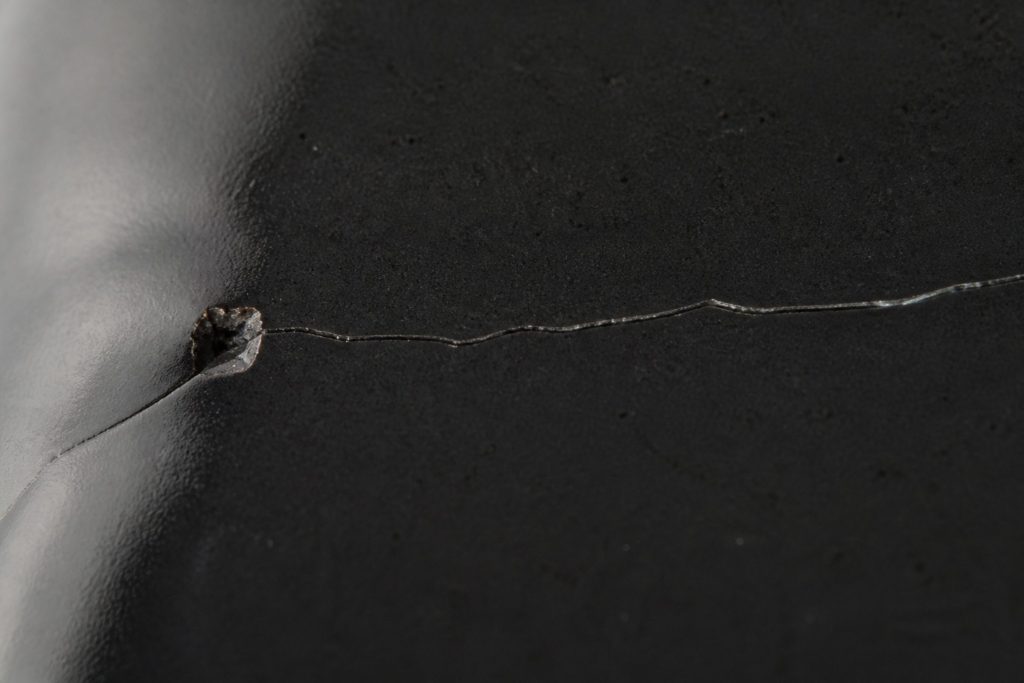
  • A crack running across black ceramic from a small chipped point, lit from the side so the line catches the light.
    Switch it off at the breaker

    The cooktop glass is cracked

    The one page here with no checklist, because there is nothing to check. A cracked ceramic or induction surface is not a cosmetic problem and it is not something to keep using carefully until somebody can come out.

    • A crack from a dropped pan or a hot spill
    • A chip at the edge that has started to run
    • A crack that appeared with no obvious cause
    What it usually means
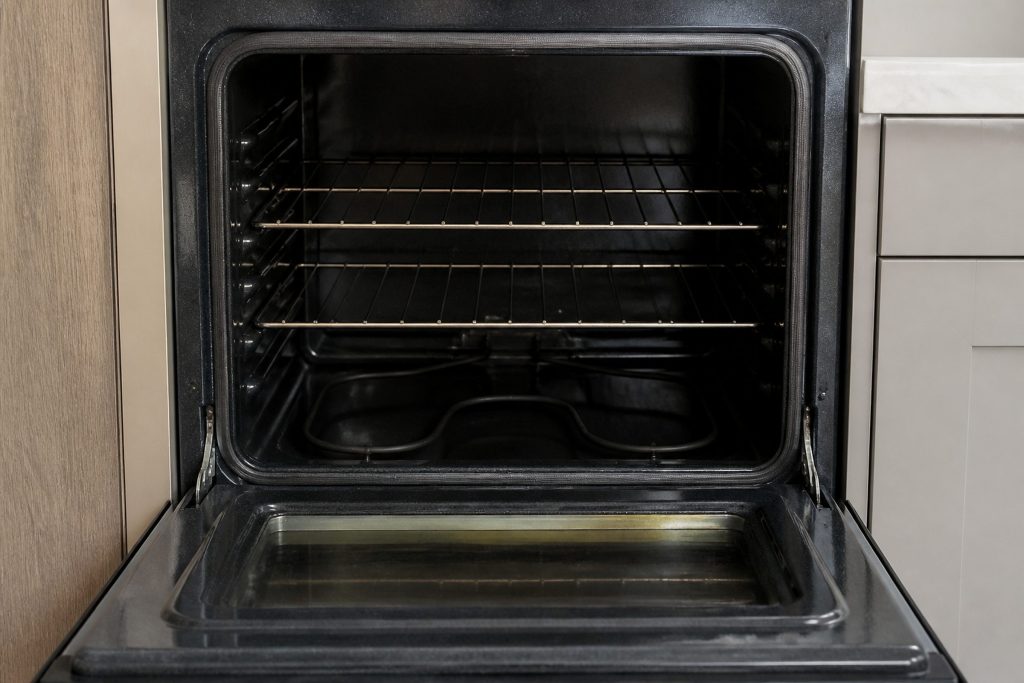
  • An empty oven cavity with the door open, the racks in place, the bake element at the bottom dark and cold.
    Panel lights, cavity cold

    The oven will not heat

    A control panel that works normally and a cavity that stays cold. On electric ovens this is a short list of two or three parts; on a gas cavity it is a different short list, and knowing which you have halves the diagnosis.

    • It preheats forever and never gets there
    • The broiler works and the bake does not
    • It heats sometimes and not others
    What it usually means
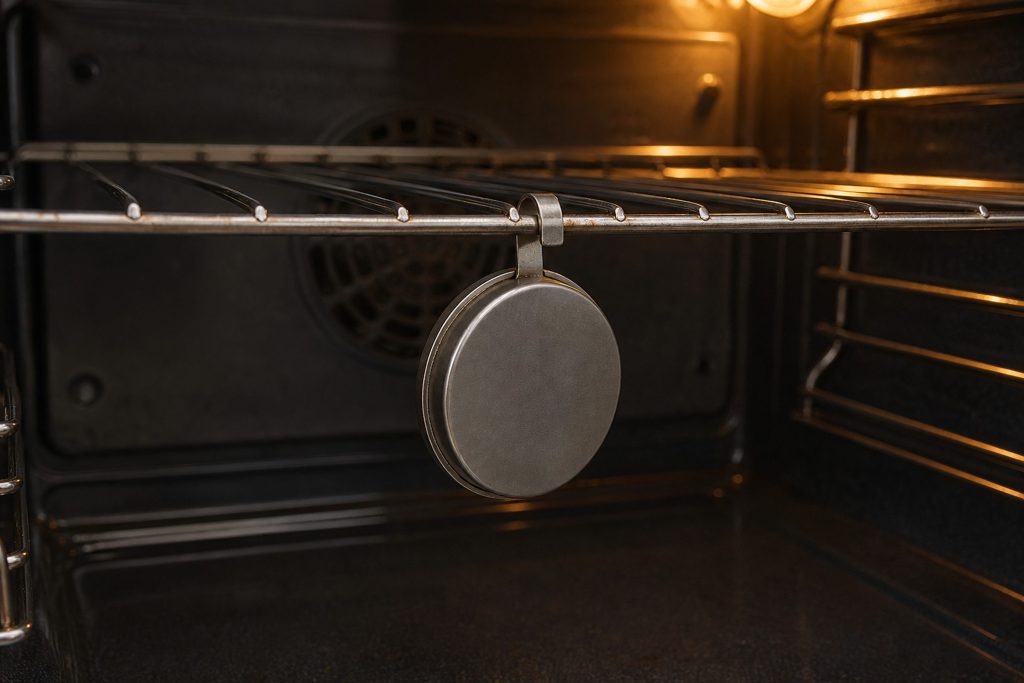
  • A standalone oven thermometer hanging from a wire rack in an empty oven cavity, its dial turned away from the camera so no reading is legible.
    Everything bakes badly

    The oven runs hot, cold, or will not hold

    An oven that heats but not to the number on the display. Cakes that sink, cookies that burn on one tray and not the next, a machine that will not go past a certain temperature at all. This is measurement rather than heat.

    • It will not go past a certain temperature
    • Everything browns on one side
    • Recipes that used to work no longer do
    What it usually means
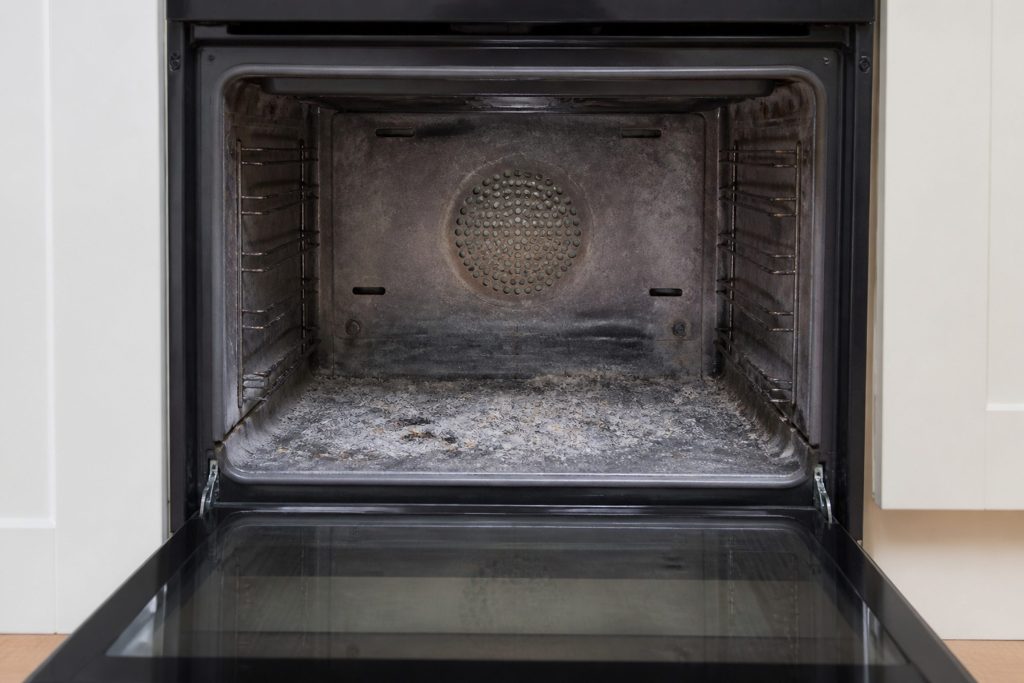
  • An oven cavity after a very hot cycle: white ash across the floor of it, the door open, the interior discolored.
    Or the door is still locked

    The oven stopped working after a self-clean

    A specific and very common call: the self-clean cycle finished, and now the oven does not heat, or the door will not unlock, or both. Self-clean is the hottest thing this appliance ever does, and it finds anything marginal.

    • Dead oven the moment the clean cycle ended
    • The door still locked hours later
    • It blew the same part once before
    What it usually means
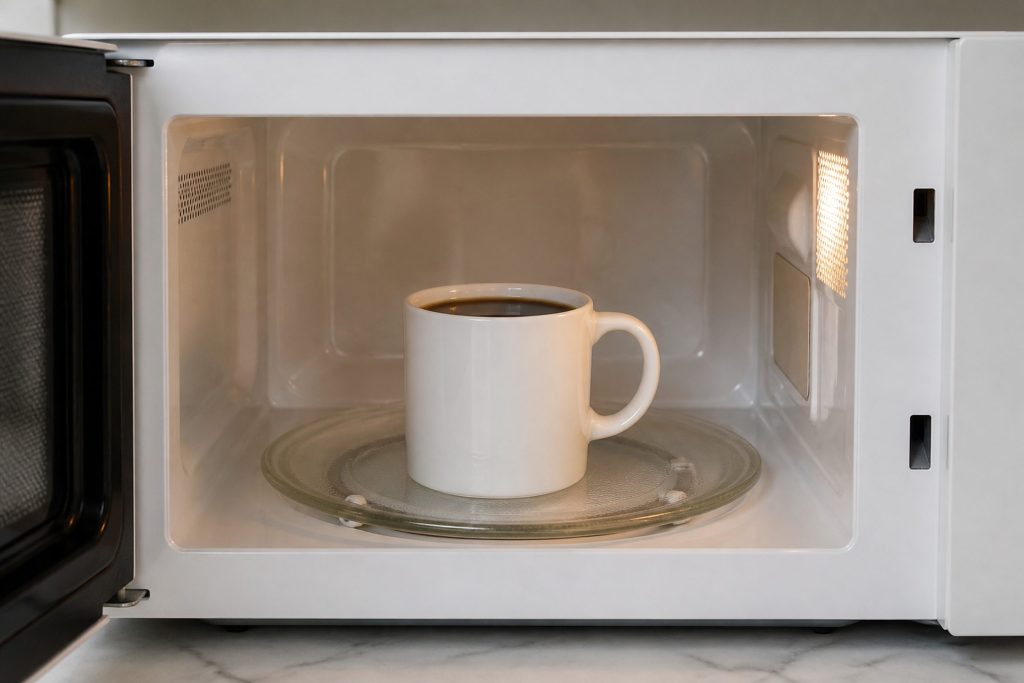
  • A white mug of coffee standing on a glass turntable inside an open microwave, the interior light on, no steam at all.
    Never an owner repair

    The microwave runs but nothing gets hot

    The turntable turns, the light is on, the fan runs, the timer counts down, and the food comes out cold. It is a clear symptom with a clear meaning, and it is the one appliance on this site we ask you not to open.

    • Everything runs and the food stays cold
    • A loud hum that was not there before
    • It heats weakly, and worse each week
    What it usually means
  • A fingertip on dark blank glass beside a closed appliance door, nothing lit beneath it.
    Or says to close the door

    The microwave will not start

    A machine that lights up and refuses to run, or one that insists the door is open when it plainly is not. This is nearly always the door interlocks, and there is a reason the appliance is so uncompromising about them.

    • A message asking you to open and close the door
    • You press start and nothing happens
    • The turntable turns and the timer does not count
    What it usually means
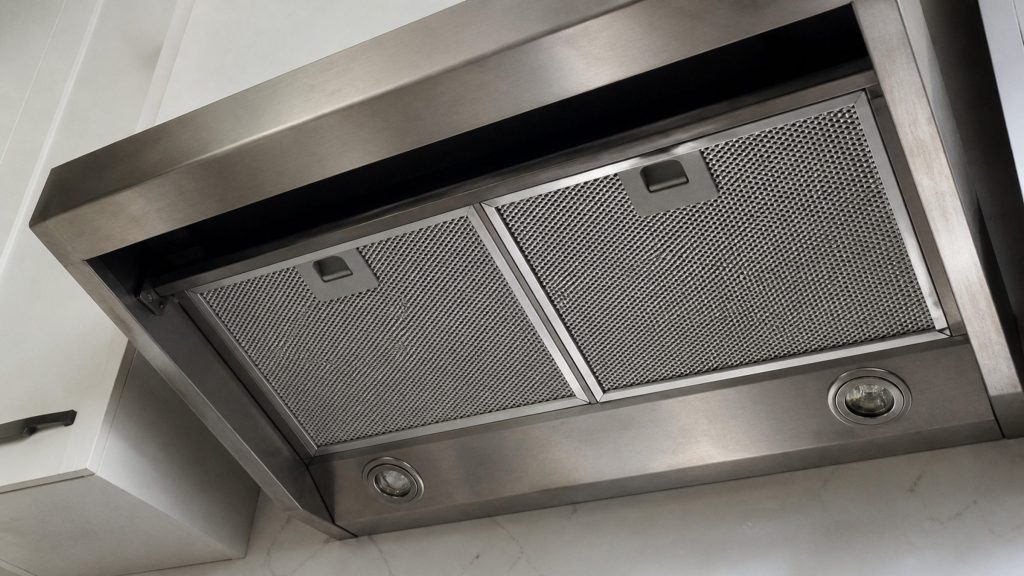
  • Looking up at the underside of a stainless range hood, metal mesh filters in place, the lights off and the cavity dark.
    Or the lights have

    The range hood fan has stopped

    The appliance nobody thinks about until it is silent. A hood that will not run, one speed missing, or lights that have gone out while the fan is fine — three complaints with three different short lists behind them.

    • Nothing at all from the fan
    • Only one speed works
    • Lights out, fan fine
    What it usually means
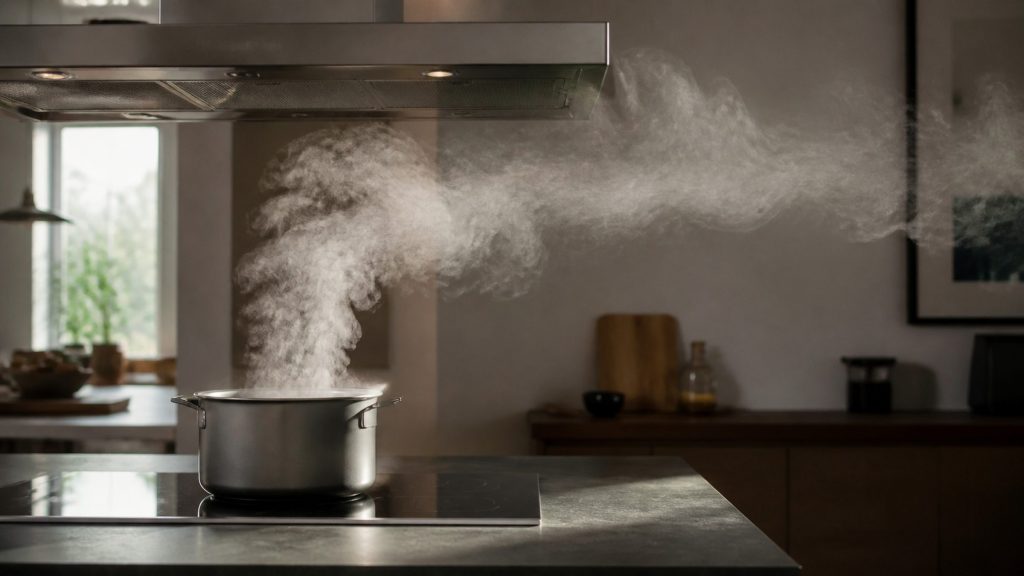
  • Steam rising from a pot on a cooktop and drifting sideways across the kitchen instead of being drawn up into the hood above it.
    Filters, damper and duct

    The hood runs but does not pull

    A hood that sounds perfectly healthy and leaves the kitchen full of steam. It is usually maintenance rather than failure, and it is one of the few appliances where an owner can genuinely fix the problem in an afternoon.

    • The fan is loud and the kitchen still fills
    • It has never really worked since it was installed
    • Worse since the filters were last cleaned — or never were
    What it usually means
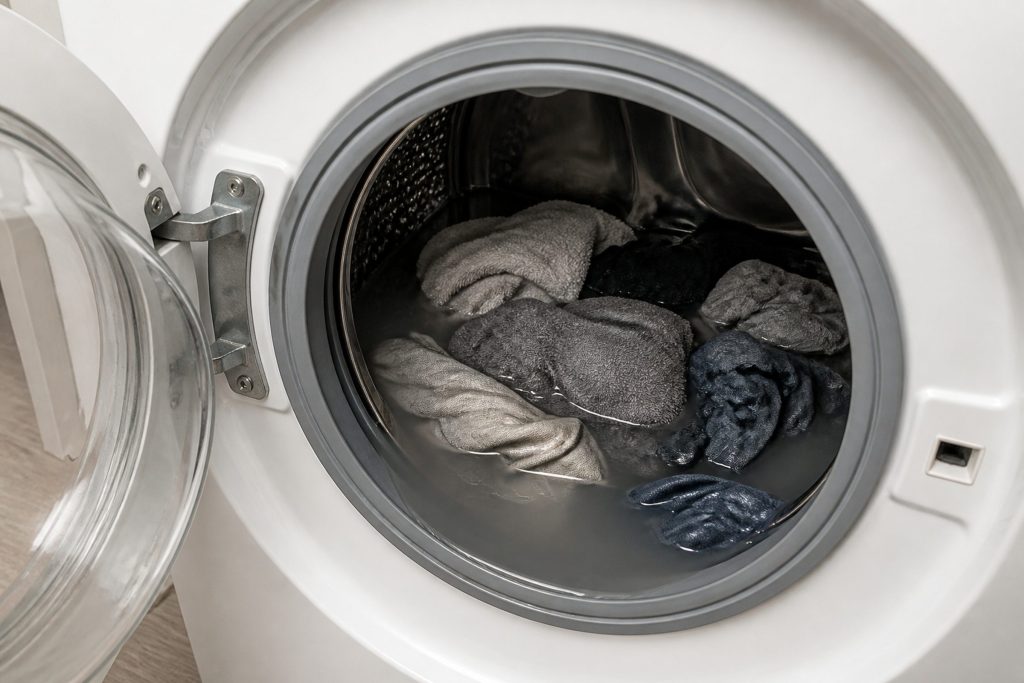
  • Looking down into the drum of a front-loading washer through its open door at wet laundry sitting in several inches of grey water.
    A tub full of water

    The washer will not spin or drain

    Worth saying in the first line, as the appliance page does: KitchenAid no longer sells washing machines in the United States. The ones here still work, they still break, and this is the most common call on them.

    • The cycle ends with the tub full
    • Clothes soaking wet at the end of the spin
    • It drains but never spins
    What it usually means
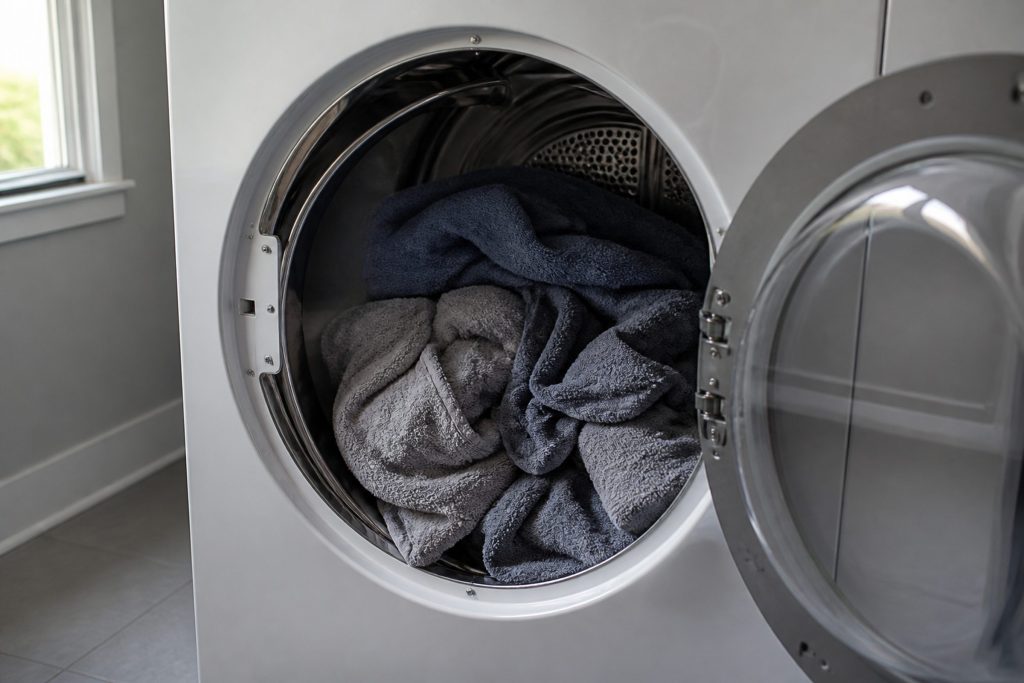
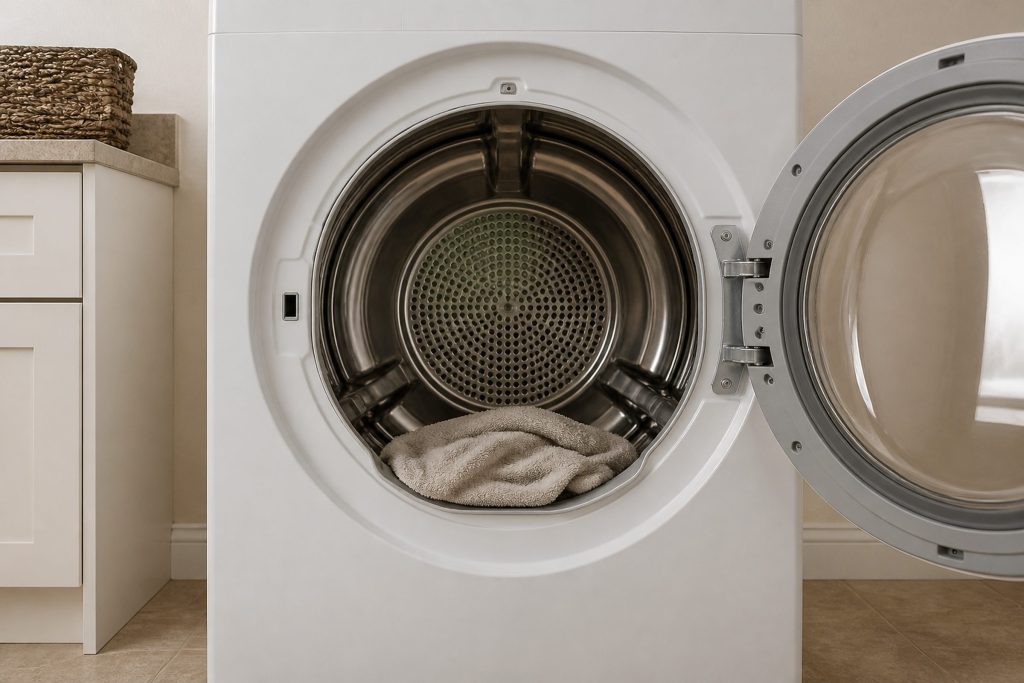
  • An open dryer drum with damp towels tumbled inside it, the door swung wide, cool daylight from a laundry room window.
    Or takes three cycles to dry

    The dryer runs and will not heat

    A vented dryer is a simple appliance, which is why so many of these calls end well. It is also the appliance where the problem is most often not the appliance at all — it is the duct behind it, and that matters for more than drying time.

    • It tumbles and the clothes stay cold and damp
    • Two or three cycles to dry one load
    • It heats for a while and then stops
    What it usually means
  • A dryer drum standing open and still with a single towel resting at the bottom of it, the drum baffles clearly not moving.
    Motor hums, drum still

    The dryer will not turn or will not start

    A drum that will not turn, or a machine that does nothing at all when the button is pressed. On a vented dryer of this age the list is short, mechanical, and mostly made of parts that are still available.

    • It hums and the drum does not move
    • Nothing at all happens when you press start
    • It squealed for months and then stopped
    What it usually means
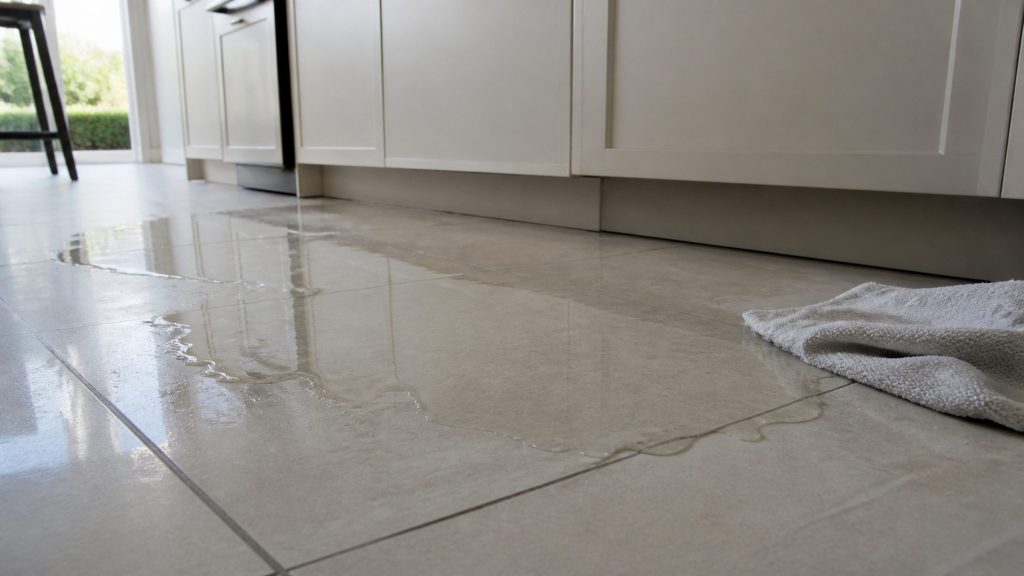
  • A spreading pool of water across a pale tile kitchen floor at the foot of a run of cabinets, a folded towel dropped at one edge of it.
    Find the source before the puddle

    There is water on the floor

    Water on a kitchen floor is the one symptom worth acting on the same day, because what it damages is rarely the appliance. A puddle also travels, so where it appears is often nowhere near where it started.

    • Water at the front of the dishwasher door
    • A puddle under the refrigerator, appearing overnight
    • Water inside the cabinet rather than under it
    What it usually means
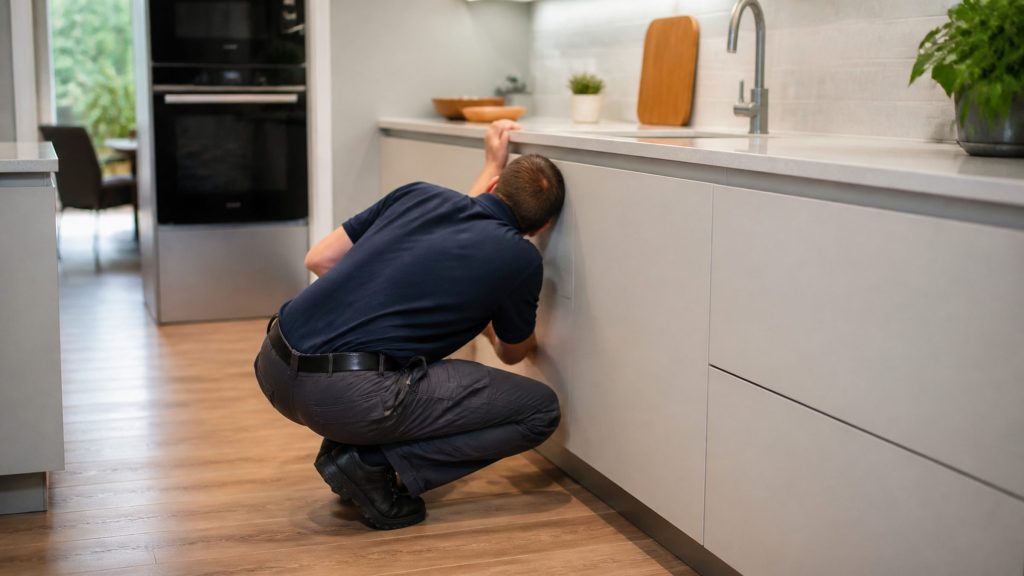
  • A person crouching with one ear turned toward a run of kitchen cabinets, hand resting on the counter edge, seen from behind so no face is visible.
    Nothing else has changed

    It has started making a new noise

    A new sound is a real signal rather than a nuisance, and it is usually the earliest warning you get. Caught while it is only a noise, most of the causes on this page are small; left until it stops, several of them are not.

    • A hum or a buzz that was not there before
    • A squeal that comes and goes
    • A clicking every few minutes with nothing else wrong
    What it usually means
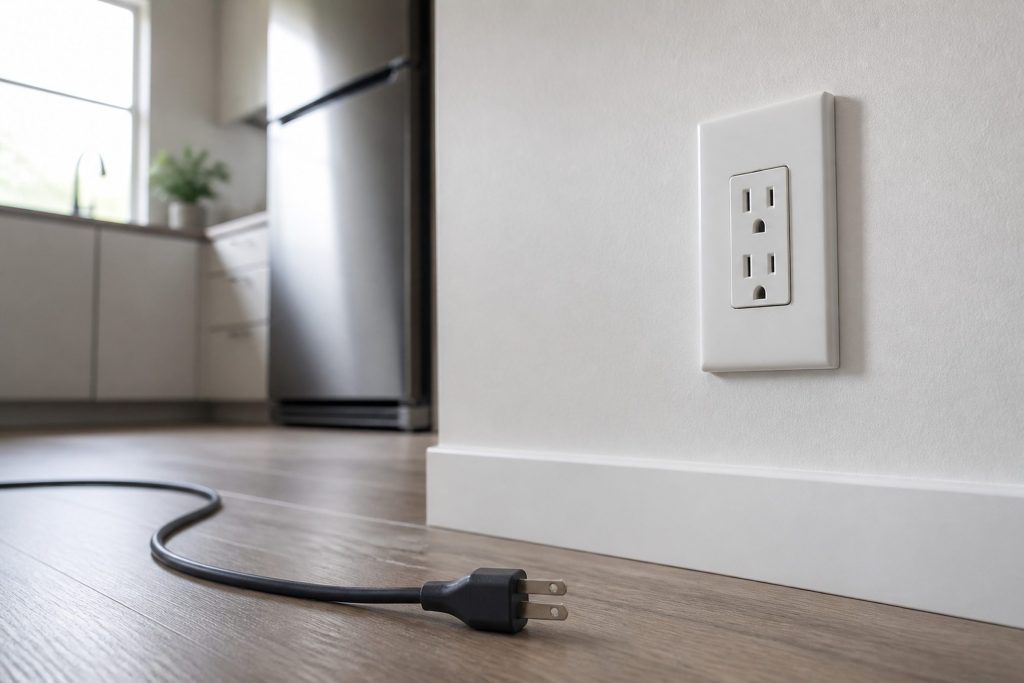
  • A power cord and plug lying loose on a kitchen floor beside a wall outlet, the plug not inserted.
    No lights, no response

    The appliance will not turn on at all

    Nothing at all is a different problem from a machine that starts and stops, and it has a much shorter list behind it. More than half of that list is outside the appliance, which is why it is worth ten minutes before it is worth a visit.

    • A completely dark panel
    • It worked yesterday and is dead this morning
    • It came back once and then went again
    What it usually means
  • A hand pressing a blank dark glass control surface with nothing lit under it, reflections of a kitchen window across the glass.
    Lit up and ignoring you

    The control panel is not responding

    A panel that lights up and does nothing, or one where some buttons work and others never do. Before this is a repair it is worth ruling out two settings and one very ordinary condition, because between them they explain a lot of these.

    • Some buttons work, others do nothing
    • The display is lit and every press is ignored
    • A lock symbol you did not put there
    What it usually means
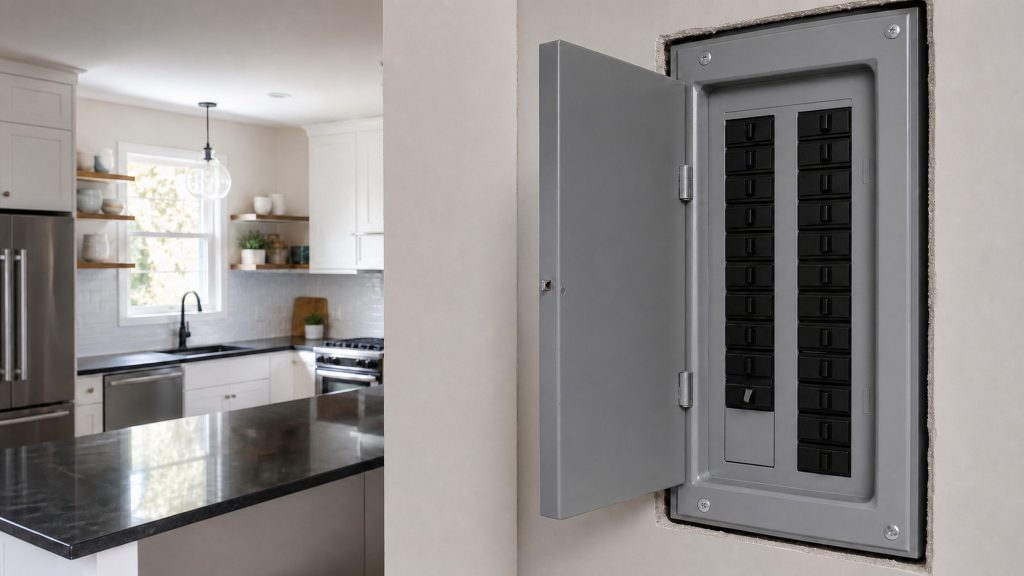
  • A kitchen in daylight with a household breaker panel open on the wall at the right, rows of identical unmarked breakers, one switched down, and a dark counter beyond.
    The call we get after every storm

    It stopped working after a power outage

    Storm season fills our phone with this one, and a good share of it is not damage at all. Appliances that lost power come back confused, report it, and want acknowledging — and a documented reset clears more of them than most people expect.

    • A clock flashing, or PF on the display
    • PO on a refrigerator display
    • It came back on and behaves strangely
    What it usually means
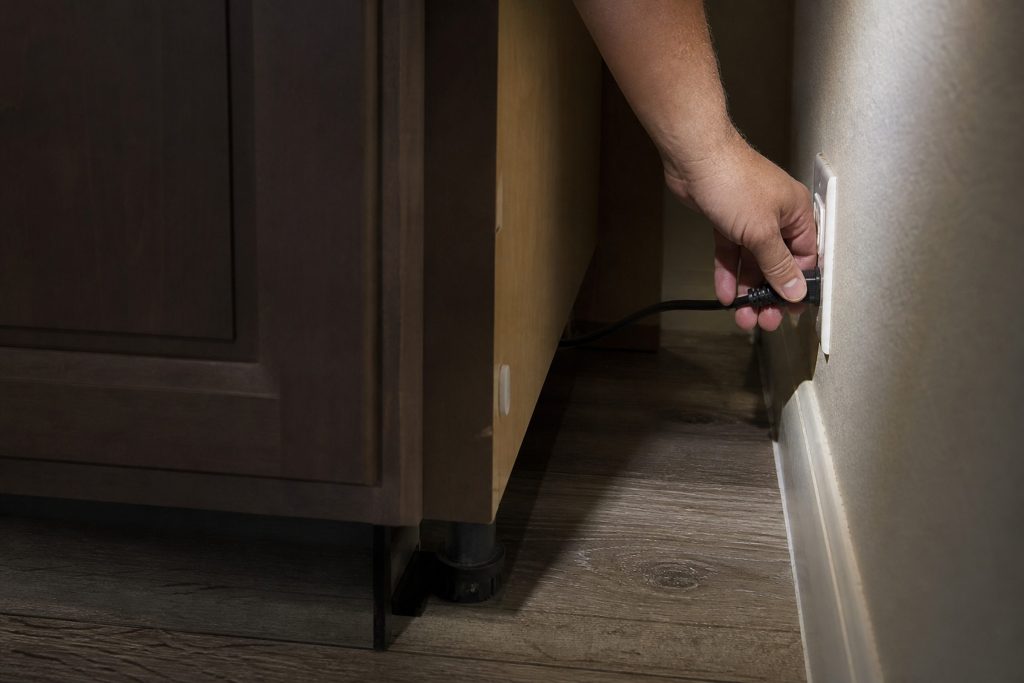
  • A hand reaching to a wall outlet behind a run of kitchen cabinets, about to withdraw a plug, the cabinet pulled slightly forward to make room.
    What a reset can and cannot do

    How to reset it

    One of the most searched things about this whole make, and one of the most misunderstood. There is no reset button on most of these appliances — what there is is a power cycle, and a set of feature resets that do very specific jobs.

    • Looking for a reset button that does not exist
    • A filter light that will not go out
    • A machine that needs restarting after a storm
    What it usually means

Why this archive is written in behavior rather than parts

Nobody searches for a drain pump. They search for water in the bottom of the dishwasher.

That is not a small distinction, and it is the reason this archive exists alongside the repair list. When an appliance stops, the behavior is the only thing you have: it will not drain, the Clean light is blinking, one side is warm and the other is freezing, it runs and nothing gets hot, there is water on the floor and you cannot see where from. Naming the part is the end of the diagnosis, not the beginning of it.

A site organized only by part name quietly asks you to finish that diagnosis yourself before it will tell you anything — and if you could, you would not be reading. So these pages start where you actually are. Every one of them opens with something free to try, and a real number of them end there, which is a cost to us and the right way round.

Or start from the repair itself
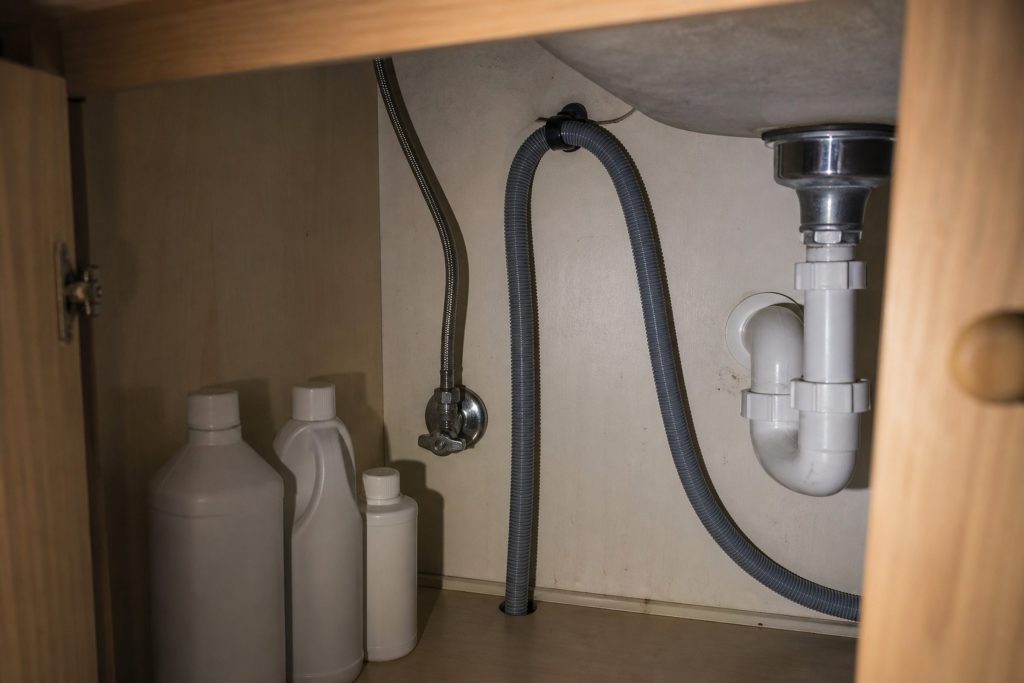
The inside of a base cabinet under a kitchen sink: a shut-off valve, a braided supply line and a corrugated drain hose looping up, cleaning bottles pushed to one side.

What is unusual about a KitchenAid

On this make, a surprising amount can be read before anybody arrives.

More than on most equipment we work on, and it is worth knowing because it is free.

  • The Clean light is a code. A dishwasher with no numeric display still reports its condition: it flashes it on the Clean light in two bursts — the first is the F number, a pause, the second is the E number. Seven flashes, a pause, one flash is F7 E1. Count both before you cancel the cycle, because canceling is what erases it. That single habit is worth more than any description you could give us over the phone.
  • PO is a notice, not a failure. After a storm, a refrigerator showing PO is telling you it lost power for long enough to get warm inside and is waiting for somebody to acknowledge it. Nothing is broken. What matters is the thermometer, not the message.
  • Which compartment is wrong settles most of it. Fresh food warm with a cold freezer is airflow, not refrigerant — and it is the cheaper half of that page. Both warm together is a different search entirely. One sentence, and half the diagnosis is done.
  • After an outage, set the clock. Several appliances on this make will not run a timed function until the time of day is set. One can look completely dead and be perfectly well.

None of that is a trick to keep you off the phone. It is the fastest route to an answer, and on a good number of these calls it is the whole answer.

What each repair costs
A kitchen counter lit only by grey daylight during a heavy rain shower, water running down a window, the room dim and the counter surface reflecting the window.

What to have ready

Three things that shorten every call

None of them takes more than a minute, and together they change what comes on the van.

The model number

  • Dishwasher: on the edge of the door, visible when it is open
  • Refrigerator: the upper left wall inside the fresh food section
  • Wall oven or range: the frame inside the door
  • Hood: behind a filter. Washer or dryer: inside the door opening

What the appliance is reporting

  • Both halves of the code — the F number and the E number
  • Or the two counted bursts of flashes on a dishwasher Clean light
  • Whether it comes straight back after a minute at the breaker
  • A photograph of the display is worth a paragraph of description

How it is fitted, and when it started

  • Freestanding, integrated behind your own panel, or in a tall housing
  • Stacked, in a closet, or in the garage
  • Whether it drifted over two weeks or stopped the night the power came back
  • Whether anything was cleaned, moved or serviced just before

By appliance

Or start from the machine

If several of these sound like yours at once, the appliance page gathers them together and explains how they relate.

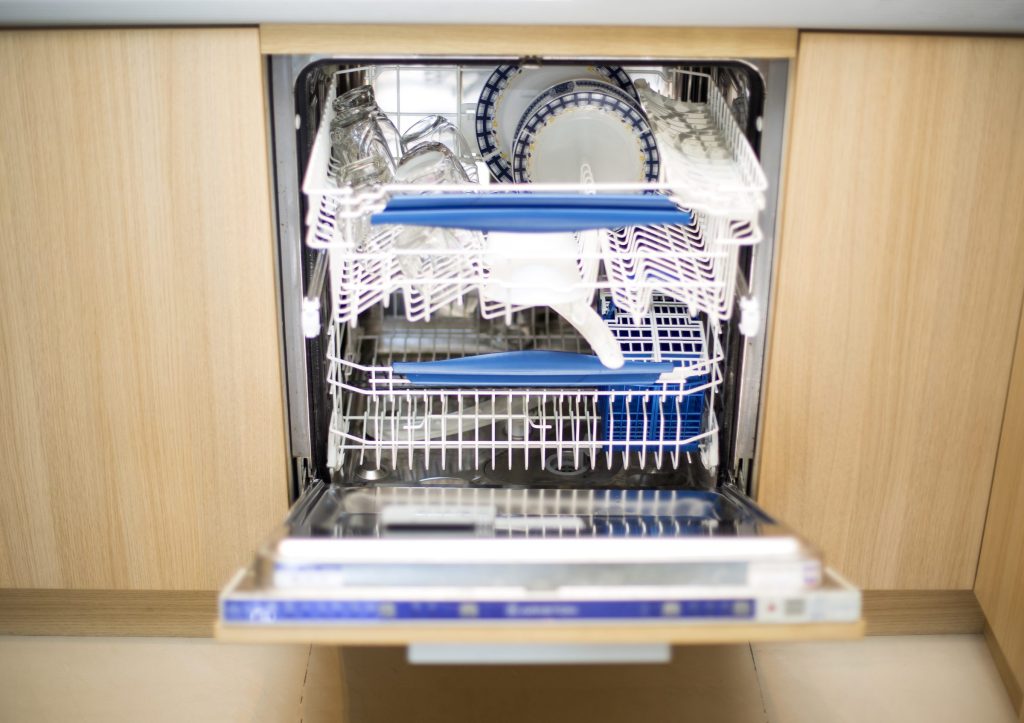
  • An integrated dishwasher standing open behind a light wood panel, both racks out, a cutlery basket in the lower one, the control strip along the top edge of the door
    Integrated control · Front control · Third rack · ProDry · 24" · 39–44 dBA

    Dishwashers

    The appliance this name means in a kitchen, and the one that tells you the most before anybody arrives. A KitchenAid dishwasher with no display still reports its code — it flashes it on the Clean light, in two bursts, and those two numbers are a diagnosis you can read from across the room before anybody opens anything.

    Dishwasher repair
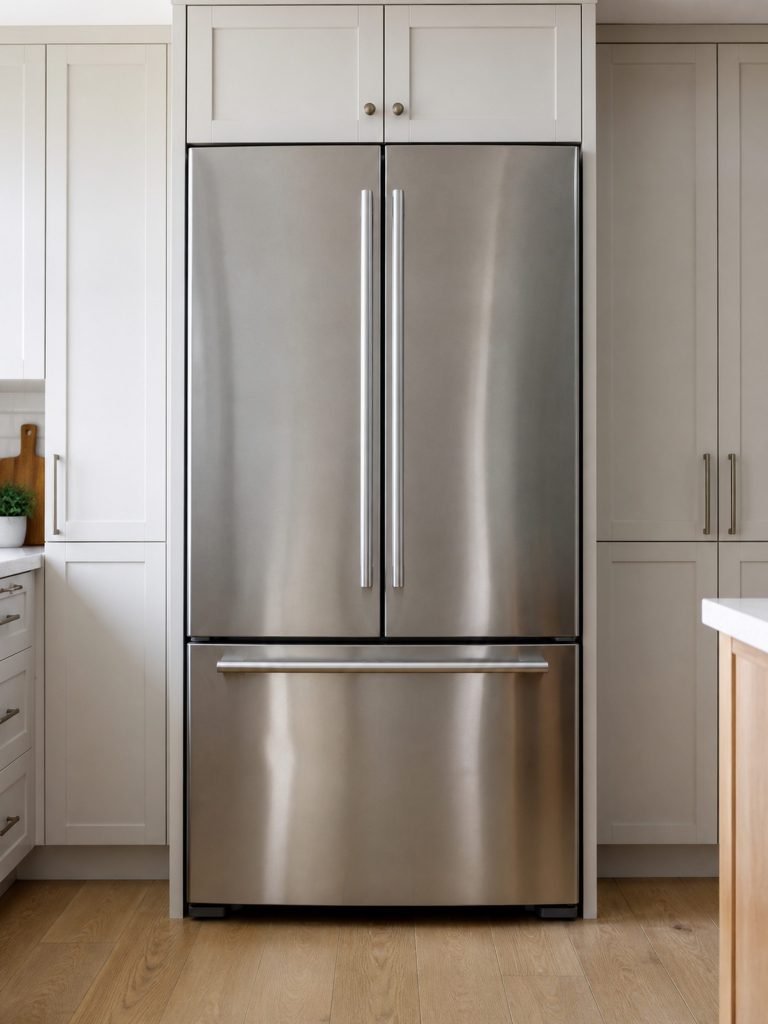
  • A tall stainless French door refrigerator filling the frame, both upper doors closed and the freezer drawer below shut, standing between cabinets in a bright kitchen, shot straight on from a few steps away.
    French door · Side-by-side · Bottom mount · Built-in · Counter-depth · 30"–48"

    Refrigerators

    The largest part of this maker's line and the largest part of our phone. French door and side-by-side, freestanding and built into cabinetry, counter-depth and full depth — and one code that South Florida sees more than anywhere else, because it is the one a cabinet shows after the power has been off.

    Refrigerator repair
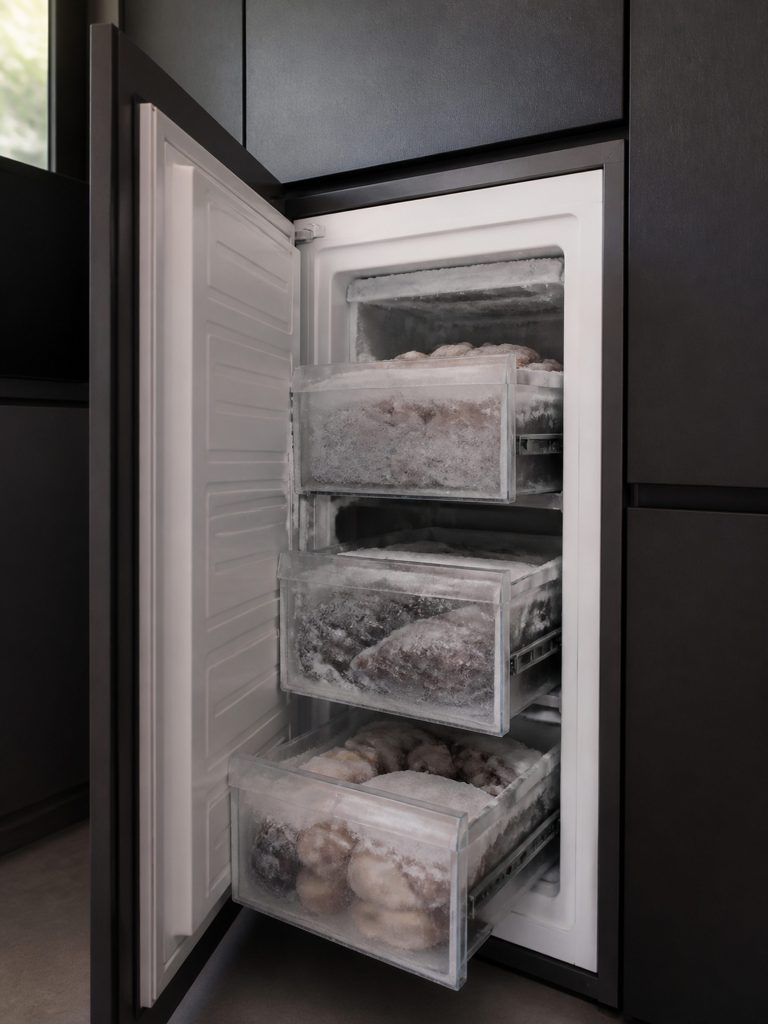
  • A freezer compartment with its drawers pulled out, clear boxes of frozen food stacked in them
    Freezer drawers · Bottom mount · Side-by-side · Ice build-up · Frost

    Freezers

    This make does not sell a standalone freezer, and that is worth saying plainly: the freezer here is the bottom drawer of a French-door cabinet, one column of a side-by-side, or a refrigerated drawer set to freeze. It is still the half people call about, because a freezer that stops is a freezer full of food.

    Freezer repair
  • An ice bin filled to the top with clear cubes, seen straight down
    Undercounter 15" and 18" · 25 lb and 35 lb · Clear Ice · Panel-ready · In-door

    Ice makers

    Two different appliances share this card, and knowing which one you have changes everything. There is the ice maker inside the refrigerator, and there is the undercounter machine that does nothing else — a real ice maker with its own drain, its own water line and its own cleaning cycle. In this climate the second one earns its keep and asks for attention.

    Ice maker repair
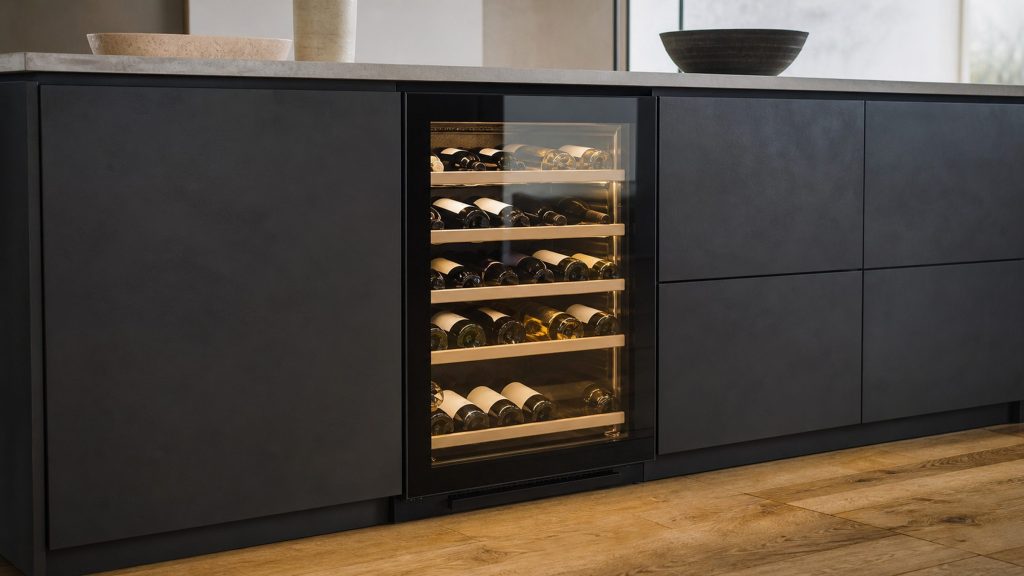
  • An undercounter wine cabinet built into dark cabinetry, bottles lying on wooden shelves behind a glass door, lit warm inside
    Undercounter 15" and 24" · Wine cellars · Beverage centers · Panel-ready · Glass door

    Wine cellars and beverage centers

    Small cabinets with an expensive job. A wine cellar holds a narrow band of temperature behind a glass door, in a climate that is working against it and often in a cabinet with very little air. When one drifts, what is inside it is usually worth more than the repair.

    Wine cellar repair
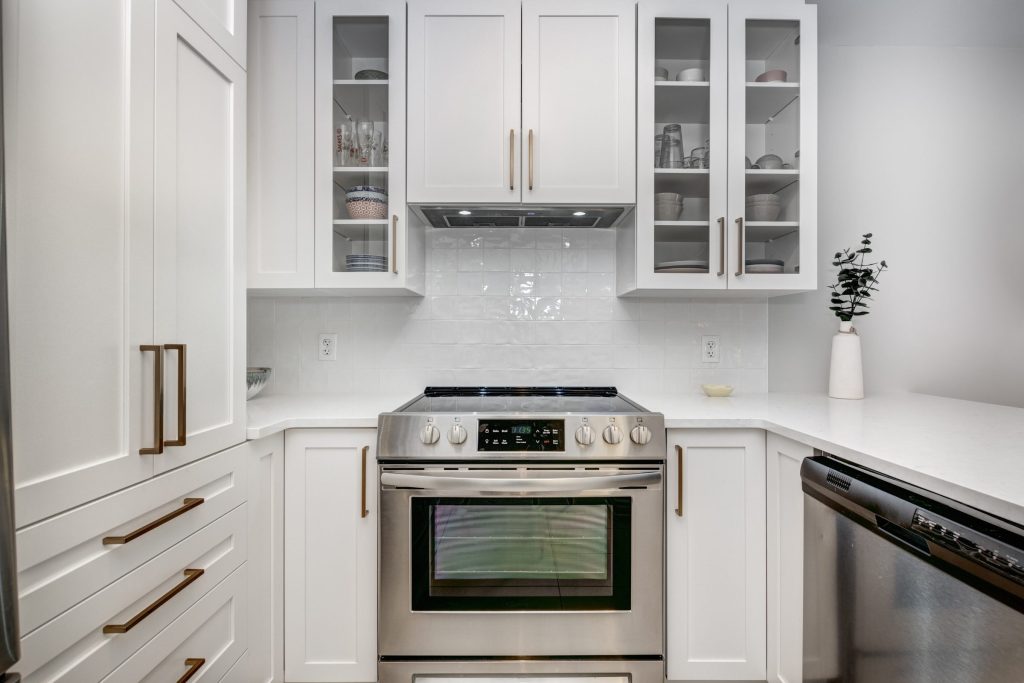
  • A stainless slide-in range set between white shaker cabinets under a hood, a dishwasher at the right, bright daylight
    Commercial-Style · Slide-in · Freestanding · Double oven · Downdraft · Gas, electric, dual fuel, induction

    Ranges

    One appliance and two systems that fail independently. More than half of this maker's current ranges are the Commercial-Style machines — heavy, knob-controlled, gas or dual fuel or induction — and the rest are slide-ins and freestanding ranges, including a downdraft model with the ventilation built into the appliance itself.

    Range repair
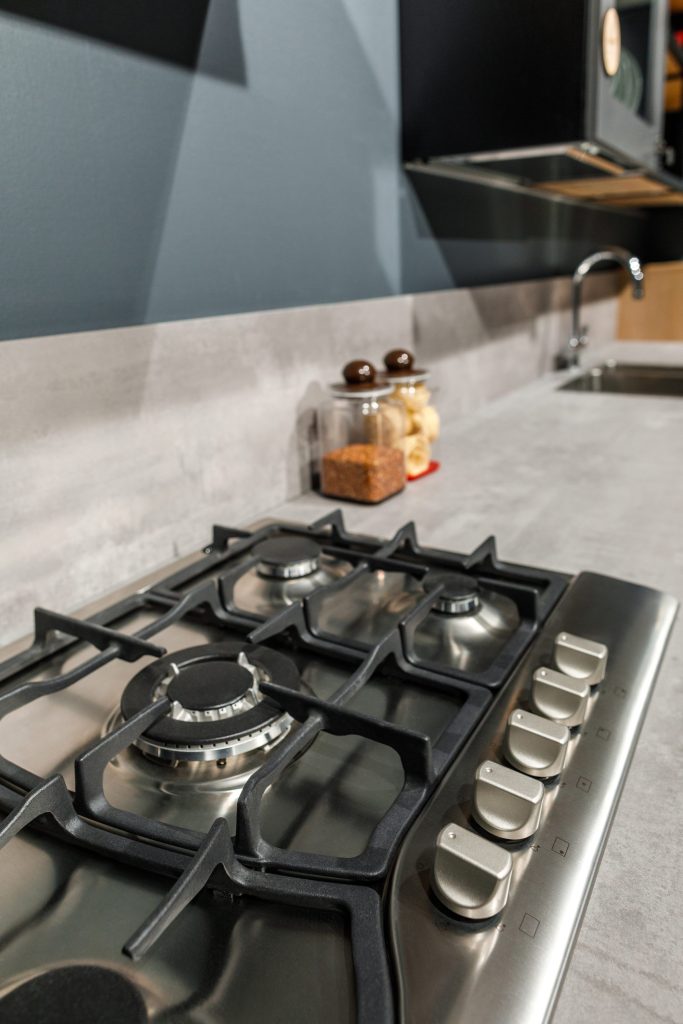
  • A stainless gas cooktop seen close from one side, four sealed burners with cast grates and a row of knobs along the front edge
    Gas · Gas-on-glass · Electric radiant · Induction · Downdraft · 15", 30", 36"

    Cooktops

    Four different appliances under one word. Gas with sealed burners, gas on a glass surface, electric radiant under ceramic, and induction — plus the downdraft versions of two of them, with a blower built into the counter. What has gone wrong is usually obvious once you know which one you are standing in front of.

    Cooktop repair
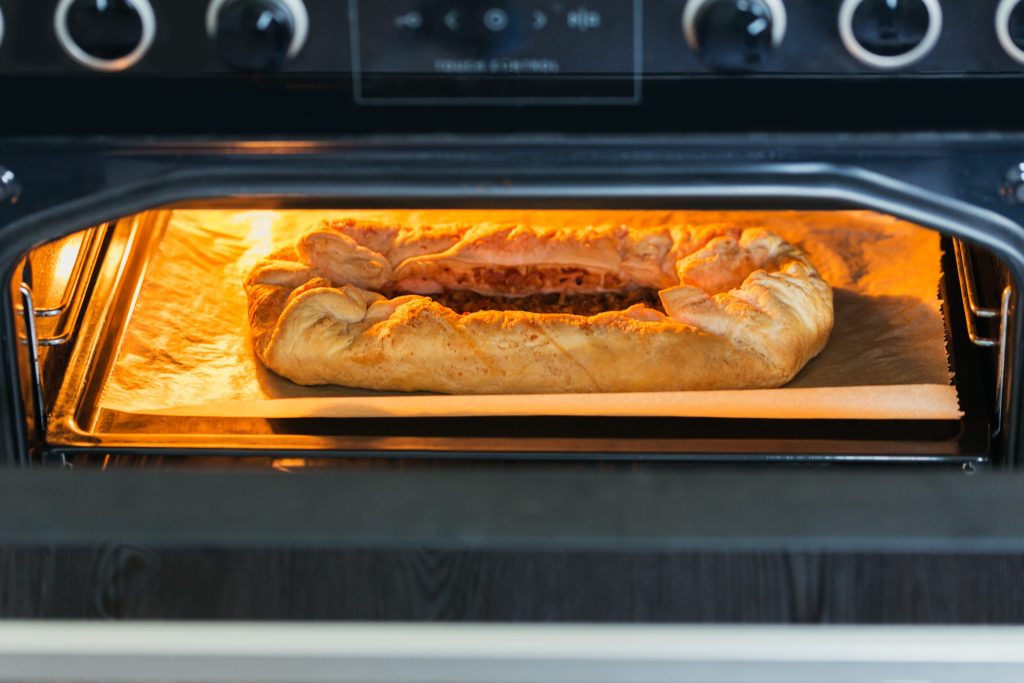
  • A built-in oven with the door open and a tart baking on the shelf, the cavity lit warm, knobs and a touch control panel above the door
    Single · Double · Combination microwave-oven · 24", 27", 30" · True Convection · Self-clean

    Wall ovens

    Built into a tall housing, surrounded by cabinetry, and heavy. A wall oven is the appliance where the access is a real part of the job — and the combination units, with a microwave above the oven, are two appliances in one opening that report separately and fail separately.

    Wall oven repair
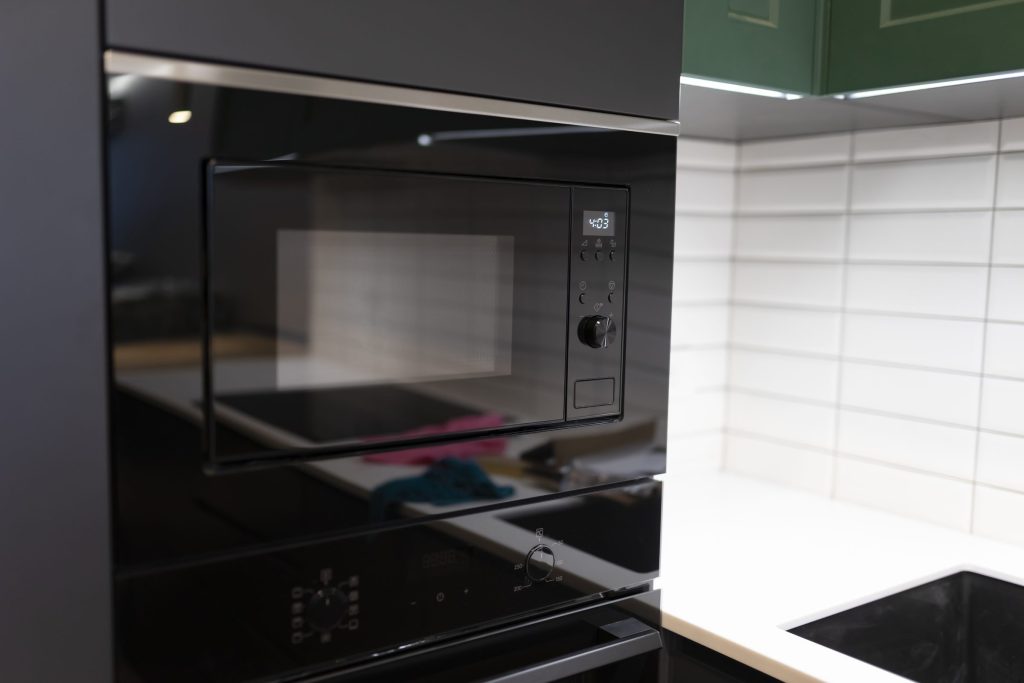
  • A black built-in microwave set into a run of dark cabinetry above a cooktop, its door closed
    Over-the-range · Built-in · Low profile · Microwave-hood combination · Countertop · Air Fry

    Microwaves

    The appliance nobody thinks about until the light is on and nothing is hot. Over-the-range, built into a cabinet with a trim kit, or the microwave-hood combination that also ventilates your cooktop — and on that last one, a dead microwave means a dead hood as well.

    Microwave repair
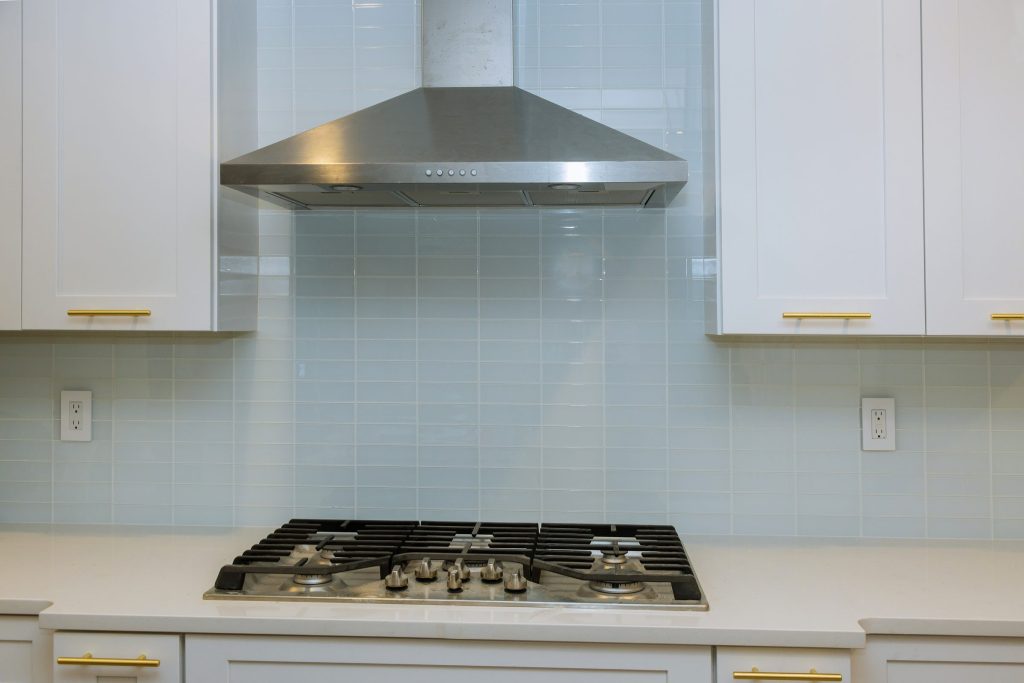
  • A stainless chimney hood mounted on a tiled wall above a gas cooktop in a white kitchen
    Wall-mount · Under-cabinet · Island · Commercial-Style · Custom liners · Retractable downdraft

    Range hoods and vents

    The appliance that gets attention only when it is silent, and the one whose maintenance is genuinely all an owner needs to do. Wall-mounted canopies, under-cabinet hoods, island hoods, insert liners for custom millwork, and the retractable downdraft that rises out of the counter.

    Range hood repair
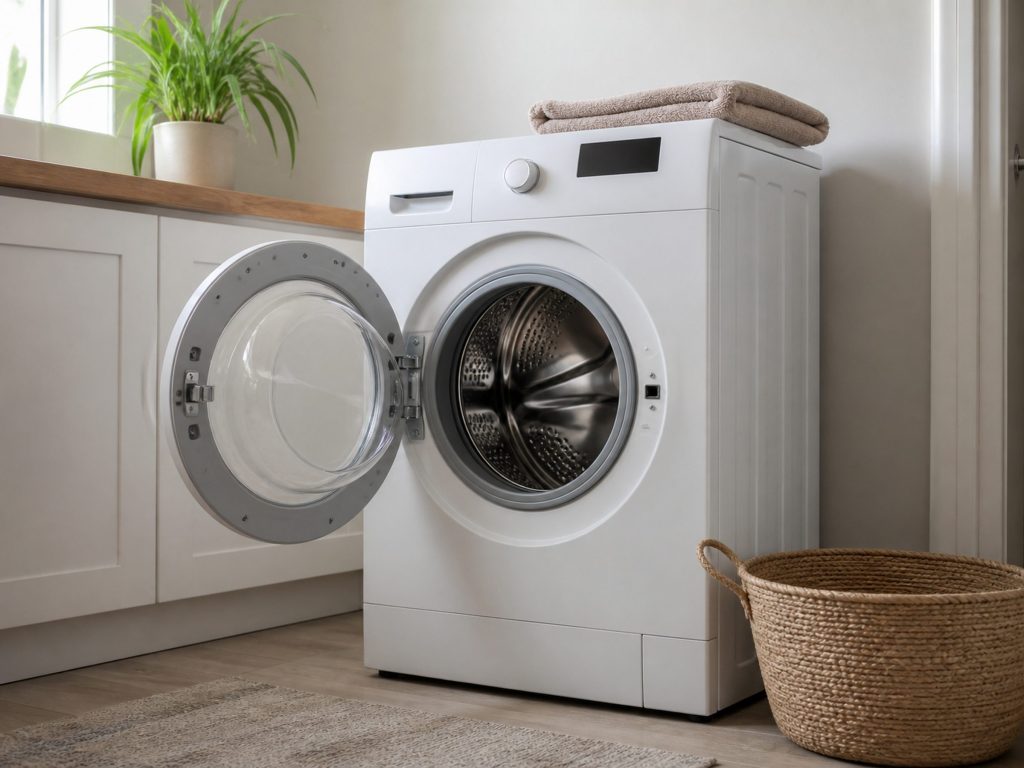
  • A front-loading washing machine standing in a domestic laundry room with its door open on the empty stainless drum, a folded towel on the machine beside it and a basket on the floor, no person in the frame.
    Superba · Ensemble front-load · Top-load · No longer manufactured · Still repaired

    Washing machines

    Worth saying in the first line: KitchenAid does not sell washing machines in the United States any more. There is no laundry section in its own catalog and no laundry family in its own support base. The machines are still in South Florida homes and garages, people still search for them by name, and we still repair them — this page is about a machine that is no longer made.

    Washing machine repair
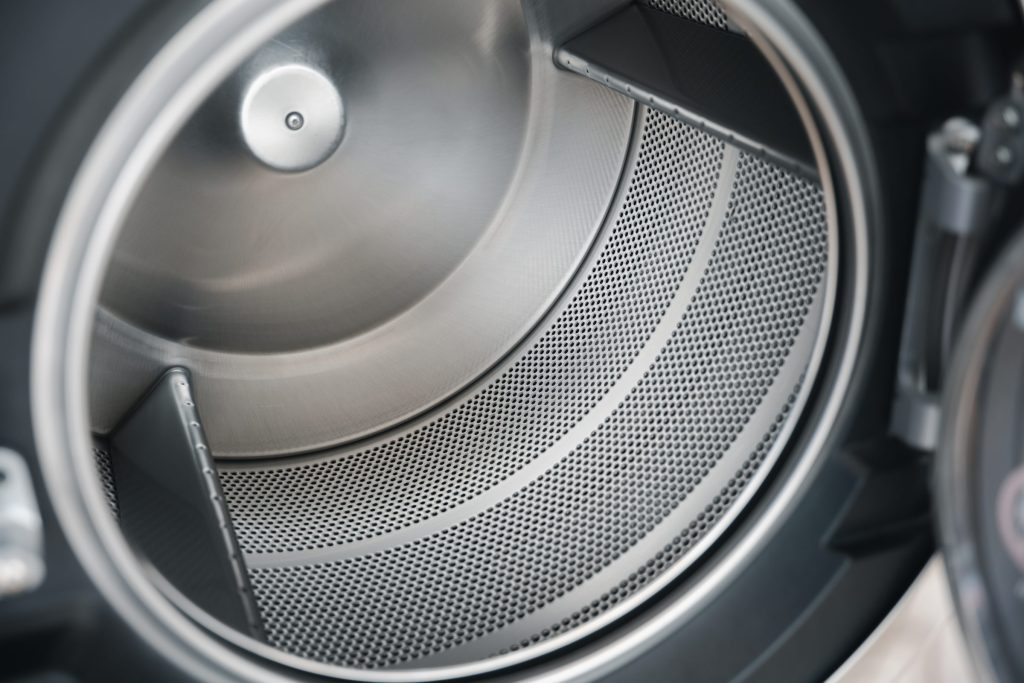
  • The inside of a dryer drum seen through the open door, the perforated stainless wall and the lifting vanes
    Electric and gas · Vented · Ensemble front-load · No longer manufactured · Still repaired

    Dryers

    The same situation as the washer next to it, and usually the same laundry room. KitchenAid stopped selling dryers in the United States, and the ones still working here are vented electric and gas machines that people search for by model number to this day. A vented dryer is a simple appliance, which is why so many of these calls end well.

    Dryer repair

Not seeing yours?

37 descriptions cannot cover every way an appliance goes wrong.

The ones missing from a list like this are usually the odd ones — a noise only on one cycle, a smell only after a long wash, a machine that behaves differently when the air conditioning is running, something that started the week the kitchen was painted. Those are real, and we have seen most of them.

If you do not see your own symptom here, it is not a sign that we do not cover it. Call (305) 306-1328 or use the form and describe it however makes sense to you. You will get a straight answer about what it is likely to be, and roughly what it costs, before anybody is booked — and if it is not our work, we will tell you that too.

If there is a code on the display

325 conditions, decoded

This maker writes its codes as a pair — an F number for the system and an E number for what it saw — and a dishwasher with no display flashes the same pair on the Clean light. Every code we publish has a page here saying what it covers and what a visit checks first.

  • KitchenAid induction cooktop error code E2

    KitchenAid induction cooktop error code E2: The cooktop is too hot. Are you trying to cook with an empty pan/pot? The control panel switches off because of excessively high temperatures. The internal temperature of the electronic parts is too high. Wait for the cooktop to cool down before using it again. If you have placed an empty pan or pot on one of the cooking areas and started the cooktop, it may trigger this error code. Add food or liquid Move the pan/pot to the cooking area and start the cooktop. What the code narrows down, what the maker publishes for it, and why the same number means something else on another KitchenAid appliance.

    What this one means
  • KitchenAid induction cooktop error code E90

    KitchenAid induction cooktop error code E90 is real and published, but the maker states no meaning for it. What it does publish, what a power cycle actually tells you, and what happens if the code comes back.

    What this one means
  • KitchenAid induction cooktop error code E91

    KitchenAid induction cooktop error code E91 is real and published, but the maker states no meaning for it. What it does publish, what a power cycle actually tells you, and what happens if the code comes back.

    What this one means
  • KitchenAid induction cooktop error code E92

    KitchenAid induction cooktop error code E92 is real and published, but the maker states no meaning for it. What it does publish, what a power cycle actually tells you, and what happens if the code comes back.

    What this one means
  • KitchenAid induction cooktop error code E93

    KitchenAid induction cooktop error code E93 is real and published, but the maker states no meaning for it. What it does publish, what a power cycle actually tells you, and what happens if the code comes back.

    What this one means
  • KitchenAid electric and induction cooktop error code F0

    KitchenAid electric and induction cooktop error code F0: An object, liquids, or soils are putting pressure on the control panel. What the code narrows down, what the maker publishes for it, and why the same number means something else on another KitchenAid appliance.

    What this one means
  • KitchenAid electric cooktop error code F03

    KitchenAid electric cooktop error code F03: There is an internal communication error on the touch control module. What the code narrows down, what the maker publishes for it, and why the same number means something else on another KitchenAid appliance.

    What this one means
  • KitchenAid induction cooktop error code F0E1

    KitchenAid induction cooktop error code F0E1: Is the correct cookware being used? Is the pot the correct size? Only use pots and pans made from ferromagnetic material that are suitable for use with an induction cooktop: Enameled steel Cast iron Stainless steel designed for induction cooking To determine whether a pot is suitable, a magnet may be used to check whether the pot is magnetic. The quality and the structure of the pot base can alter cooking performance. Some indications for the base's diameter do not correspond to the actual diameter of the ferromagnetic surface. Some pots and pans have only a part of the bottom in a ferromagnetic material, with parts in another material that is not suitable for induction cooking. These areas may heat up at different levels or at lower temperatures. In certain cases, where the bottom is made mainly of non-ferromagnetic materials, the cooktop might not recognize the pan and, therefore, not switch on the cooking zone. Non-ferromagnetic materials will not work with induction cooking. Non-ferromagnetic materials include: Stainless steel Glass Ceramic Copper or aluminum To ensure the cooktop functions properly, use pots of a suitable minimum diameter. Always use the cooking zone that best corresponds to the minimum diameter of the bottom of the pot. Place the pot, making sure it is well centered on the cooking zone in use. It is recommended not to use pots that exceed the perimeter of the cooking zone in use. What the code narrows down, what the maker publishes for it, and why the same number means something else on another KitchenAid appliance.

    What this one means
  • KitchenAid induction cooktop error code F0E2

    KitchenAid induction cooktop error code F0E2 is real and published, but the maker states no meaning for it. What it does publish, what a power cycle actually tells you, and what happens if the code comes back.

    What this one means

Before you book

What people ask us first

The Clean light is blinking. Is that a code, or is it broken?

It is a code, and it is the most searched complaint on this whole badge. A dishwasher without a display counts the number out in two bursts: the first is the F number, the second is the E number. Seven flashes, a pause, one flash is F7 E1 — not eight. Watch one full repeat before you press anything, because Cancel erases it and so does the breaker.

It showed a code and then cleared on its own. Should I still call?

Write the number down first, then decide. A condition that clears and stays gone for weeks is often a control that got confused — by a power cut, a surge, a moment of heat. One that comes back is the appliance telling you the condition is real, and the number you wrote down is the difference between a diagnosis and a guess, because nothing on this make keeps a history you can read later.

There is no number at all. What now?

Plenty goes wrong without one. A gas burner that will not light reports nothing, and neither does a hood, a washer or a dryer on this badge — those are described in plain words instead, which is what this archive is for. Start from what the machine is doing: what it does, when it does it, and what changed just before.

Can I just switch it off at the breaker and see?

You can, and on 267 of the 325 published conditions on this badge that is the maker's entire instruction. But understand what it is: a test, not a repair. Give it a full minute so the control loses power properly, and write the code down first. If nothing comes back, the control was confused. If the code returns, the reset has proved the condition is live — and that is worth knowing before anybody drives out.

The oven cooks fine but the display is dead. Is that urgent?

It is not an emergency, and it is not something to leave indefinitely either. On these ranges and wall ovens the display and the control are the same board, so a dark display often means the appliance is running without the part that is supposed to be supervising it — including the door lock during a cleaning cycle. Use it normally if you must, skip self-clean until it is looked at.

In more detail

How to describe a KitchenAid problem so somebody can actually help

Say what it does, not what you think it is

“It is not draining” is more useful than “I think the pump has gone”, because the second one has already thrown away three of the four possibilities. Water standing in a dishwasher tub is a filter, an air gap, a disposal plug or a drain loop far more often than it is a pump — and three of those four are outside the appliance. Describing the behavior keeps all four on the table.

Say when it started, and what happened just before

An appliance that drifted over two weeks and one that stopped the night the power came back are rarely the same problem, and the second one often begins with a clock that was never set. A cooktop burner that stopped clicking right after a cleaning is usually a cap sitting off-center. An oven that failed during a self-clean is a specific and well-known situation. The timing is frequently the diagnosis.

Say which half is wrong

On refrigeration this is the single most valuable sentence available. Fresh food warm with a cold freezer is a single-evaporator cabinet with an airflow problem — a fan, a damper or a defrost circuit — and it sits at the cheaper end. Both compartments warm together is a different search. One zone of a two-zone wine cabinet being wrong rules out the compressor outright. Which rack of a dishwasher is coming out dirty identifies the diverter before anybody arrives.

Do not clear the code before you read it

It is the only evidence the appliance has produced, and clearing it is the one thing that cannot be undone. Write down both halves and leave it showing if you can. On a dishwasher with no numbers, count the two bursts of flashes on the Clean light before you cancel — canceling is what erases them.

Three pages here exist to stop you booking a visit

A French-door cabinet sweating down the middle in humid weather is documented as normal on this make, and Energy Saver is the setting to look at. PO after an outage is a notice rather than a failure. A dishwasher that cleans perfectly and dries nothing is usually doing what it was designed to do. On a site that makes its living from repairs those three are a deliberate cost, and they are the right one — you should not pay for a visit to be told something the manufacturer already publishes.

And three carry a safety line instead of a checklist

A cracked ceramic or induction surface goes off at the breaker and stays off. The high-voltage side of a microwave is never an owner repair, because the capacitor holds a dangerous charge after the appliance is unplugged. And a dryer that keeps opening its thermal fuse is telling you about a blocked duct rather than about a fuse — replacing the fuse and stopping there sells you the same afternoon twice.

What we are, and what the figures on this site mean

We are an independent repair company. We are not affiliated with, authorized by, or endorsed by any manufacturer, and we do not carry out repairs on any manufacturer’s behalf. We carry our own warranty on the work we performed and the parts we fitted, and OEM parts are available on order. Every figure on this site is a starting point and a researched market range for South Florida rather than a quote for your KitchenAid — the exact cost is confirmed after an on-site diagnostic and agreed in writing before anything is opened. Brand names and model numbers are the property of their respective owners and are used for identification only.

Describe it in your own words.
You do not need to know which part it is. What the appliance is doing, when it started, and the model number are enough for us to tell you what is likely and what it should cost.

This article is based on:

  • Official manufacturer documentation
  • Internal repair procedures
  • Technician repair history
  • Company quality standards
Call (305) 306-1328