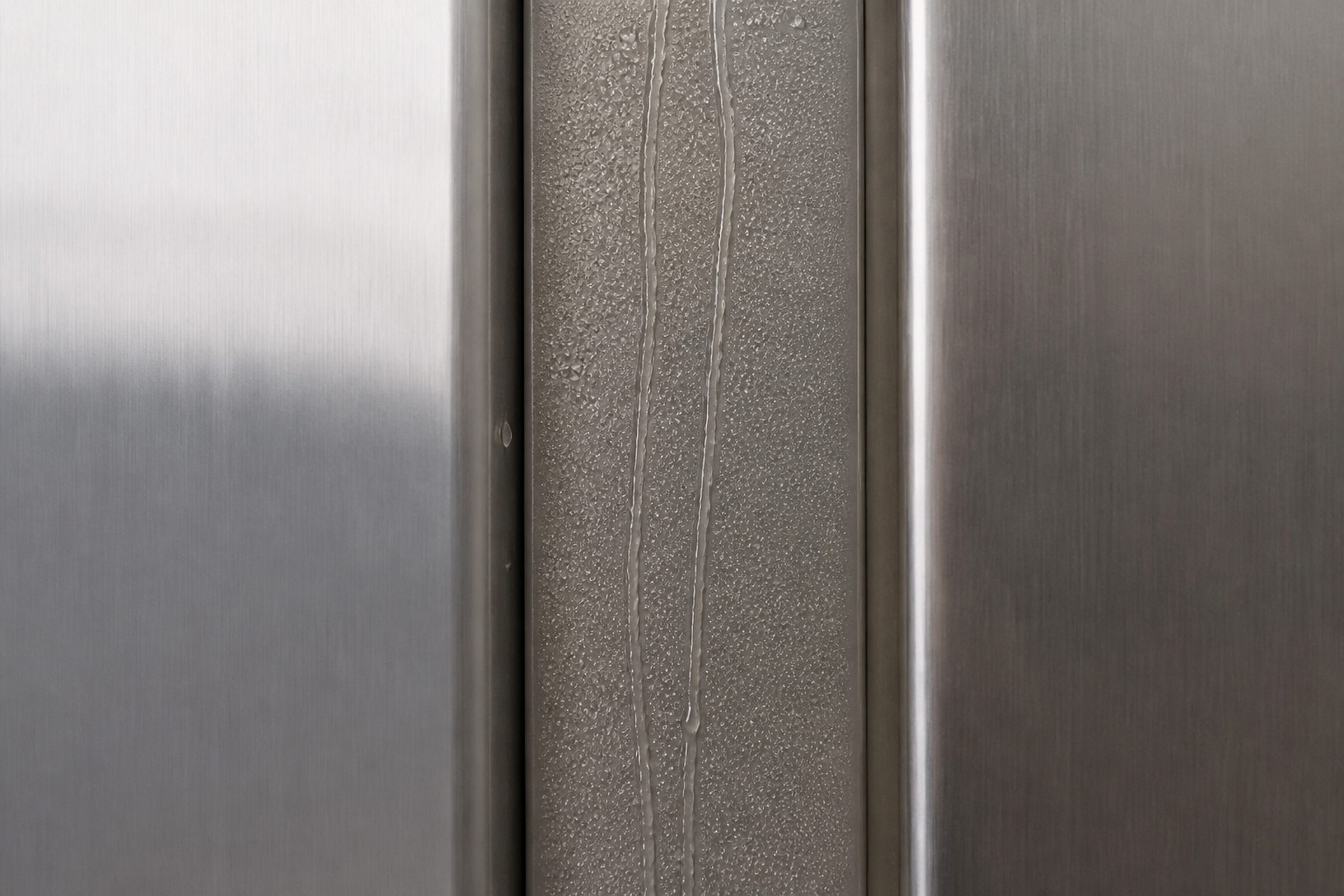
- “A wet strip down the middle between the doors”
- “Condensation on interior walls or on packages”
- “Worst in August, and worse without air conditioning”
Symptom
KitchenAid the refrigerator is sweating
Moisture down the strip between the two doors of a French-door cabinet, or on the interior walls and food packages. In a South Florida summer the manufacturer itself calls a minimal amount of this normal — and names a switch to try before anybody replaces a gasket.
- From $95 diagnostic, credited to the repair
- 59 cities and neighborhoods covered
- OEM parts available on order
- In writing the price, before anything is opened
Five ordinary causes
What this usually turns out to be
Cheapest and commonest first, which is also the order we check them in. They sit hundreds of dollars apart, and only the unit settles which one is yours.
-
High humidity and Energy Saver on
The maker documents both: condensation is expected in humid weather, and Energy Saver switches off the frame heaters that prevent it. Try that before anything else.
-
A home that is not air conditioned
Or a kitchen that is only cooled part of the day. The maker names this case specifically. It is a room condition rather than an appliance condition.
-
A door left ajar, or opened often
Every opening in August puts humid air into a cold box. A door held a fraction open by a bottle or a drawer does it continuously.
-
A tired or misaligned door seal
The paper test finds this: close the door on a sheet of paper and pull. If it slides out easily anywhere, that part of the seal is not sealing.
Door, gasket & alignment repair from $155 -
A blocked defrost drain
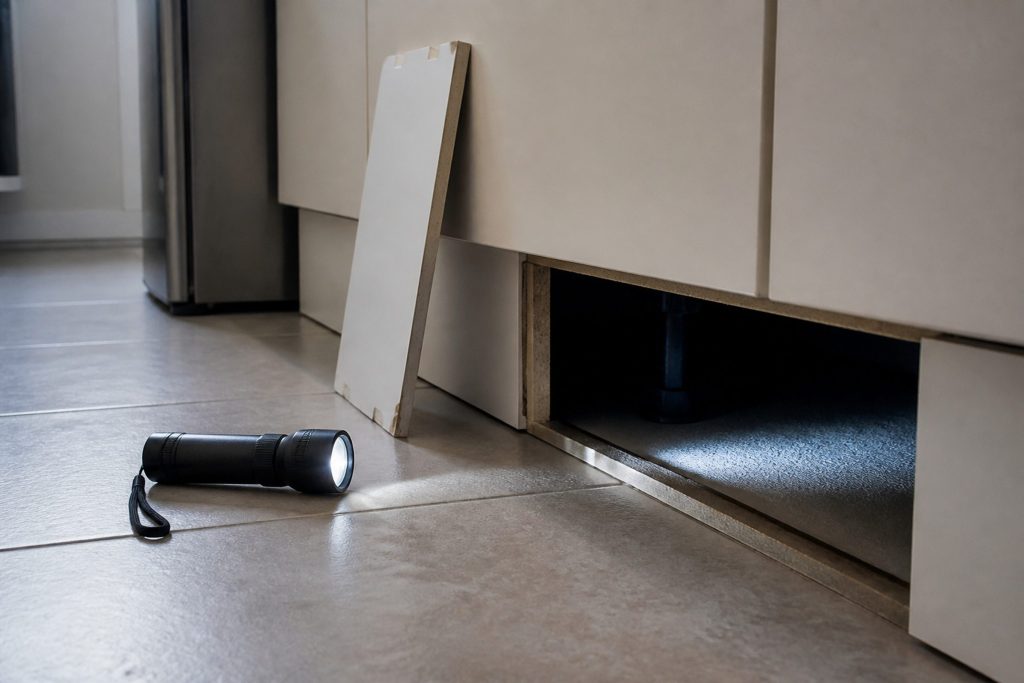
When the moisture is water inside the cabinet rather than dew on the outside, this is the usual reason, and it shows as ice under the freezer drawer.
Refrigerator defrost & cooling repair from $245
In five minutes
Before you call anybody
None of it needs tools, and all of it makes the visit shorter.
-
01
Find Energy Saver and switch it off
It is in the control panel settings on most of these cabinets. Give it a day before you judge. This is the manufacturer's own first answer to condensation in humid weather.
-
02
Do the paper test on both doors
Close the door on a sheet of paper and pull it out, at several points around the frame rather than one. Easy anywhere means the seal is not sealing there.
-
03
Check nothing is holding a door open
A tall bottle on a shelf edge, an over-filled drawer, a bin that has shifted. Continuous warm air is the difference between dew and a real frost problem.
-
04
Then book it if there is water inside
Dew on the outside in August is usually normal. Water pooling inside the cabinet, or ice building under the freezer drawer, is a drain and worth a visit.
How it shows up
What people describe when they call
In more detail
About KitchenAid the refrigerator is sweating
The fastest diagnosis is the code
Try switching Energy Saver off. That feature turns off small heaters built into the cabinet frame whose only job is to stop exactly this, and the manufacturer names turning it off as the first answer to moisture on door gaskets, the center strip or the cabinet seams in warm humid weather. It is free, it is reversible, and it solves a real share of these.
The manufacturer says this first, and so do we
KitchenAid documents that a minimal amount of condensation is normal, especially in high humidity, and that during months of high humidity — particularly in a home that is not air conditioned — it is normal to see some frost and sweating on interior walls and on food packages. It names moisture on the vertical seal between the two refrigerator doors specifically. That is not a defense of a broken appliance; it is a description of physics in a warm wet room.
The switch worth finding before the gasket
Energy Saver turns off the frame heaters that keep those surfaces dry. Switching it off is the maker's own remedy for moisture on door gaskets, the center mullion and cabinet seams in warm humid weather. Before anybody orders a part for your cabinet, that setting is worth a day of your time.
This article is based on:
- Official manufacturer documentation
- Internal repair procedures
- Technician repair history
- Company quality standards
Before you book
Questions about KitchenAid the refrigerator is sweating
Is sweating down the middle a broken gasket?
Not necessarily, and that is the point of this page. The strip between the two doors of a French-door cabinet is called the mullion, and the manufacturer describes moisture on it as something that may occur during periods of high humidity. Try Energy Saver off first — replacing a perfectly good gasket does not fix a room.
What does Energy Saver actually do?
It switches off small heaters in the cabinet frame that exist to keep those surfaces above the dew point. In a dry climate they are wasted energy, which is why the feature exists. In a Miami August they are the reason your cabinet is not wet.
When is condensation actually a problem?
When it is water inside the cabinet rather than dew on the frame, when there is ice building on the back wall or under the freezer drawer, or when a seal fails the paper test. Those are repairs. Dew on the mullion on a humid day, with a working cabinet, is not.
Where we do it
Across Miami-Dade, Broward, and Palm Beach
Same terms everywhere we go: an on-site diagnostic first, the price agreed in writing, and the exact figure confirmed once we have seen the unit.
Neighborhoods people ask for by name