Appliance
KitchenAid ice makers
Two different appliances share this card, and knowing which one you have changes everything. There is the ice maker inside the refrigerator, and there is the undercounter machine that does nothing else — a real ice maker with its own drain, its own water line and its own cleaning cycle. In this climate the second one earns its keep and asks for attention.
- 5 symptoms we are called out to
- From $95 diagnostic, credited to the repair
- 59 cities and neighborhoods covered
- OEM parts available on order
The short version
What this equipment is, for a repair
Configurations
Undercounter 15" and 18" · 25 lb and 35 lb · Clear Ice · Panel-ready · In-door
Access
Planned before the visit, not discovered on arrival
Parts
OEM, available on order
Diagnostic
From $95, credited to the repair
What goes wrong with it
Symptoms we are called out to on KitchenAid ice makers
Each one covers the likely causes in the order they are worth checking, and what to do in five minutes before booking anything.
-
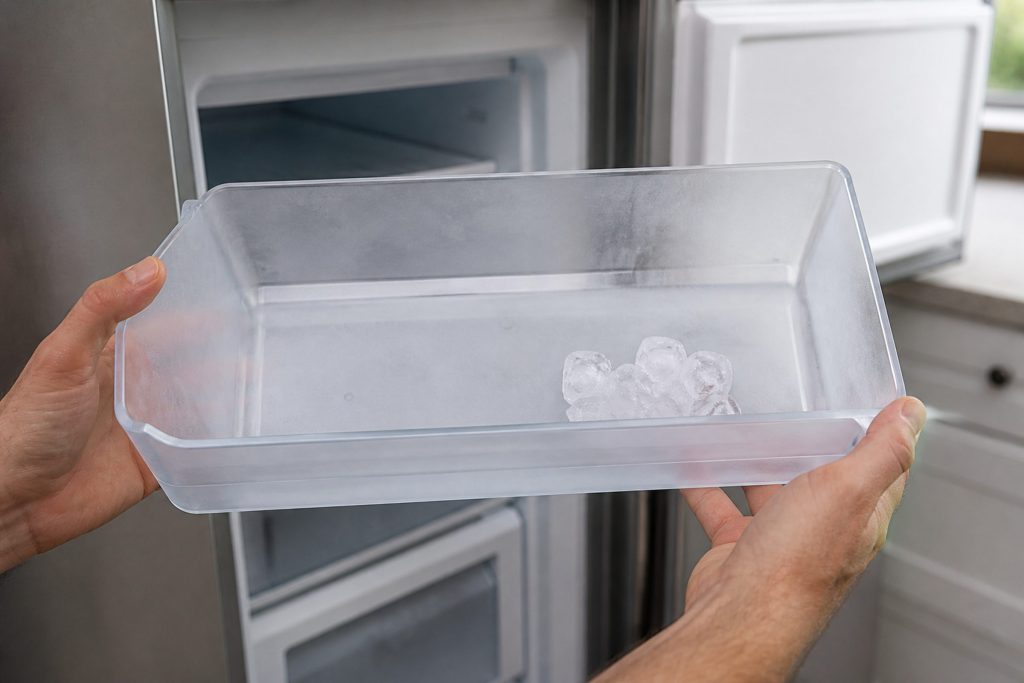
No ice, slow ice, small ice The ice maker has stopped
The single most serviced part of a modern French-door refrigerator, and a separate appliance entirely if yours is the undercounter machine. Which one you have changes almost everything about this call.
- No ice at all and water still dispensing
- Half the ice it used to make
- It stopped after a filter change or a cleaning
-
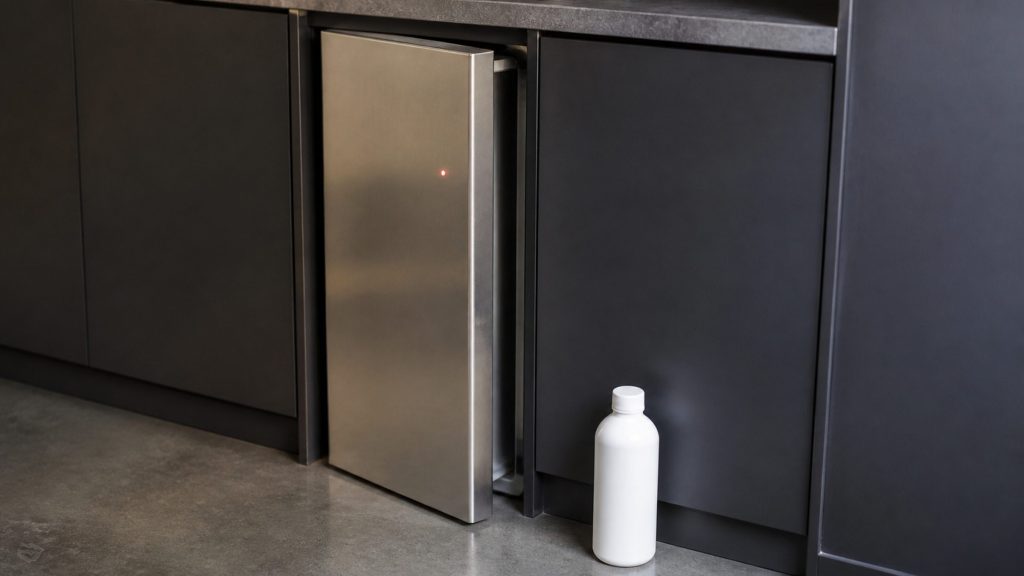
Or a light blinking red The ice machine will not restart after cleaning
Common on the undercounter machines and usually not a failure at all. A cleaning cycle that has not been completed and acknowledged leaves the machine sitting there with a light blinking at you, doing nothing.
- A red light blinking after a cleaning cycle
- The power button flashing and no ice
- It ran the cleaning cycle and then stopped
-
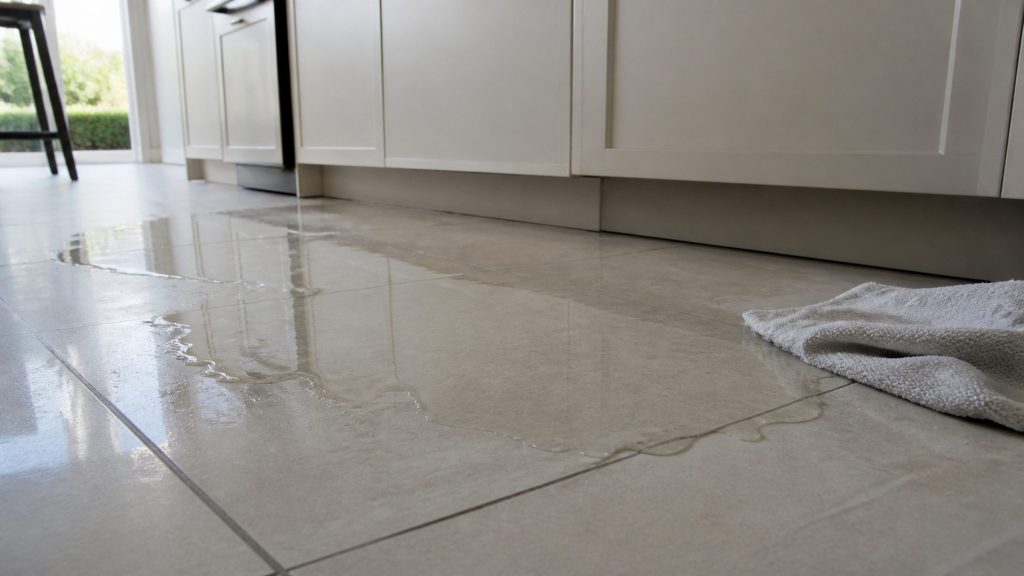
Find the source before the puddle There is water on the floor
Water on a kitchen floor is the one symptom worth acting on the same day, because what it damages is rarely the appliance. A puddle also travels, so where it appears is often nowhere near where it started.
- Water at the front of the dishwasher door
- A puddle under the refrigerator, appearing overnight
- Water inside the cabinet rather than under it
-
Nothing else has changed It has started making a new noise
A new sound is a real signal rather than a nuisance, and it is usually the earliest warning you get. Caught while it is only a noise, most of the causes on this page are small; left until it stops, several of them are not.
- A hum or a buzz that was not there before
- A squeal that comes and goes
- A clicking every few minutes with nothing else wrong
-
What a reset can and cannot do How to reset it
One of the most searched things about this whole make, and one of the most misunderstood. There is no reset button on most of these appliances — what there is is a power cycle, and a set of feature resets that do very specific jobs.
- Looking for a reset button that does not exist
- A filter light that will not go out
- A machine that needs restarting after a storm
What we do on it
Repairs we carry out on KitchenAid ice makers
Starting figures for this equipment in South Florida. The exact cost is confirmed after an on-site diagnostic — and this is not the whole list of what can go wrong, so call if your problem is not here.
-
from $95 Diagnostic visit
We read what the appliance is reporting — a code on a display, or the flashes on a dishwasher Clean light — then measure before saying anything about the repair. The fee is credited toward the work when you go ahead.
- The code read on site, including blink codes
- Measured rather than guessed
- Credited toward the repair
-
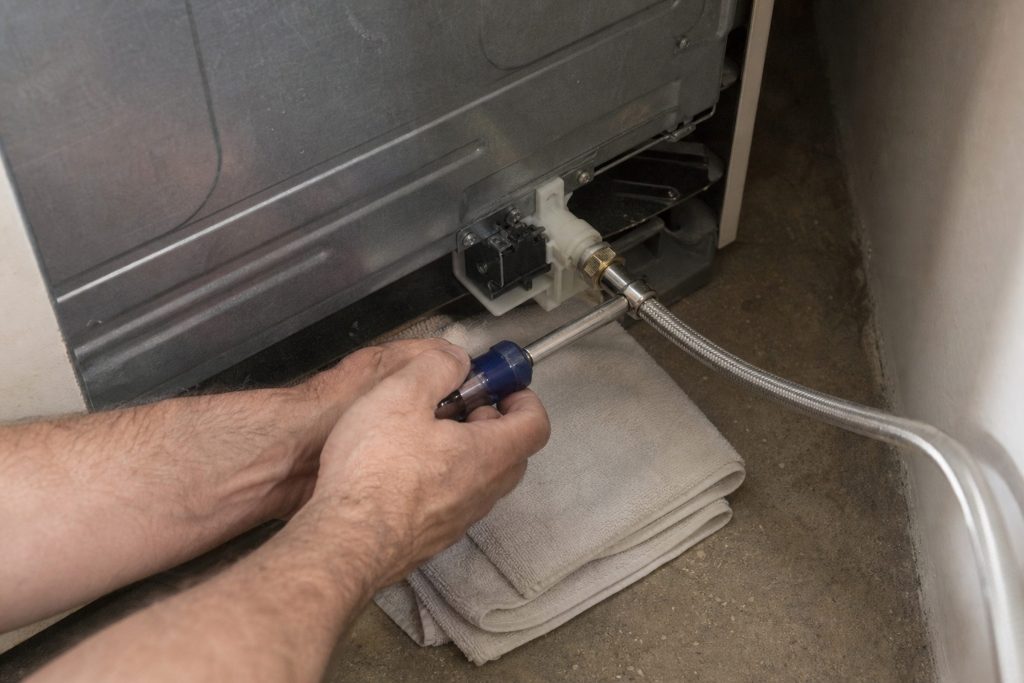
from $175 Refrigerator water & dispenser repair
No water at the door, a dispenser that drips, or water arriving on the floor instead of in the glass. Most of it starts at the inlet valve, the filter head or a defrost drain, and almost none of it starts where the puddle is.
- Inlet valve, filter head and line pressure checked in order
- Defrost drain cleared where the water is coming from inside
- Dispenser switch, chute and door checked as one assembly
-
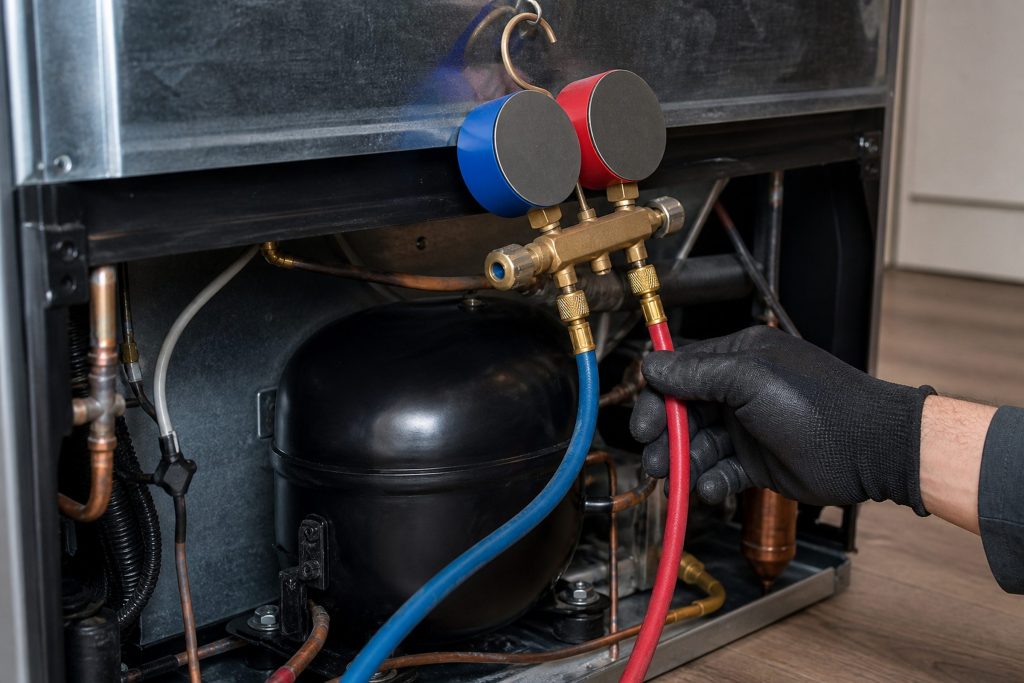
from $650 Sealed system & compressor repair
Refrigerant circuit work — the biggest repair on any cold appliance, and the one where the diagnosis matters more than the part. Everything cheaper is ruled out first, and if the job is not worth doing you will hear that on the visit.
- Everything cheaper ruled out before a circuit is opened
- Leak located and the drier replaced, not just a recharge
- Held at set point under load before we leave
-
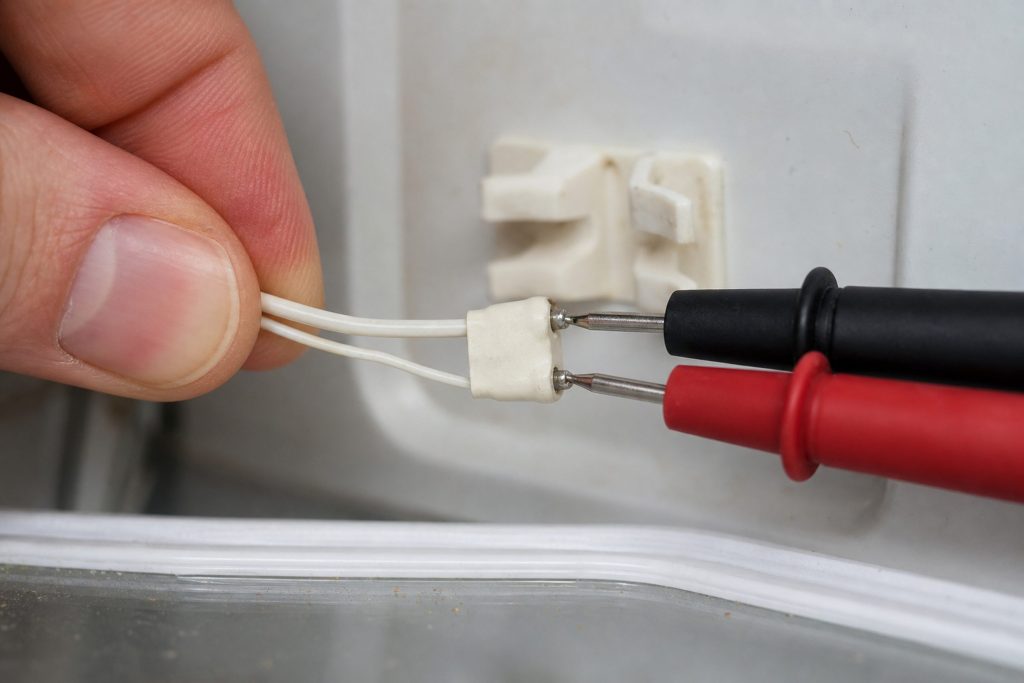
from $225 Refrigeration control & sensor repair
A cabinet that reads right and behaves wrong, one zone warm while the other is perfect, or a panel that has not been the same since the power came back. This is the electronics rather than the cooling.
- Thermistors read against their own curve, not by feel
- Power-outage notices and resets cleared properly first
- Board and panel proved separately before either is ordered
-
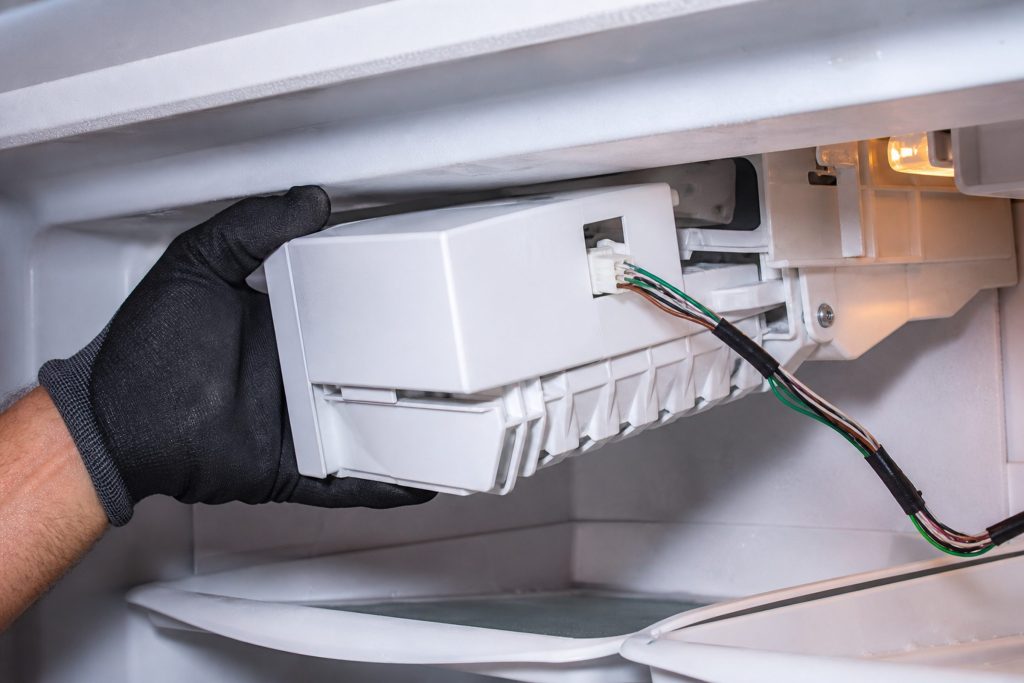
from $185 Ice maker fill & harvest repair
No ice, small ice, or cubes that form and refuse to let go. Two different appliances share this repair — the module inside a refrigerator and the undercounter machine that does nothing else — and knowing which one you have changes the visit.
- Water in, then harvest, then the module — in that order
- Frozen fill tubes cleared and the reason found
- Bin sensing checked before the ice maker is blamed
-

from $145 Ice machine cleaning & descaling
The maintenance that keeps an undercounter ice machine out of the repair pages. In this water it wants doing more often than the manual assumes, and it is the difference between cloudy cubes and a stopped machine.
- Evaporator, water path and pump descaled, not just wiped
- Bin, scoop and drain cleaned by hand
- Machine restarted and proved through a full harvest
-
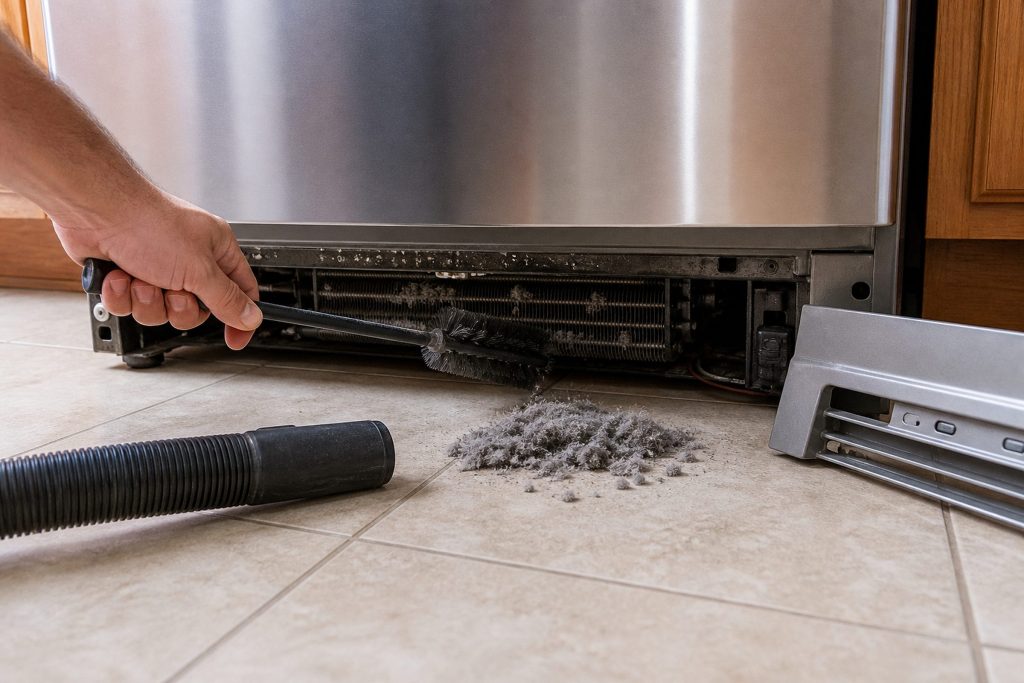
from $165 Appliance maintenance
A planned visit rather than an emergency one: filters, drains, coils, seals and ducts on whichever appliances you want looked at, in one appointment. Most of the expensive repairs on this list are prevented by an hour spent on this.
- Several appliances in one visit rather than one call each
- Filters, drains, coils, seals and ducts
- A written note of anything worth watching
-
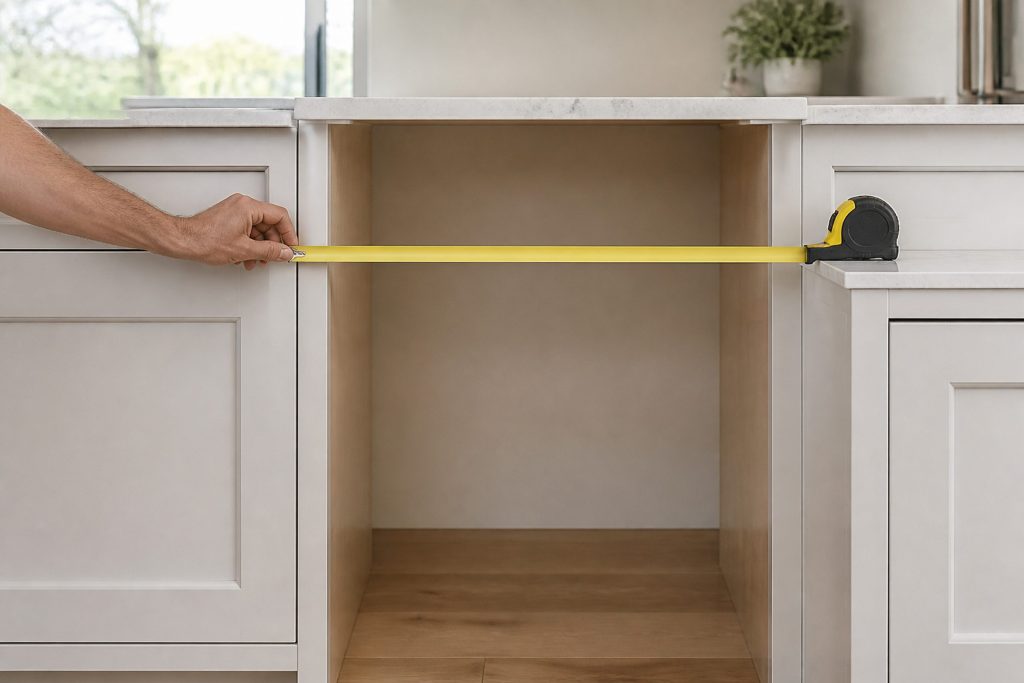
from $185 Appliance installation
Fitting a replacement into an opening that was built for something else — levelling, water, drainage, ventilation and the panel front. Most of what goes wrong in the first year of a new appliance is decided on the day it goes in.
- Levelled, sealed and connected, not just pushed into the gap
- Water, drain and ventilation checked rather than assumed
- The old appliance disconnected safely
In more detail
About KitchenAid ice makers
The two machines, and why we ask which
The undercounter machines are 15 and 18 inches wide, make 25 or 35 pounds a day, and come panel-ready or in stainless. They plumb in and they drain. The ice maker in a refrigerator is a module in the freezer or in the door and has no drain at all. Same words, different appliance, different visit.
What actually goes wrong
- Water in. Supply valve, filter, inlet valve, and a fill tube that has frozen — which stops the ice and then hides why.
- Water out, on the undercounter machines. A slow drain will stop a machine cold.
- Scale. The evaporator plate, the pump and the water path, in water this hard. It shows first as cloudy or small cubes.
- The harvest. Cubes that form and will not release, which is usually the hot-gas valve or the sensor watching the plate.
- The ice maker module or the ejector on the refrigerator machines, and the bin thermostat or optics that tell it the bin is full when it is not.
Why South Florida is hard on these
Warm ambient air, hard water and near-constant demand. An ice maker in a Miami kitchen runs closer to its limit for more of the year than the same machine anywhere north, and the two things that suffer are the condenser it breathes through and the scale in its water path. Both are maintenance rather than repair, right up until they are not.
What to have ready when you call
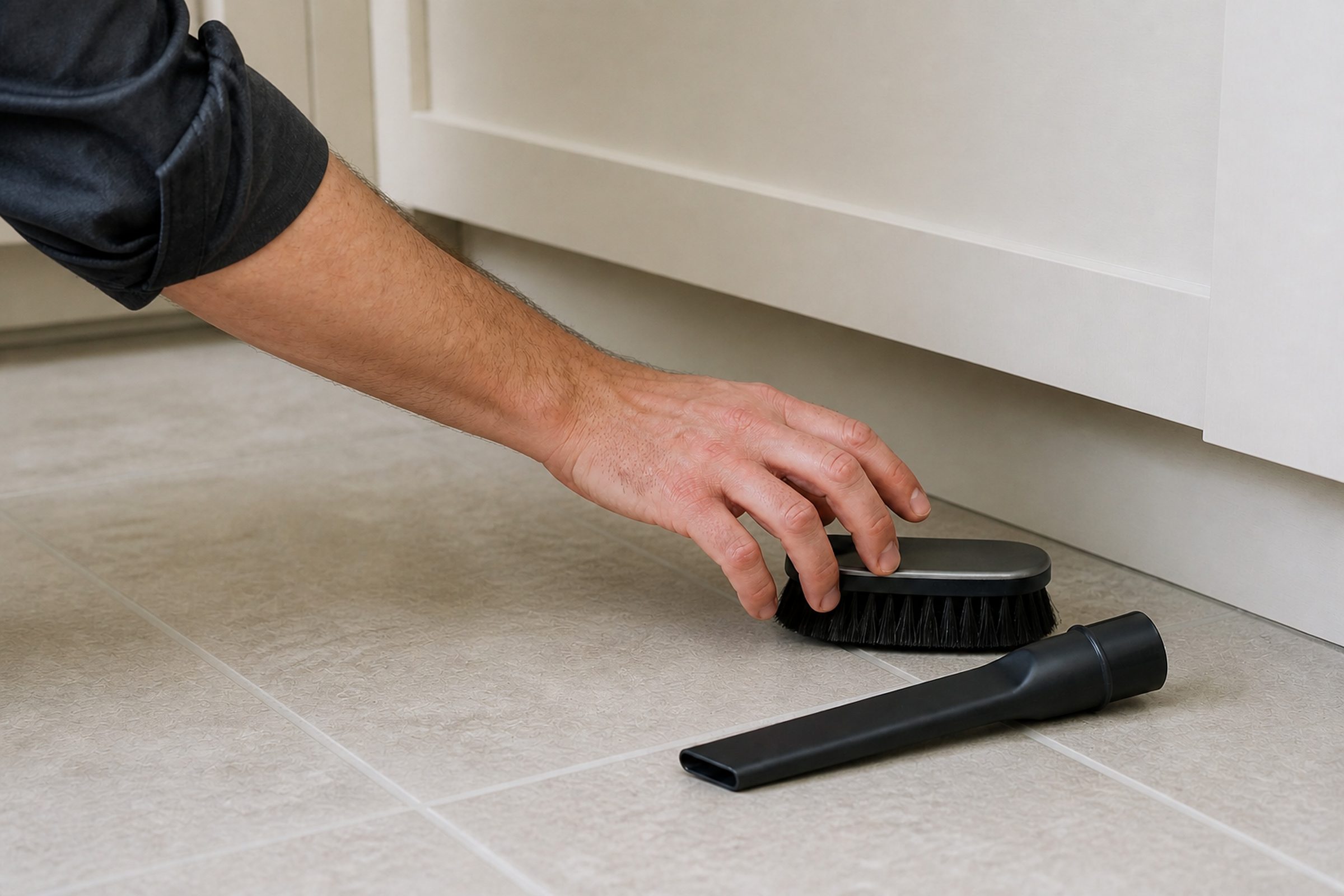
The model number, whether it is undercounter or inside a refrigerator, whether it drains to a pipe or a pump, and when it last had a cleaning cycle.
This article is based on:
- Official manufacturer documentation
- Internal repair procedures
- Technician repair history
- Company quality standards
Before you book
Questions about KitchenAid ice makers
How often does an undercounter ice maker need cleaning?
More often here than the manual assumes — realistically a couple of times a year, and more if it is in a bar area or outdoors under cover. These machines run a cleaning cycle themselves with the maker's solution; what they cannot do is clean the bin and the scoop, which is where most of what people can see actually lives.
It will not start again after I cleaned it.
Very common and usually not a failure. The cleaning cycle has to finish and be acknowledged, the drain has to be clear, and on most of these the machine needs the power cycling before it goes back to making ice. If it has run a cleaning cycle and then sat, that is the sequence to walk through before anybody is called out.
What is Clear Ice, and why does mine look cloudy now?
Clear ice is made by freezing slowly in layers so the air and minerals are pushed out; cloudy ice means that process is being cut short. Water quality and a scaled evaporator are the usual reasons, and both are fixable. It is a good early signal — cloudy ice usually shows up months before a machine stops.
The one in my refrigerator has stopped and everything else is fine.
Then work outward: the shut-off arm or switch, the filter if it is overdue, the fill tube frozen solid, the inlet valve, and only then the ice maker module itself. A refrigerator ice maker is a small machine bolted into a cold box, and most of what stops it is water arriving rather than the module.
Does an undercounter machine need a drain?
Most of them do, and it is the part people forget exists. A drain that is slow or blocked will stop a machine that is otherwise perfect, and a gravity drain that was installed with too little fall never worked properly in the first place. It is worth mentioning when you book whether yours drains or has a pump.
Where we do it
Across Miami-Dade, Broward, and Palm Beach
Same terms everywhere we go: an on-site diagnostic first, the price agreed in writing, and the exact figure confirmed once we have seen the unit.
Neighborhoods people ask for by name