Maintenance & Prevention
How Often to Clean KitchenAid Dishwasher Filters, and Why the Glasses Are Cloudy
Clean the filter assembly in the base of a KitchenAid dishwasher about once a month, check the spray arm jets quarterly, wipe the door seal and the tub lip quarterly, and run a dishwasher cleaner or a white vinegar rinse through an empty hot cycle every month or two. That schedule handles residue and smell. It does not handle cloudy glassware, which is water hardness rather than dirt: KitchenAid's own manual strongly recommends a water softener at 15 grains or more and treats 7 to 12 grains as medium to hard, and its stated remedies for spotting and filming are to raise the rinse aid setting, switch to tablets or packs rather than gel, and run a cleaner periodically. Miami-Dade and Broward both soften their supply at the treatment plant because the aquifer beneath them is hard, so the only number that matters is your own — and you get it from your utility or a test strip, not from a web page.
The full guide
How often to clean KitchenAid dishwasher parts, and which clock each one runs on
There are three maintenance jobs on this machine and they run on three different schedules. None of them is complicated, and together they take about fifteen minutes a month.
Monthly: the filter assembly. Pull the lower rack. In the floor of the tub is a cylindrical filter that turns counterclockwise and lifts out, and a flat filter underneath it that lifts away once the cylinder is gone. Rinse both under a hot tap and brush them with a soft brush. That word is the job: the cylinder looks dirty and rinses clean in seconds, while the flat mesh looks clean and is not, because grease films it in a way running water does not lift. Seat the flat one first, twist the cylinder back until it locks, and confirm it is locked.
Quarterly: the spray arms and the seal. Turn each arm by hand — it should spin freely. Take it off, which is a twist or a single clip, and hold it up to a window. You are looking through the jets, and a clear arm shows daylight through every hole. Narrowed holes come clear with a cocktail stick. Then wipe the door seal all the way around and the lip of the tub the door closes onto, which is where a smell begins.
Every month or two: an empty hot cycle with a dishwasher cleaner or a cup of white vinegar in a cup on the top rack. This is the finishing step, and it only works if the first two have been done.
That is the whole schedule, and it deals with residue, drainage and smell. What it will not deal with is the thing that brought most people to this page.
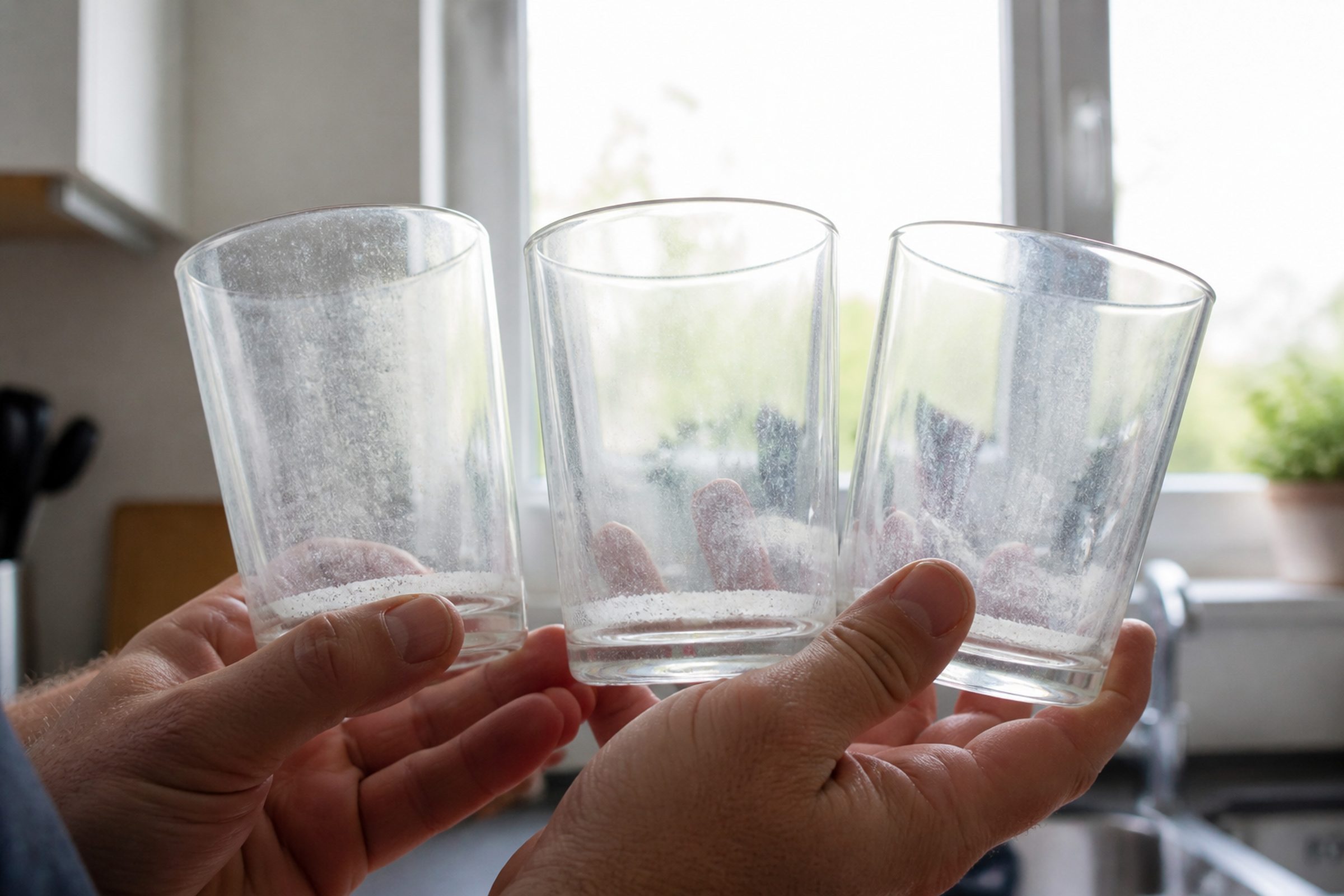
Cloudy glasses are not a dirty dishwasher
If your glassware comes out with a white film or fine spots, and it wipes off with a fingernail or comes back after vinegar, you are looking at minerals from the water rather than dirt from the dishes. No amount of cleaning changes it, because there is nothing to clean.
KitchenAid treats this as a water question in its own manual, and its remedies are specific:
- Raise the rinse aid setting. The dispenser leaves the factory around 2 or 3 and it adjusts upward. Rinse aid is not a luxury on hard water; it is what stops water sheeting into droplets that dry into spots.
- Use tablets or packs rather than gel. The maker names this directly for spotting and filming.
- Run a cleaner periodically, or a white vinegar rinse, in an empty hot cycle.
- Consider a water softener. KitchenAid's manual strongly recommends one at 15 grains or more, and classifies 7 to 12 grains as medium to hard.
Those thresholds are the manufacturer's, they are the same thresholds everywhere in the country, and they are the useful part.
The honest part: we will not tell you Miami's hardness number
You will find pages that give you one. We are not going to, and the reason is worth your time.
What is solidly established: Miami-Dade Water and Sewer's own water quality reports state that the water from the Alexander Orr plant receives lime treatment to reduce hardness, and that the Hialeah and Preston plants use enhanced softening. Broward County likewise treats its groundwater with lime to reduce hardness and color. Both utilities soften on purpose, at the plant, because the source — the shallow limestone Biscayne Aquifer under all three counties — is hard. That is first-party, it is in their own documents, and it settles the direction: the water arriving at your dishwasher started hard and has been treated.
What is not established is a figure. Hardness is not a regulated contaminant, so an annual water quality report is not required to publish a number, and the Miami-Dade reports do not. The figures circulating for this city come from third-party sites, most of them selling softeners, and they disagree with each other by a factor of five for the same address — one gives about 4 grains, another 11.5, another the equivalent of more than 22. At least one attributes its number to a county report that does not contain it. Publishing any one of those would be inventing a fact, and this site does not do that.
So here is how to get your own number, which is the only one your machine cares about:
- Call your utility — Miami-Dade WASD, Broward County Water and Wastewater, or your city system — and ask for hardness in grains per gallon. It is a routine question and they answer it.
- Or test at your tap. A hardness test strip or a small kit costs a few dollars, takes a minute, and measures the water your dishwasher is actually filling with, including whatever your building's plumbing and any existing treatment do to it.
Then compare it to the maker's own thresholds above. Under 6 grains and rinse aid alone is plenty. Between 7 and 12 and you want rinse aid turned up and tablets rather than gel. At 15 or more, the manufacturer's own recommendation is a softener, and at that point a softener protects far more than glassware.
What hard water quietly costs, beyond appearance
Scale is not only cosmetic. Three things inside the machine pay for it, and none of them are the dishes.
The heating circuit. An element or a heat pump coated in scale transfers heat poorly, runs hotter to compensate, and ages faster.
The spray jets. They close gradually rather than suddenly, which is exactly why "it does not clean as well as it used to" arrives over two or three years and never has a starting date.
The inlet valve and the drain path. Residue that gets past a neglected filter ends up somewhere, and it ends up there.
When it is not the water and not the cleaning
Dishes coming out gritty with clean filters and clear jets, water standing in the tub at the end of a cycle, a machine that will not fill, or a blinking Clean light are not maintenance. On most of these dishwashers the blinking Clean light is the error code, because the machine has no display — and it deserves reading rather than resetting.
Independent KitchenAid service across Miami-Dade, Broward and Palm Beach. We are not affiliated with, authorized by or endorsed by any manufacturer.
If it turns out to be a repair
What this leads to, and what it costs
Every job on this site is priced the same way: an on-site diagnostic first, the figure agreed in writing before anybody starts.
-
Integrated control · Front control · Third rack · ProDry · 24" · 39–44 dBA Dishwashers
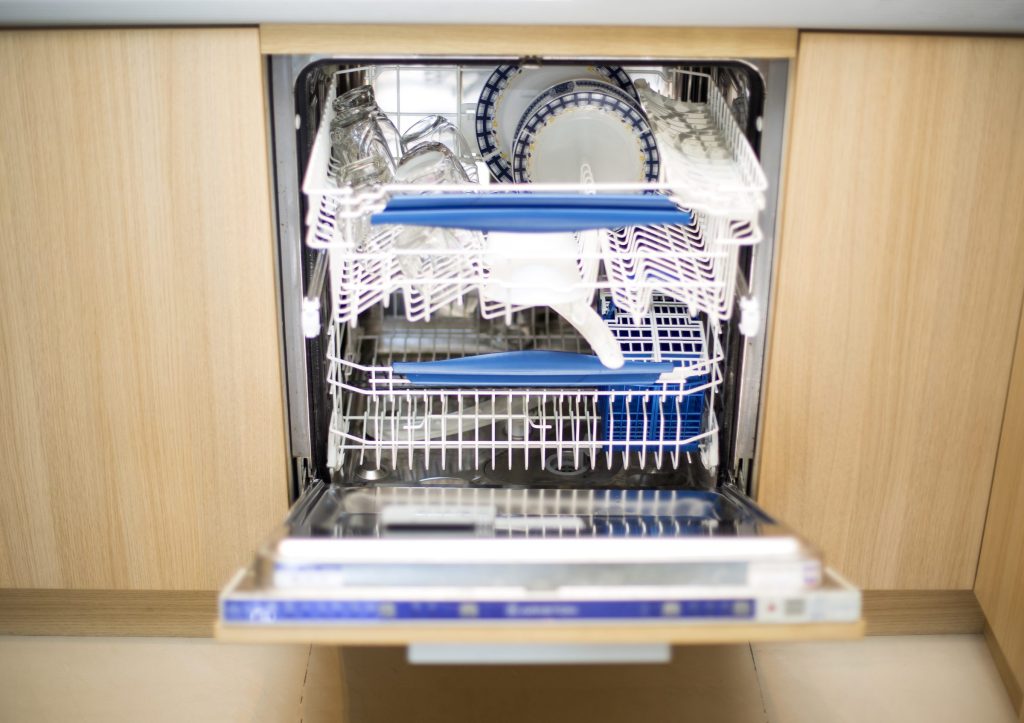
The appliance this name means in a kitchen, and the one that tells you the most before anybody arrives. A KitchenAid dishwasher with no display still reports its code — it flashes it on the Clean light, in two bursts, and those two numbers are a diagnosis you can read from across the room before anybody opens anything.
- The Clean light blinking a set number of times, over and over
- A cycle that finishes with water still standing in the tub
- Dishes coming out gritty, or coming out wet
-
from $165 Appliance maintenance
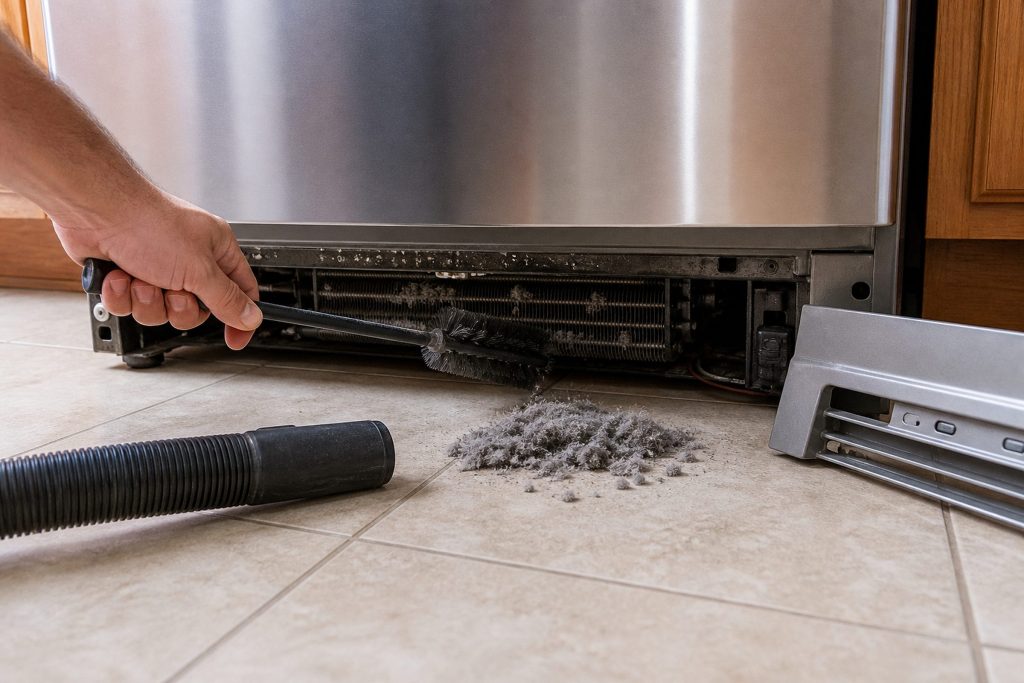
A planned visit rather than an emergency one: filters, drains, coils, seals and ducts on whichever appliances you want looked at, in one appointment. Most of the expensive repairs on this list are prevented by an hour spent on this.
- Several appliances in one visit rather than one call each
- Filters, drains, coils, seals and ducts
- A written note of anything worth watching

Questions people ask about this
How do I clean my KitchenAid dishwasher filter?
Pull the lower rack out. In the floor of the tub there is a cylindrical filter that turns counterclockwise and lifts out, and a flat upper filter underneath it that lifts away once the cylinder is gone. Rinse both under a hot tap and brush them with a soft brush — brushing rather than rinsing is the whole difference, because the fine mesh looks clean when it is filmed with grease. Seat the flat one first, then twist the cylinder back until it locks, and check it is locked; a loose filter rattles and lets residue past.
How often are you supposed to clean your dishwasher?
Think of it as three clocks rather than one. The filter is monthly. The spray arms, the door seal and the tub lip are quarterly. An empty hot cycle with a dishwasher cleaner or a cup of white vinegar is every month or two, and it belongs after the mechanical work rather than instead of it. A cleaner run on loaded filters and scaled jets accomplishes very little, which is why people conclude the products do not work.
How do I deep clean my KitchenAid dishwasher?
Filters out and brushed, spray arms off and held up to the light with the blocked jets picked clear, door seal and tub lip wiped, the edge under the door where residue collects wiped, and then an empty cycle on the hottest setting with a cleaner. Do it in that order. Two hours once or twice a year, and it puts most machines back where they were.
Is white vinegar safe in a dishwasher?
As an occasional rinse in an empty machine, it is a long-standing practice and KitchenAid names it alongside a proprietary cleaner for hard water filming. Keep it occasional rather than routine, and keep it off the stainless exterior entirely — the maker warns specifically that vinegar-based and citrus-based cleaners, ammonia, bleach and abrasives can damage the finish, and says outright that this damage is not covered by warranty.
How do I find out how hard my water actually is?
Ask your own utility, or test it at your own tap. Miami-Dade Water and Sewer, Broward County Water and Wastewater and the city systems all publish an annual water quality report and all answer the phone, and hardness is a routine question. Be aware that hardness is not a regulated contaminant, so the annual report is not obliged to list it and often does not. A hardness test strip or a small test kit costs a few dollars and gives you your number at your kitchen sink, which is the number your dishwasher is actually working with.
Maintenance & Prevention
More guides like this one
-
How to Reset KitchenAid Refrigerator Water Filter Light, and Which Cartridge Is Yours
The light is a counter, not a sensor. It is not reporting anything about your water, and it will keep asking until somebody tells it the cartridge was changed.
Read more -
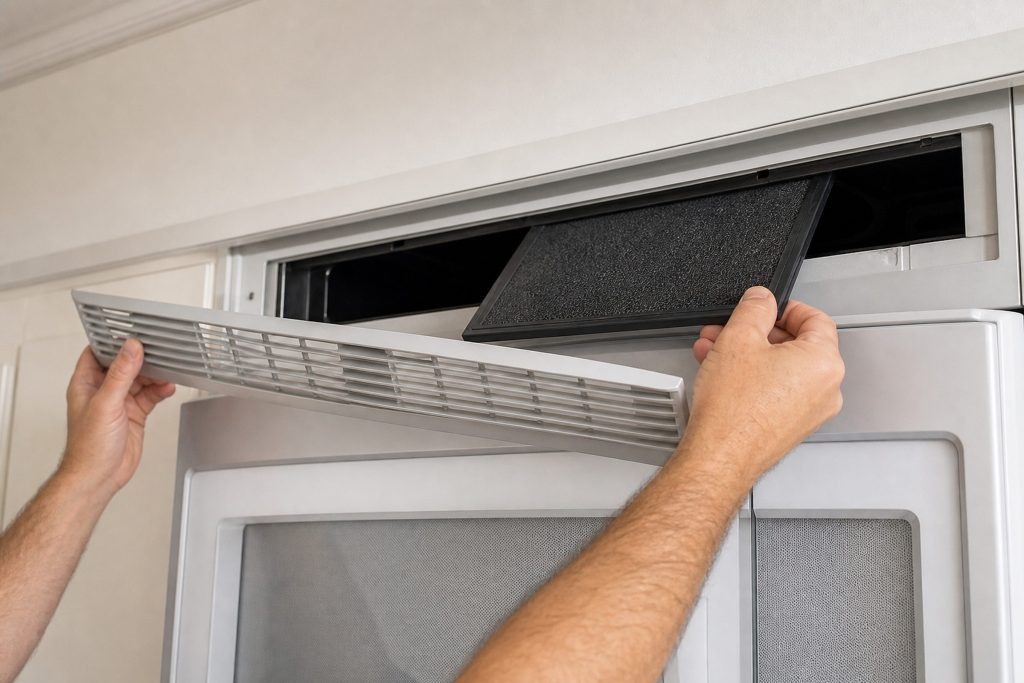
KitchenAid Microwave Charcoal Filter Replacement: The Part Behind the Grille
An over-the-range microwave is two appliances in one box. If it recirculates rather than ducting outside, there is a consumable filter behind the top grille that most owners have never seen.
Read more -
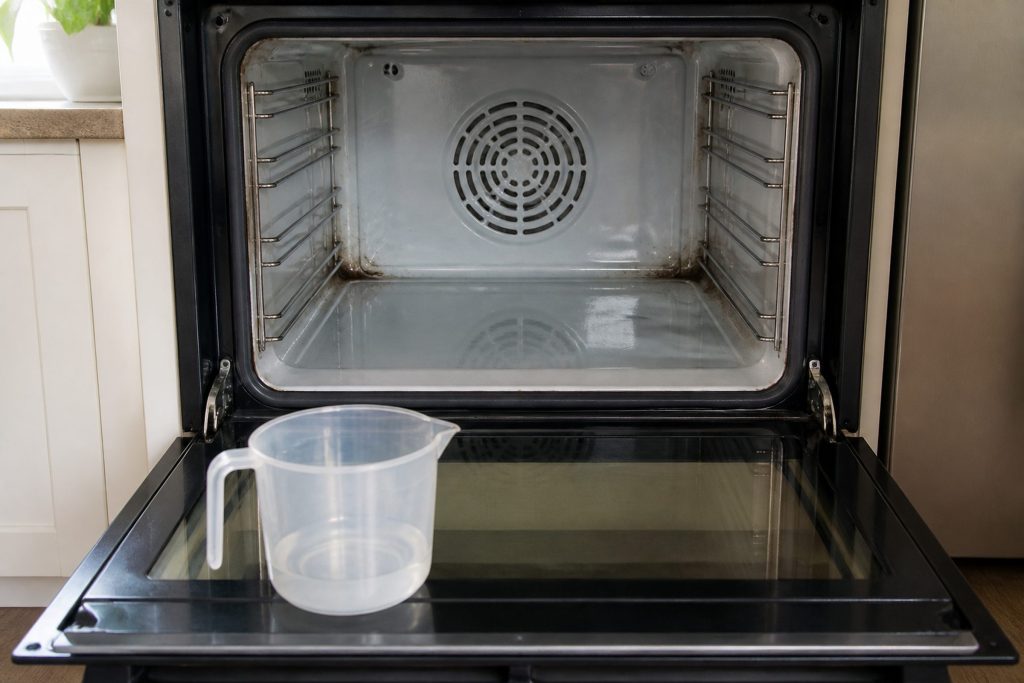
KitchenAid Oven AquaLift Self Clean or High Heat: Which One Do You Have?
One of these cycles runs at low temperature with water on the cavity floor and carries none of the risk of the other. It also will not shift what the other shifts, which is why people decide it is broken.
Read more
Tell us the model number and what it is doing.
This article is based on:
- Official manufacturer documentation
- Internal repair procedures
- Technician repair history
- Company quality standards