Maintenance & Prevention
How to Clean KitchenAid Dryer Ducts: The Whole Run, Not Just the Lint Screen
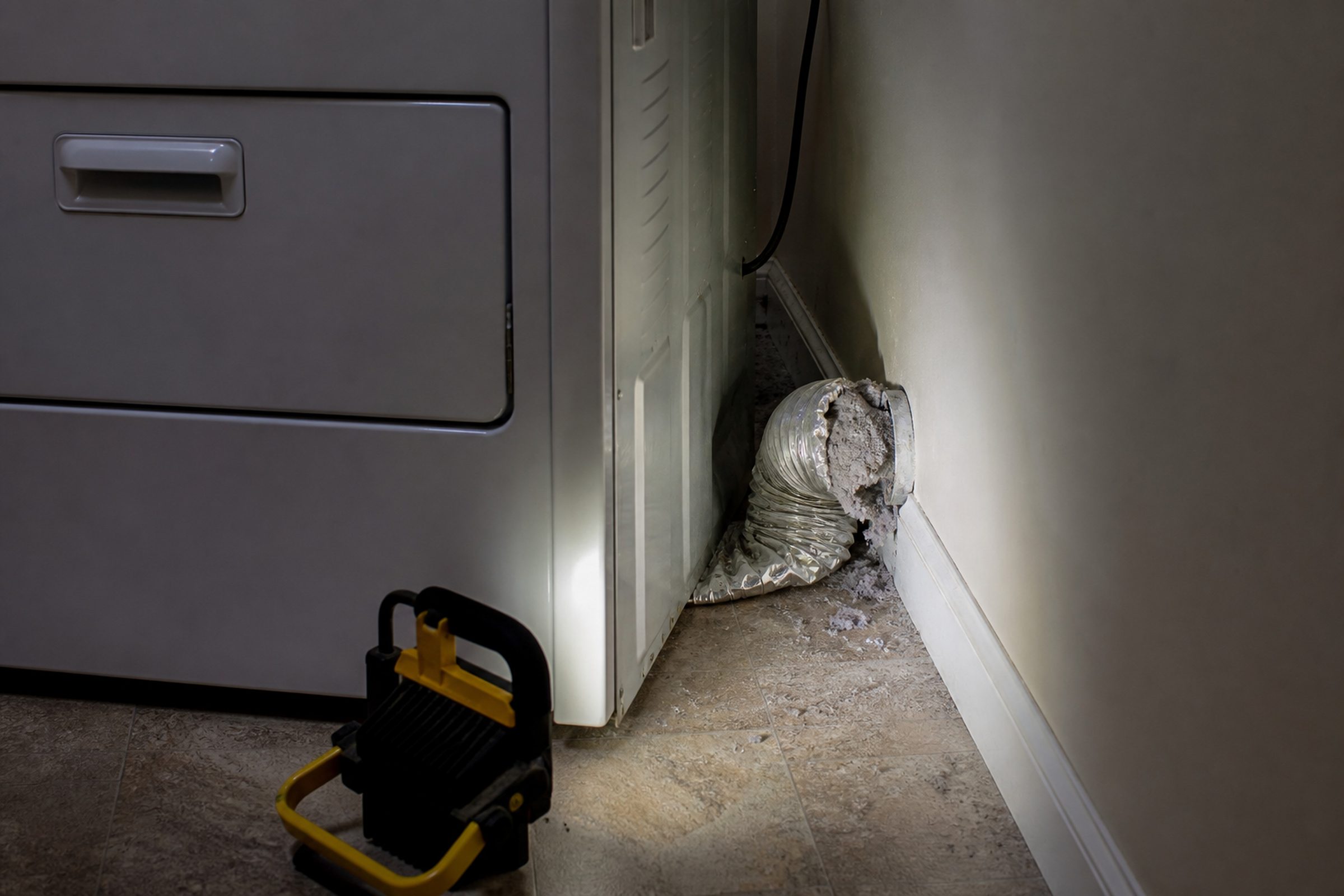
Clean the lint screen after every load, wash the film off it a few times a year, and once a year pull the machine out and clean the entire duct run — the flexible section behind the dryer, the pipe through the wall, and the flap outside where the air actually leaves. On a KitchenAid vented dryer, a restricted duct is behind most complaints about drying time, and in South Florida it matters more than it would anywhere drier, because the air the machine draws in is already carrying moisture and the duct has less margin to give. Disconnect the power at the outlet or the breaker before the machine is moved, brush the duct through from both ends, vacuum what falls out, and confirm the outside flap opens fully when the dryer runs.
The full guide
How to clean KitchenAid dryer vents, screens and ducts, end to end
KitchenAid stopped selling dryers in the United States, which is exactly why so little has been written about the ones still working. They are in laundry rooms and garages across Miami-Dade, Broward and Palm Beach, they are vented electric and gas machines, and they are repairable. They are also simple, which is good news: on a vented dryer, most of what looks like a failing machine is a duct.
The duct is not the appliance. It is the part of the system nobody bought, nobody owns emotionally, and nobody cleans — and it is responsible for the complaint we hear more than any other about these machines, which is that a load takes three cycles.
Start with the screen, then look under it
Take the lint off the screen after every load. That much most people do.
Here is the part most people do not do. A few times a year, run the screen under a tap. If water sits on the mesh in beads instead of passing straight through, the screen is filmed with fabric softener and dryer sheet residue. It looks perfectly clean and it is blocking air. Warm soapy water and a soft brush restore it in a minute.
Then get a vacuum crevice tool down into the slot the screen came out of. Lint packs into the bottom of that housing, and it does not leave on its own.
Cutting power, and the gas dryer caution
Before the machine moves: unplug an electric dryer, or switch off both halves of its double breaker.
On a gas dryer, the machine is tethered by a flexible gas line, and that connection is not something to lean on, kink or disconnect casually. Move it only as far as the line comfortably allows, and if the run is short, clean what you can reach from outside and have the rest done. That is a genuine safety line rather than a formality.
The run itself
Loosen the clamp and pull the duct off the machine's outlet. Expect the elbow immediately behind the dryer to be the worst section — it has the sharpest bend and it takes the wettest lint.
Brush the run through with a dryer vent brush on a flexible rod, working from the machine end. Then go outside and work from the other end. Lint you loosen has to come out rather than be pushed into the middle, so vacuum as you go at whichever end is open.
Check what the duct is made of while you have it in your hands. Rigid or semi-rigid metal has a smooth bore and holds its shape. Flexible foil accordion duct sags into low spots, crushes behind a machine pushed back too hard, and catches lint on every ridge. Where the installation allows the change, make it.
The flap outside, which decides everything
This is the step people skip and it is the one that most often finds the problem.
With the machine reconnected and running on air fluff, go outside and look at the vent. The flap or louvers should swing fully open with real airflow behind them — enough that you feel it on your hand.
What we find instead: flaps painted shut during a building repaint, louvers glued together with years of lint, screens retrofitted over the outlet that clog solid in a season, and nests. A perfect duct behind a closed flap is a closed duct. In condo buildings the outlet may be several floors from your laundry closet and shared, which is worth knowing before anybody starts pricing parts.
Why the humidity here changes the arithmetic
A vented dryer dries clothes by heating air, passing it through the drum, and throwing that now-wet air outside. The whole cycle depends on the outgoing air leaving freely.
In this climate two things work against it. The air the machine draws in — from the laundry room, from a garage — already carries a lot of water, so it can absorb less from your clothes. And the air the machine pushes out is going into outdoor air that is already near saturation for much of the year. Lint sitting in that duct is damp lint. It packs into a mat rather than blowing through, and it builds a restriction faster than the same machine would build one in Denver.
That is the practical difference: a partly blocked run that would be merely annoying in a dry state is not survivable here. Once a year, all the way to the flap.
What the duct is protecting
The thermal fuse. A blown thermal fuse on one of these machines is nearly always a symptom of a restricted vent rather than a failure of its own. Replacing the fuse without clearing the duct buys you a few weeks.
The heating element or the gas valve coils, which run hotter and cycle harder against a restriction.
The machine's own lifespan, and the clothes in it, which get cooked over three cycles instead of dried in one.
When it is not the duct
Book a visit when the duct is genuinely clear and one of these is true: the drum turns with no heat at all — on an electric machine check both halves of the breaker first, because half a double breaker can trip and leave you exactly this symptom; the machine squeals or rumbles, which is drum rollers, the idler pulley or a rear bearing and is a sensible repair on these; the machine will not start or stops the moment the button is released; or cycles end early with damp clothes, which is often moisture sensor bars in the drum coated with softener residue.
And a machine that has ever stood in water after a storm deserves a call before it is switched on again. That is a safety question, not a formality.
Independent KitchenAid service across Miami-Dade, Broward and Palm Beach. We are not affiliated with, authorized by or endorsed by any manufacturer.
If it turns out to be a repair
What this leads to, and what it costs
Every job on this site is priced the same way: an on-site diagnostic first, the figure agreed in writing before anybody starts.
-
Electric and gas · Vented · Ensemble front-load · No longer manufactured · Still repaired Dryers
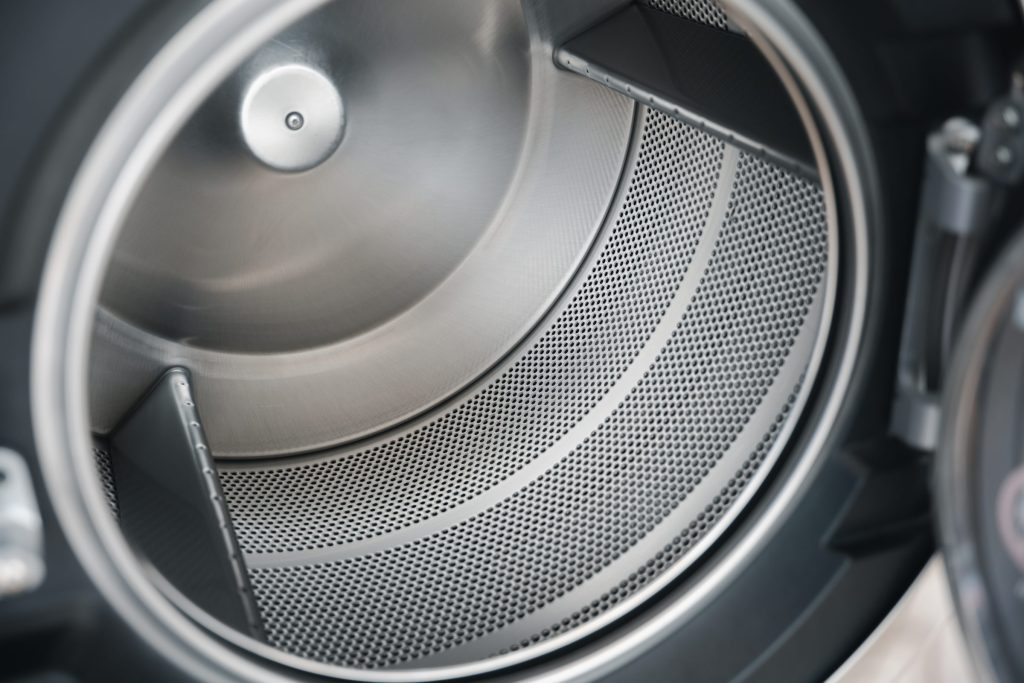
The same situation as the washer next to it, and usually the same laundry room. KitchenAid stopped selling dryers in the United States, and the ones still working here are vented electric and gas machines that people search for by model number to this day. A vented dryer is a simple appliance, which is why so many of these calls end well.
- A drum that turns with no heat at all
- A cycle that runs and runs and the clothes stay damp
- A machine that will not start, or stops the moment the button is released

Questions people ask about this
How do I clean a KitchenAid dryer that takes three cycles to dry a load?
Treat it as the duct until proved otherwise. Clean the screen, vacuum the housing under it, pull the machine out, disconnect the duct and brush the whole run to the outside, and then confirm the flap out there actually opens while the machine is running. That sequence resolves the large majority of these complaints on a vented machine. If drying time is still long with a genuinely clear duct, the suspects become the heating circuit, a cycling thermostat, or the moisture sensor bars in the drum.
How often does the duct need doing in South Florida?
Once a year for a normal household, and twice for a large family or a machine in a garage or closet with a long run. The reason it is more often here is humidity: a vented dryer works by throwing warm wet air outside, and in August it is pushing that air into outdoor air already close to saturated. Lint in that environment packs damp rather than blowing through, so a partial restriction that a dry climate would tolerate becomes a real one here.
Is a blocked dryer vent actually dangerous?
Yes, and it is the one item on this page to treat urgently rather than at your convenience. A restricted duct traps heat inside the cabinet, and lint is the fuel sitting in that heat. A dryer that is hot to the touch on the outside, that smells scorched, or that keeps blowing its thermal fuse is telling you about the duct rather than about itself. Stop using it and deal with the run.
Can I clean the duct without moving the dryer?
Partly. You can brush from the outside vent inward, which is worth doing and reaches the far end of the run. What you cannot reach that way is the elbow immediately behind the machine, which is where the sharpest bend and the heaviest packing usually are. On a gas dryer especially, if moving the machine makes you uneasy, brushing from outside and booking the rest is a sensible split.
Should I replace flexible foil duct with rigid pipe?
Where the installation allows it, yes. Rigid or semi-rigid metal has a smooth bore, holds its shape, and does not sag into the low spot that collects damp lint. Foil accordion duct crushes behind a machine that has been pushed back too far, and every ridge in it catches. Keep the run as short and as straight as the room permits and avoid a bend right at the outlet.
Maintenance & Prevention
More guides like this one
-

How to Reset KitchenAid Refrigerator Water Filter Light, and Which Cartridge Is Yours
The light is a counter, not a sensor. It is not reporting anything about your water, and it will keep asking until somebody tells it the cartridge was changed.
Read more -
KitchenAid Microwave Charcoal Filter Replacement: The Part Behind the Grille
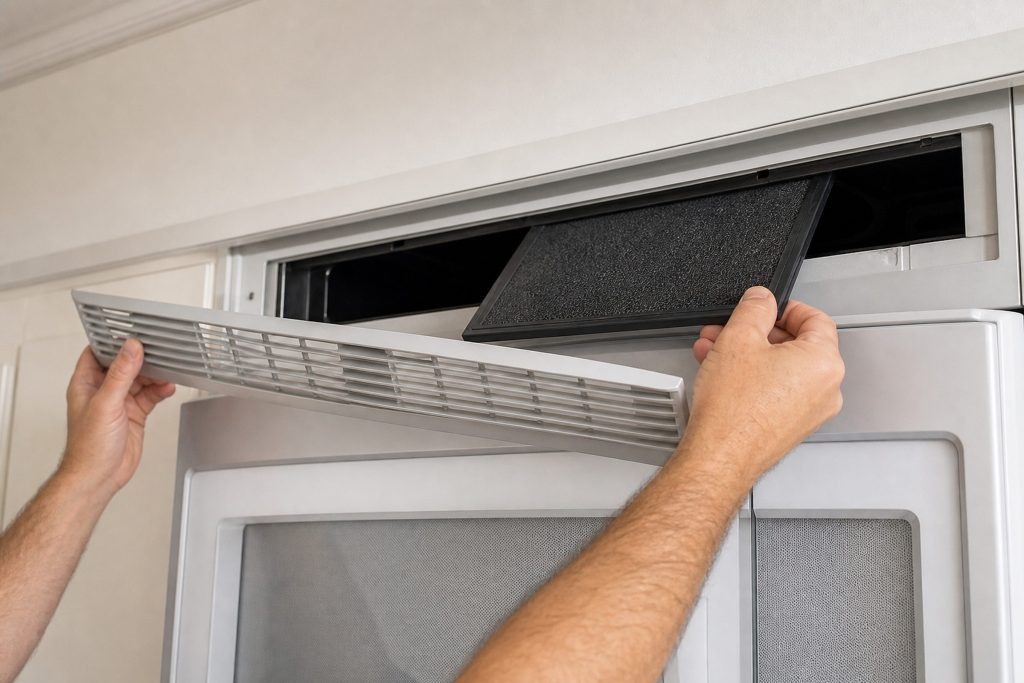
An over-the-range microwave is two appliances in one box. If it recirculates rather than ducting outside, there is a consumable filter behind the top grille that most owners have never seen.
Read more -
KitchenAid Oven AquaLift Self Clean or High Heat: Which One Do You Have?
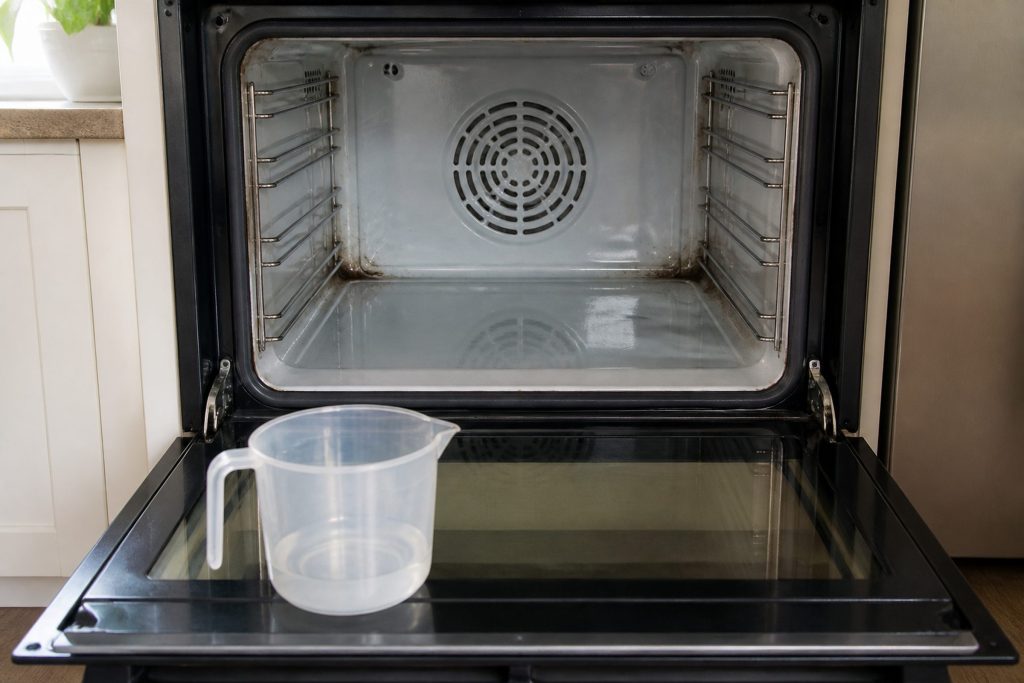
One of these cycles runs at low temperature with water on the cavity floor and carries none of the risk of the other. It also will not shift what the other shifts, which is why people decide it is broken.
Read more
Tell us the model number and what it is doing.
This article is based on:
- Official manufacturer documentation
- Internal repair procedures
- Technician repair history
- Company quality standards