Appliance
KitchenAid dishwashers
The appliance this name means in a kitchen, and the one that tells you the most before anybody arrives. A KitchenAid dishwasher with no display still reports its code — it flashes it on the Clean light, in two bursts, and those two numbers are a diagnosis you can read from across the room before anybody opens anything.
- 13 symptoms we are called out to
- From $95 diagnostic, credited to the repair
- 59 cities and neighborhoods covered
- OEM parts available on order
The short version
What this equipment is, for a repair
Configurations
Integrated control · Front control · Third rack · ProDry · 24" · 39–44 dBA
Access
Planned before the visit, not discovered on arrival
Parts
OEM, available on order
Diagnostic
From $95, credited to the repair
What goes wrong with it
Symptoms we are called out to on KitchenAid dishwashers
Each one covers the likely causes in the order they are worth checking, and what to do in five minutes before booking anything.
-
That blinking is a code The Clean light is blinking
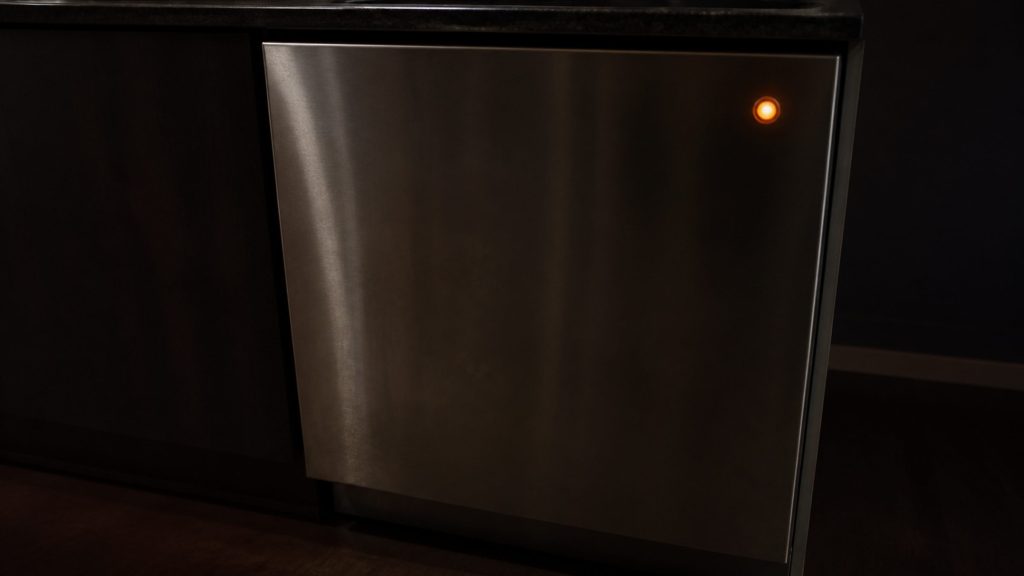
The most searched complaint on this whole make, and the one most people throw away by canceling it. A blinking Clean light is not a general complaint — it is the same error code a machine with a display would print, delivered as flashes because yours has no numbers to print it on.
- Clean blinking a set number of times, over and over
- Blinking and beeping together
- It blinks, and the cycle will not start
-
Water still in the tub Dishwasher will not drain
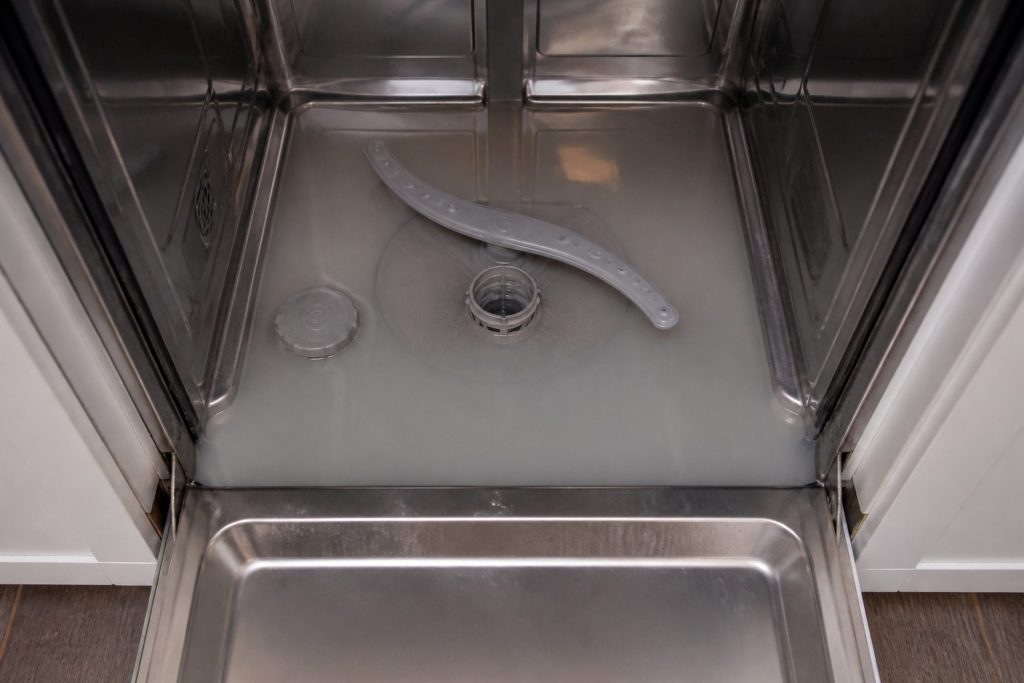
A cycle that finishes — or stops — with water standing in the bottom of the tub. Four of the five things that cause this are outside the machine or free to clear, which is why this one is worth ten minutes before it is worth a visit.
- Standing water at the end of every cycle
- You can hear the pump trying
- It drains if you run it again
-
Gritty, filmed or still soiled Dishes are coming out dirty
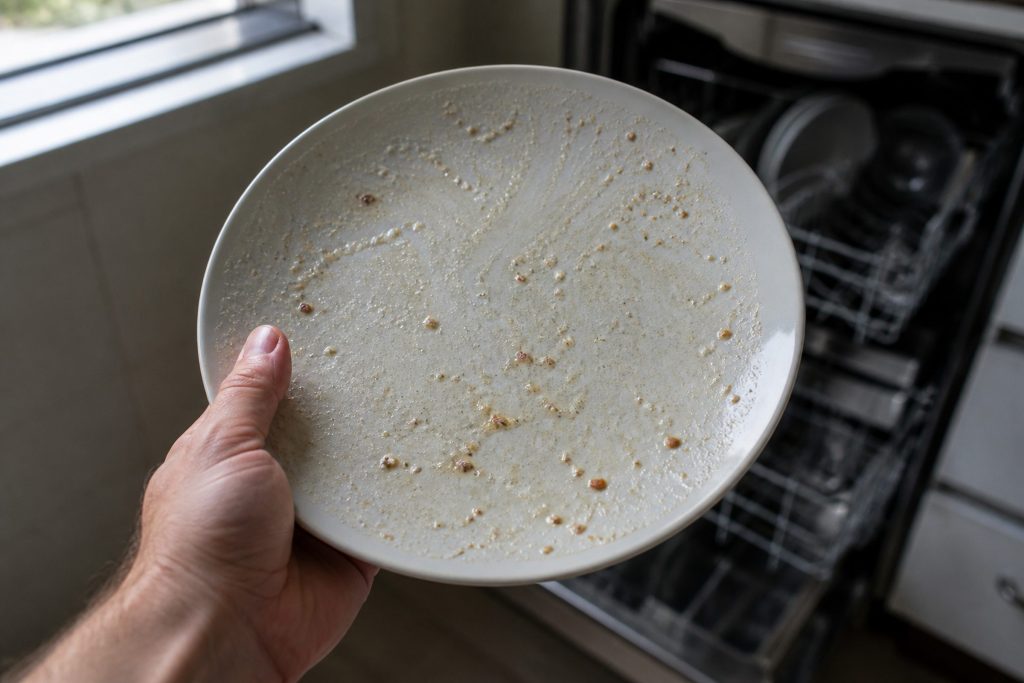
Three different complaints hide under one sentence: food still on the plates, grit deposited on them, and a white film on glassware that is not soil at all. They have different causes and only one of them is usually a repair.
- Grit on plates that went in clean-ish
- A white film on glasses that will not wipe off
- The top rack fine and the bottom rack dirty
-
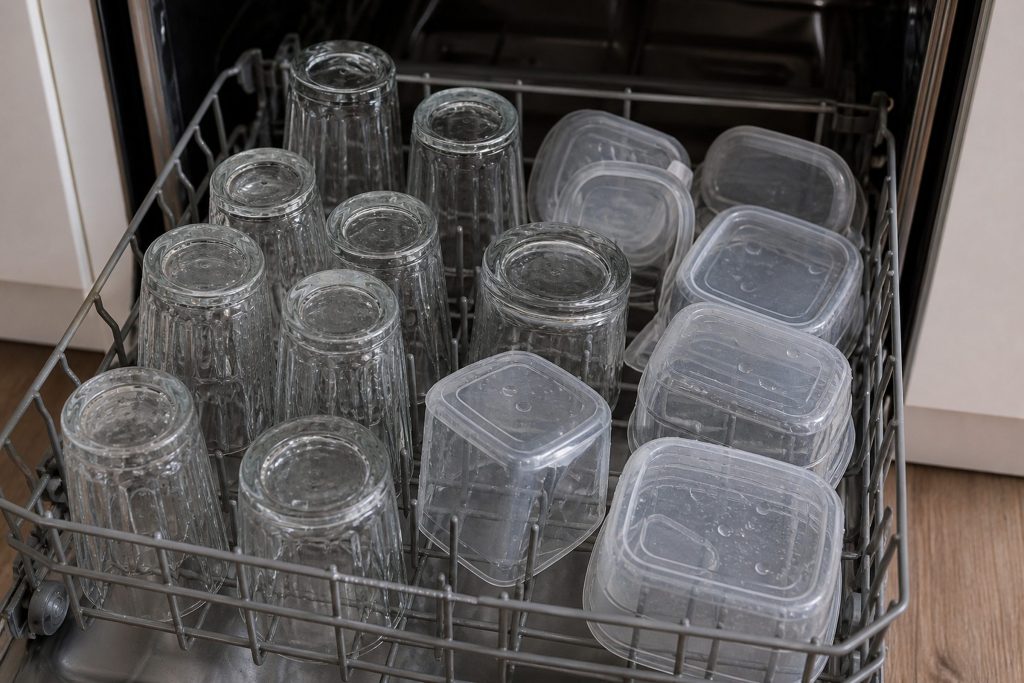
Usually not a breakdown Everything is clean and nothing is dry
One of the few pages here that mostly exists to save you a service call. These machines dry with a fan and residual heat rather than by baking the load, and three of the four usual causes are free to fix at the sink.
- Plastics wet, everything else nearly dry
- Water pooled in the bottom of upturned cups
- It dried fine until a few weeks ago
-
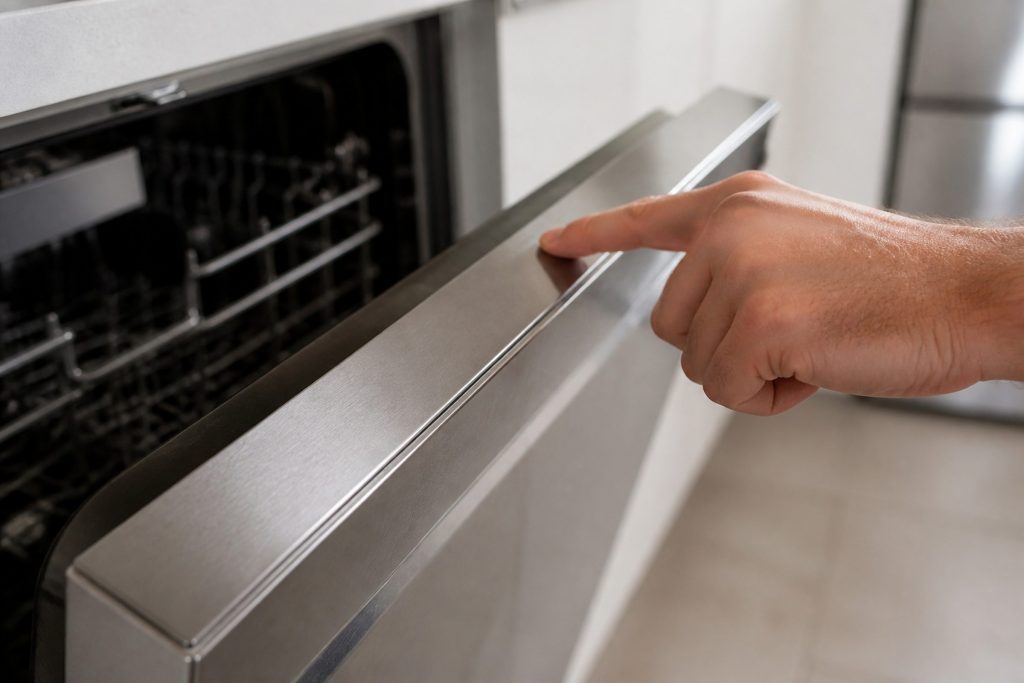
Lights on, nothing happens Dishwasher will not start
A machine with power that will not begin a cycle is a much shorter problem than a dead one. On these dishwashers it is nearly always the door, the control lock, a delay setting nobody meant to press, or a code the machine is quietly flashing at you.
- The panel lights up and the cycle never begins
- It beeps when you press start and does nothing
- The Clean light is blinking a count
-
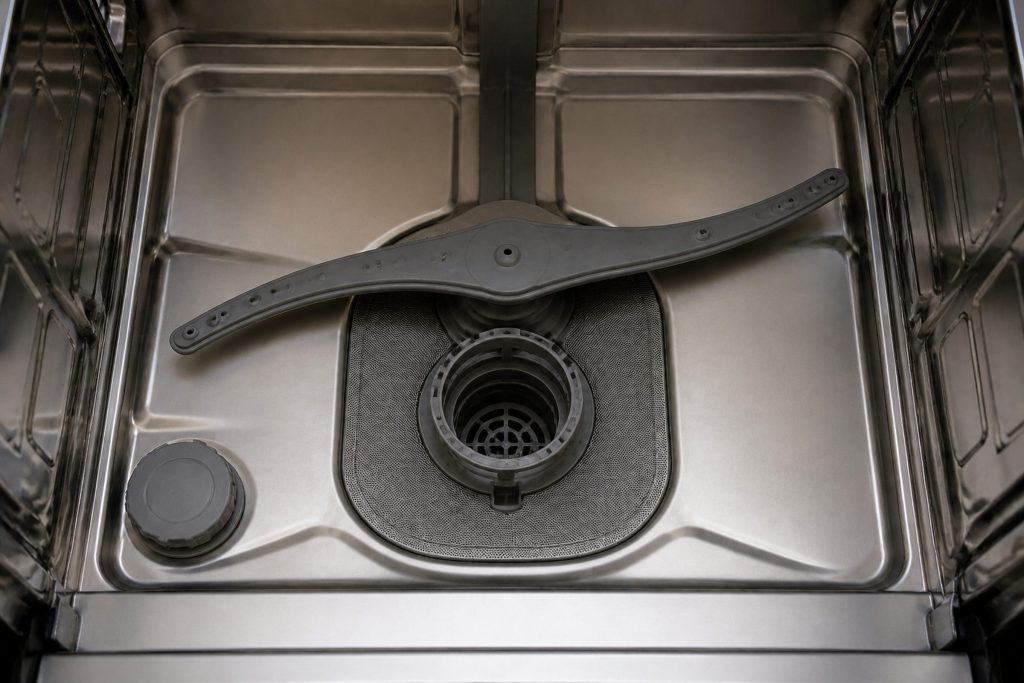
It runs, nothing sprays Dishwasher is not filling with water
A machine that starts a cycle and never takes water, or takes so little that nothing sprays properly. The supply side is short, mostly outside the appliance, and easy to work through in order.
- The cycle runs and the tub stays dry
- It fills slowly and washes badly
- Filling but not spraying
What we do on it
Repairs we carry out on KitchenAid dishwashers
Starting figures for this equipment in South Florida. The exact cost is confirmed after an on-site diagnostic — and this is not the whole list of what can go wrong, so call if your problem is not here.
-
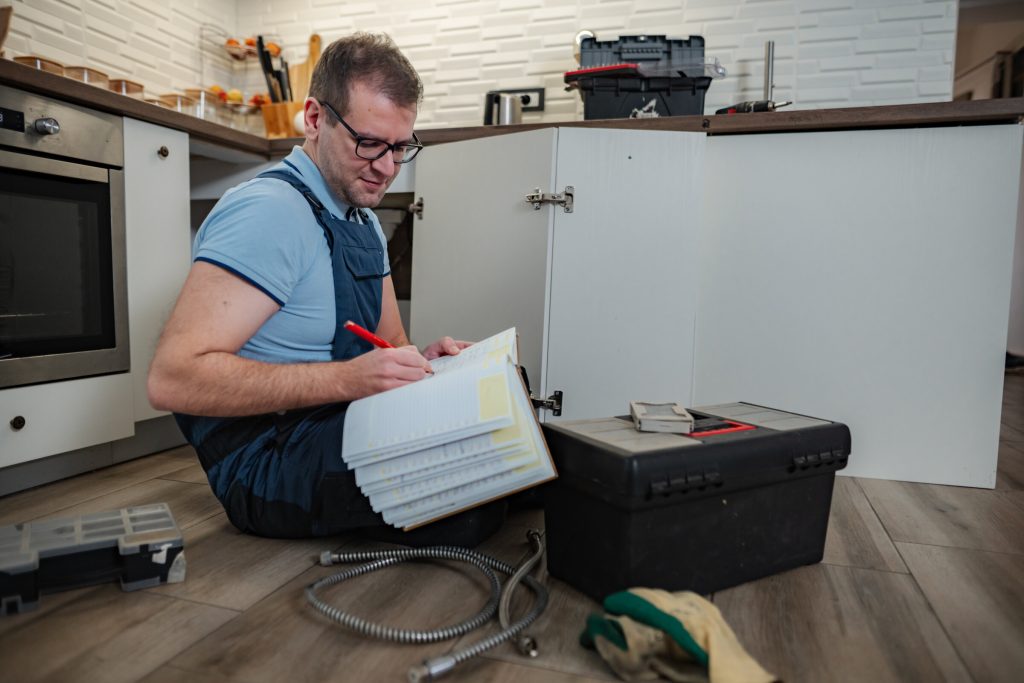
from $95 Diagnostic visit
We read what the appliance is reporting — a code on a display, or the flashes on a dishwasher Clean light — then measure before saying anything about the repair. The fee is credited toward the work when you go ahead.
- The code read on site, including blink codes
- Measured rather than guessed
- Credited toward the repair
-
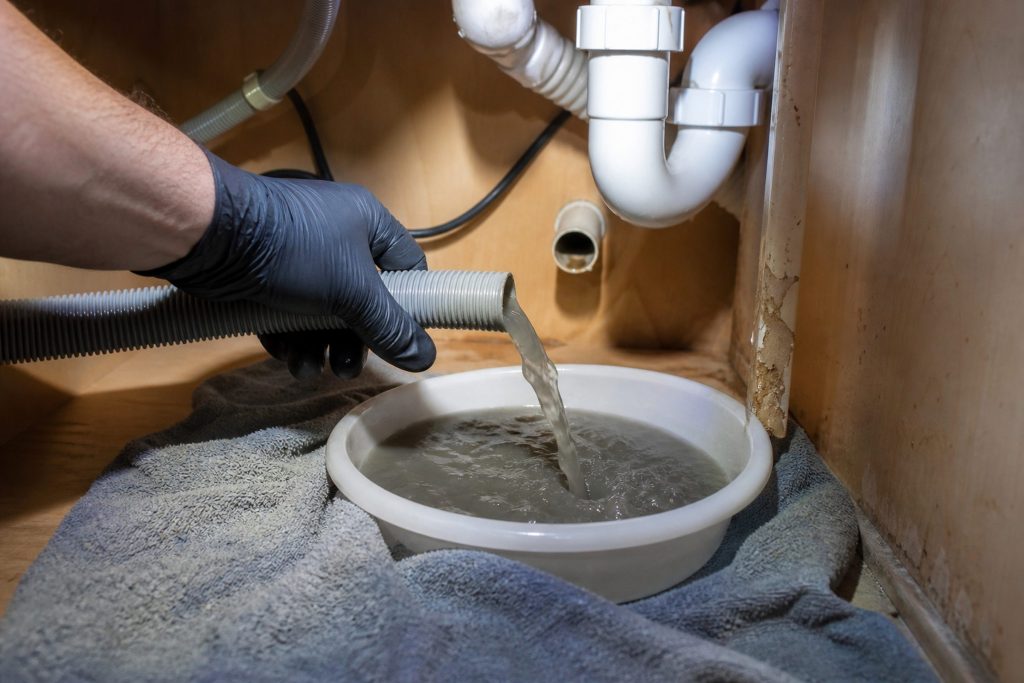
from $165 Dishwasher drain & pump repair
Water standing in the tub at the end of a cycle, or a machine that reports and stops. Three of the four usual causes are outside the appliance, which is why this visit starts at the sink rather than under the machine.
- The tub filter, air gap and disposal plug checked first
- Drain pump and check valve tested under load
- Leaks from underneath traced to the source, not mopped
-
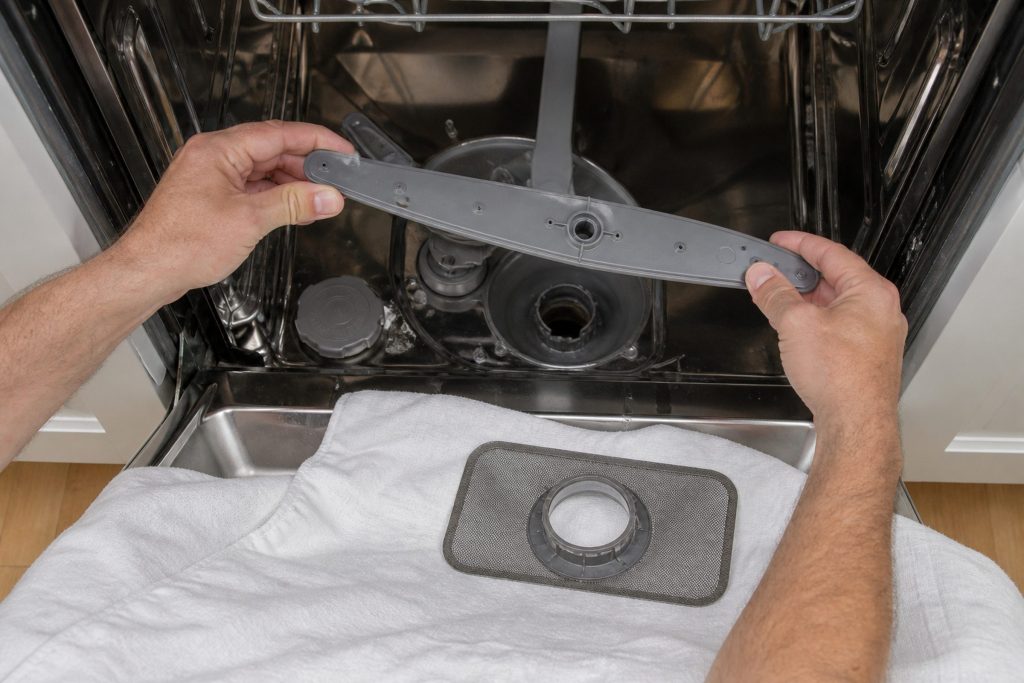
from $145 Dishwasher wash & filter service
Dishes coming out gritty, filmed or still dirty on one rack. This is the repair that most often ends without a part — and the one where South Florida water is doing more of the work than anything mechanical.
- Filter, spray arms and jets cleared and checked turning
- Wash pressure and diverter proved rack by rack
- Rinse aid and detergent set for hard water
-
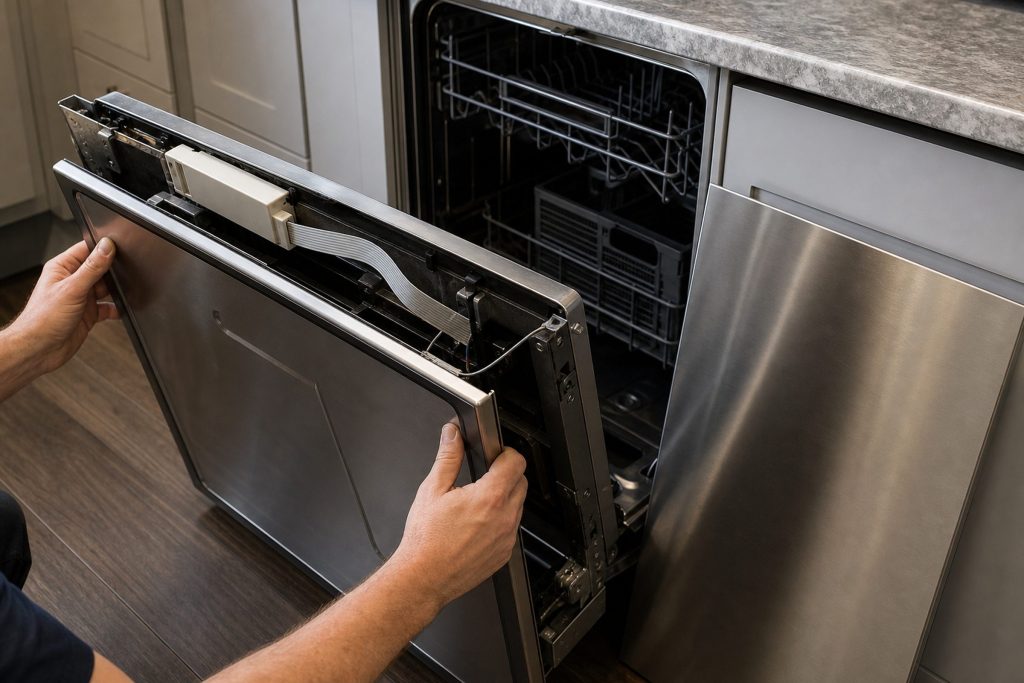
from $185 Dishwasher control & door repair
A panel that will not respond, a machine that will not start, or a door that drops open instead of staying where you put it. On an integrated machine you cannot see any of it from the front, which is where the diagnosis begins.
- Control lock and power cycle ruled out before any part
- Touch panel and control board proved separately
- Door springs and cables replaced as a pair
-
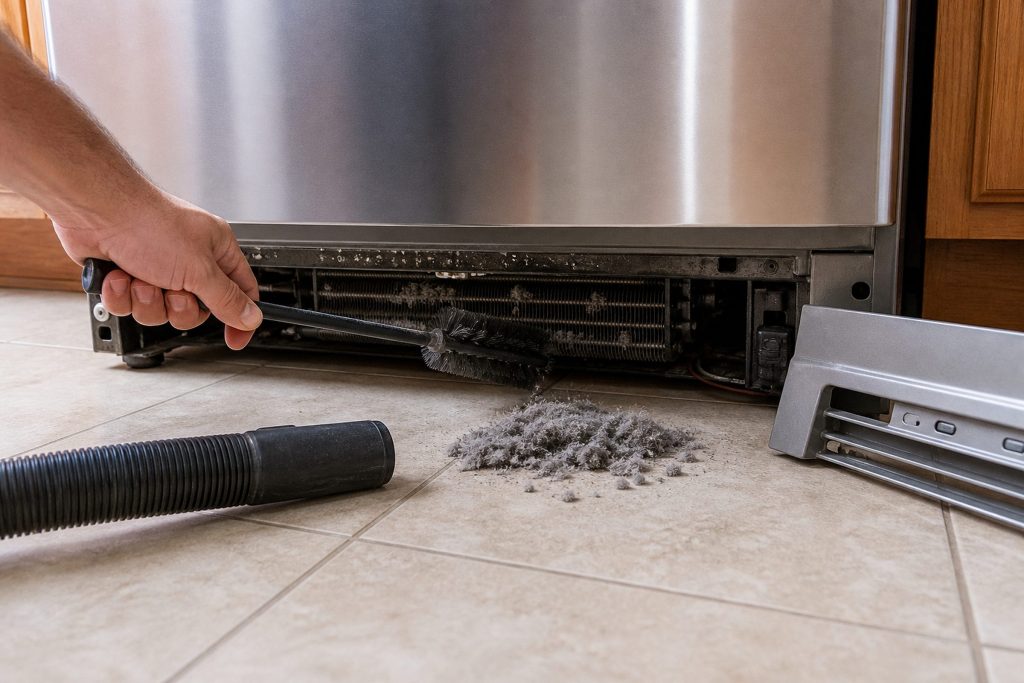
from $165 Appliance maintenance
A planned visit rather than an emergency one: filters, drains, coils, seals and ducts on whichever appliances you want looked at, in one appointment. Most of the expensive repairs on this list are prevented by an hour spent on this.
- Several appliances in one visit rather than one call each
- Filters, drains, coils, seals and ducts
- A written note of anything worth watching
-
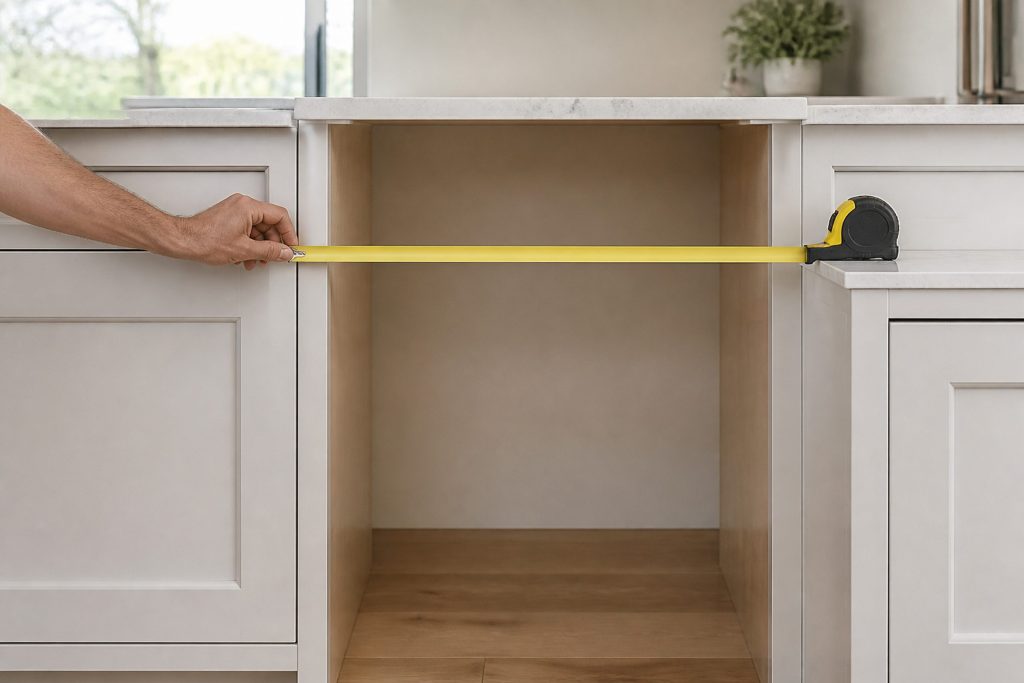
from $185 Appliance installation
Fitting a replacement into an opening that was built for something else — leveling, water, drainage, ventilation and the panel front. Most of what goes wrong in the first year of a new appliance is decided on the day it goes in.
- Leveled, sealed and connected, not just pushed into the gap
- Water, drain and ventilation checked rather than assumed
- The old appliance disconnected safely
In more detail
About KitchenAid dishwashers
Two control styles, one machine
Every current dishwasher on this make is 24 inches wide and comes as front control or integrated control. The maker's own feature names — third rack, ProDry and Advanced ProDry, 360° Max Jets, FreeFlex — describe the racking and the drying rather than the mechanism. A repair on one is a repair on all of them.
What actually goes wrong
- Water not leaving. The tub filter, the air gap, the disposal plug, the drain hose loop, then the pump. Most of that list is outside the appliance.
- Water not arriving. The supply valve under the sink, the inlet valve and its screen, and pressure. A machine that fills slowly runs long and washes badly before it ever reports anything.
- The control panel. Unresponsive buttons and a panel that lights but will not start are two different repairs, and on an integrated machine you have to open the door to tell them apart.
- The door. Springs and cables that carry a heavy door, and a latch the machine will not start without.
- The heater circuit and its sensor, which is what a cycle that never reaches temperature comes down to.
Hard water, and what it does here
Groundwater from the Biscayne Aquifer is hard enough that both Miami-Dade and Broward soften it at the treatment plant before it reaches you. KitchenAid's own manual recommends a softener at 15 grains or more and treats 7 to 12 grains as medium to hard — so it is worth knowing your own utility's number rather than guessing. What hard water does to a dishwasher is film on glassware that people read as a wash failure, and scale on the heater. The maker's own answers are to raise the rinse-aid setting, use tablets rather than gel, and run a dishwasher cleaner periodically. None of that is a breakdown and all of it is preventable.
What to have ready when you call
The model number from the sticker on the edge of the door, the blink count on the Clean light or the code on the display, and whether the machine has water in it right now.
This article is based on:
- Official manufacturer documentation
- Internal repair procedures
- Technician repair history
- Company quality standards

Before you book
Questions about KitchenAid dishwashers
The Clean light is blinking. Is that a code?
Yes — it is the same code a machine with a display would show, delivered as flashes because yours has no numbers to show it on. It comes in two bursts: the first burst is the F number, then a pause, then the second burst is the E number, then a long pause and it repeats. Seven flashes, pause, one flash is F7 E1. Count both bursts and write them down before you cancel anything, because canceling clears it and then the machine has told you nothing.
Where is the filter, and does mine have one?
It does. It sits in the floor of the tub under the lower rack, and it comes out by hand — a quarter turn on the cylinder, then the flat screen underneath lifts out. It wants rinsing under a tap every month or two in this water. A blocked filter shows up as gritty dishes long before it shows up as an error, which is why so many "not cleaning" calls end at the sink rather than with a part.
What is the difference between front control and integrated control?
Where the buttons are. Front control puts them on the face of the door where you can see them; integrated control hides them along the top edge so the front is a clean panel. It changes nothing about the machine underneath and quite a lot about diagnosing a dead panel, because on an integrated machine you cannot see whether anything is lit without opening the door.
Everything is clean but nothing is dry.
Usually not the heater. These machines dry with a fan and residual heat rather than by baking the load, so the first three things are the rinse aid reservoir, whether the load has plastics stacked flat enough to hold a puddle, and whether the cycle that ran actually includes the drying option. All three are free to check.
It will not drain and I can hear it trying.
Then the pump is running and something is in its way. In order: the filter you just read about, the air gap on the counter if there is one, the disposal plug if the dishwasher was installed after the disposal, and the drain hose loop under the sink. Three of those four are outside the machine.
Where we do it
Across Miami-Dade, Broward, and Palm Beach
Same terms everywhere we go: an on-site diagnostic first, the price agreed in writing, and the exact figure confirmed once we have seen the unit.
Neighborhoods people ask for by name