Troubleshooting
KitchenAid Error Code F2E1, and What the Two Halves of Any Code Mean
A KitchenAid code in the form F#E# is two numbers doing two different jobs: the F is a function number naming which system reported, and the E is an error number naming what that system reported. That is why F2E1 and F2E0 are related — both come from the same function, the user interface and its keypad, control and wiring — while F1E1 has nothing to do with either. The documented clearing procedure for the F2 family is to cut the breaker for one minute and restore it; a code that returns after that is reporting something real. One more thing is worth knowing before you search: these codes are shared verbatim with other badges from the same corporate group, so the code tells you the subsystem and the model number tells you the machine.
The full guide
KitchenAid Error Code F2E1: Reading the Two Halves
Most pages about a code like this tell you what one code means and stop. This one is built the other way around, because once you understand the shape of the code you can read every other one you will ever see on the appliance.
F#E# is two numbers doing two different jobs.
- The F is a function number. It names *which system reported*.
- The E is an error number. It names *what that system reported*.
That single sentence does more work than any code table. It tells you immediately that F2E1 and F2E0 are relatives — same function, same subsystem, two different things it noticed. And it tells you that F1E1 has nothing to do with either of them, despite sharing a digit, because the function number is different and the function number is the part that names the hardware.
What the F2 family is about
The F2 function on cooking appliances covers the user interface — the keypad, the control, and the wiring between them. The manufacturer documents F2E0 in exactly those terms.
That is why an F2 code so often presents as an appliance that is lit but unresponsive, or one that behaves as though a key is being pressed when nobody is touching it. A touch panel that has taken moisture behind the membrane, a ribbon connector that has worked loose, a delaminating panel, a board reading a shorted key — all of them are the interface reporting about itself.
The documented clearing procedure for the F2 family is a breaker cycle: off for one minute, then restore. That is the maker's own instruction rather than repair-forum folklore, which is worth knowing because it means an F2 that clears and stays gone was genuinely a confused control and not a repair you deferred.
An F2 that comes straight back after a proper one-minute breaker cycle is real. At that point more resetting is not a strategy.
The part almost nobody tells you: these codes are not this brand's own
Our own research turned up something that changes how you should search, so we are going to say it plainly rather than bury it.
These codes are shared verbatim with other badges from the same corporate group. The manufacturer's own support page for a given code sits at the same path, with the same wording, under more than one brand name. One range service manual covers several badges and carries all of their logos on its cover.
Two practical consequences.
First: a search result under another brand name is not necessarily wrong. If you find the same code explained on a sibling brand's support page, you have very likely found the manufacturer's own text, not somebody's approximation of it.
Second, and more important: the code alone does not identify your machine. The code names the subsystem. The model number names the appliance. A code and a model number together are a diagnosis; a code by itself is half of one. This is the single biggest reason we ask for the model number when somebody calls with a code, and it is not bureaucracy.
Where the model number lives, and what it tells us
The plate is on the edge of the door on a dishwasher, on the interior upper wall of a refrigerator, and around the frame or drawer on cooking appliances.
The first letter is the brand. The second letter is the platform — the appliance category — and that is the field that reliably narrows which code table applies to you. A KDT, KDF or KDP prefix is a dishwasher. KRF and KRS are refrigerators. KFDC and KFGC are the commercial-style ranges. The letters after that describe configuration, features, width and finish, and the manufacturer publishes a full decoder for its dishwasher line.
Read the whole plate into your phone before you call. It is faster than reading it aloud twice.
When the code has no display to appear on
A large share of these machines have no numeric display at all, and that is where people get stuck — because on those, the blinking Clean light is the code.
It arrives in two bursts, matching the two halves of the code:
- First burst: the count is the F number.
- Pause.
- Second burst: the count is the E number.
- Long pause, then the whole thing repeats.
Seven flashes, pause, one flash is F7 E1. The manufacturer documents this reading procedure itself.
Count both bursts twice before you touch anything, because canceling the cycle erases it and then the machine has told you nothing at all. Two people counting is better than one, and a phone video of the light is better than both.
The strings that are not F#E# codes at all
Several things appear on cooking displays that look like codes and are not. Checking this list first saves a lot of searching.
PF— a power failure occurred. Also seen with an identifier after it. So is a flashing time of day.LOC,Lock,Locked— Control Lock is on. A feature.SAB,Sab,5AB,5A6— Sabbath Mode is on.C— the display is set to Celsius.- A blank clock — the hidden time display feature.
F9orF9 E0— this one *is* documented as a real condition: electrical outlet miswiring or a power-supply problem.
Only the last of those needs anybody to do anything technical, and it is about the wiring feeding the appliance as much as about the appliance.
Older appliances, older code shapes
On cooking appliances from roughly the 1990s and 2000s you will see a bare F and a single digit with no E suffix at all — the two-part scheme came later. Those older tables exist and they are readable, but they are group-wide tables rather than anything specific to one badge, and the same digit does not necessarily carry the same meaning it does on a current machine.
If your appliance is old enough to be showing a bare F number, that is another reason the model number matters more than the code.
What to do with a code once you have it
Write it down exactly — both halves, and every digit. Note what the appliance was doing when it appeared and whether it stops the cycle or just displays. Try one proper power cycle at the breaker, one to two minutes, and see whether it survives.
Then, if it survives, tell us the code and the model number. Between the two we usually know which part is in question before anybody arrives, which is the difference between one visit and two.
Independent KitchenAid appliance repair across Miami-Dade, Broward and Palm Beach. We are an independent repair company and are not affiliated with, authorized by or endorsed by any manufacturer. Exact cost is confirmed after an on-site diagnostic.
If it turns out to be a repair
What this leads to, and what it costs
Every job on this site is priced the same way: an on-site diagnostic first, the figure agreed in writing before anybody starts.
-
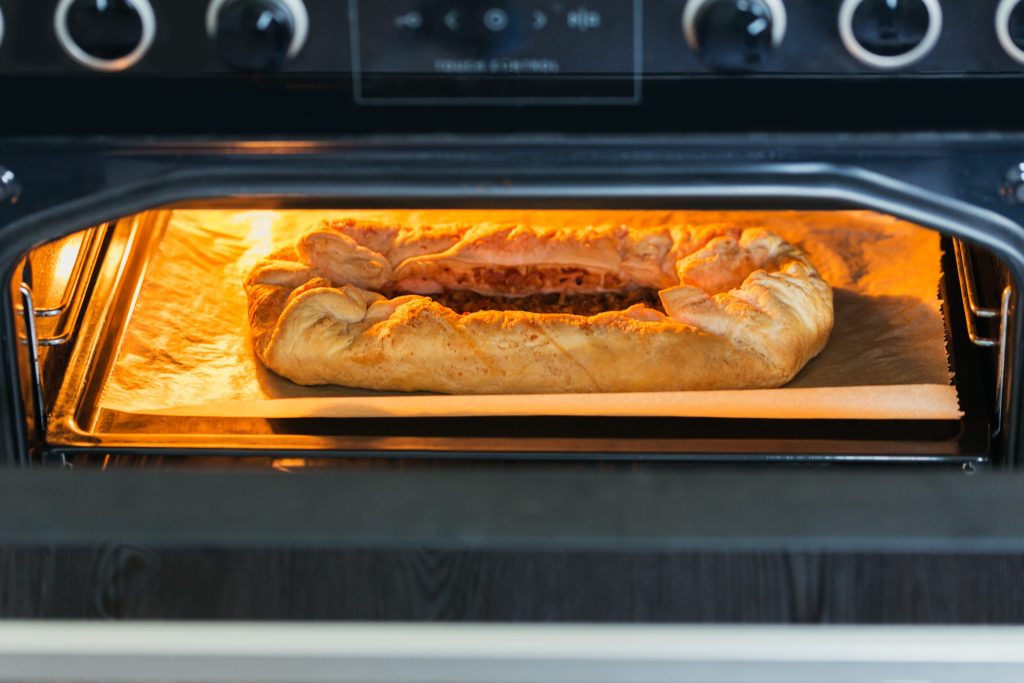
Single · Double · Combination microwave-oven · 24", 27", 30" · True Convection · Self-clean Wall ovens
Built into a tall housing, surrounded by cabinetry, and heavy. A wall oven is the appliance where the access is a real part of the job — and the combination units, with a microwave above the oven, are two appliances in one opening that report separately and fail separately.
- An F code and a letter E on the display, with the oven refusing to start
- An oven that heats but never reaches the temperature it is set to
- A door locked after a self-clean, hours after it cooled
-
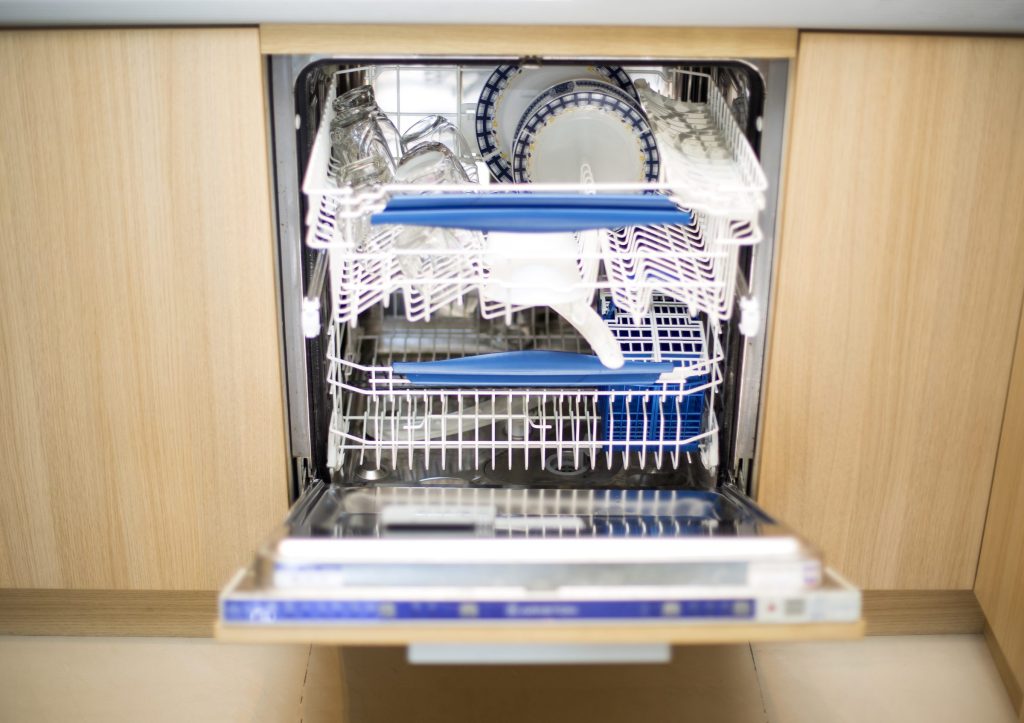
Integrated control · Front control · Third rack · ProDry · 24" · 39–44 dBA Dishwashers
The appliance this name means in a kitchen, and the one that tells you the most before anybody arrives. A KitchenAid dishwasher with no display still reports its code — it flashes it on the Clean light, in two bursts, and those two numbers are a diagnosis you can read from across the room before anybody opens anything.
- The Clean light blinking a set number of times, over and over
- A cycle that finishes with water still standing in the tub
- Dishes coming out gritty, or coming out wet
-
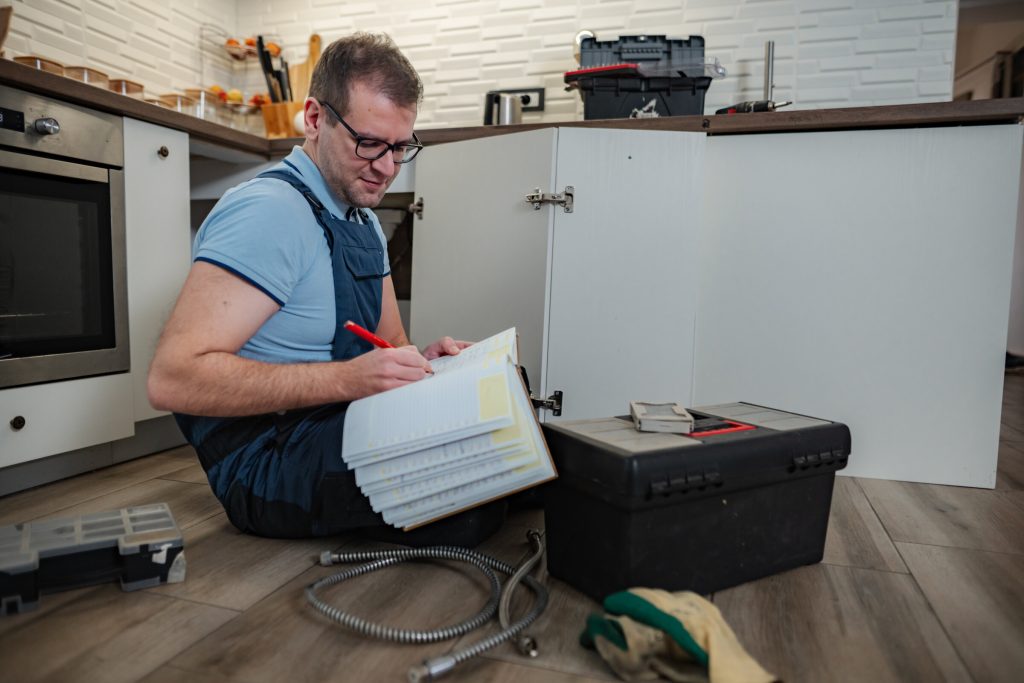
from $95 Diagnostic visit
We read what the appliance is reporting — a code on a display, or the flashes on a dishwasher Clean light — then measure before saying anything about the repair. The fee is credited toward the work when you go ahead.
- The code read on site, including blink codes
- Measured rather than guessed
- Credited toward the repair

Questions people ask about this
How do I reset KitchenAid dishwasher error codes?
Write the code down first, because resetting erases it and on a machine with no display it is the only thing the appliance has told anybody. Then cancel the running cycle and cut power at the breaker for one to two minutes. A code that clears and stays gone was a control that got confused. A code that returns on the next cycle is a real condition, and the reset has just proved it for free.
Is there a KitchenAid error code list I can download as a PDF?
The manufacturer publishes its codes as web pages in its own support base rather than as a single downloadable list, and the tidy PDFs circulating under that name are third-party compilations of varying accuracy. The one document worth having is the service manual for your specific platform, and it is worth noting that the range service manual for this platform carries three brand logos on its cover.
My oven door is locked and it is showing an F5 code. What is that?
On cooking appliances the F5 function is associated with the door and latch circuit, so a locked door alongside an F5 is consistent rather than a coincidence — the latch, its switch, or the board driving it. We are not going to publish an exact meaning for every E digit we cannot point at a source for. What we will say is that a door that is still locked on a completely cold oven is a service call rather than something to force.
My refrigerator is showing PO, or a bare E number. Is that the same system?
No. Refrigerators mostly do not use the F#E# scheme. PO is a power outage notice, not an error — the freezer got to 18°F or warmer while the power was off, and it wants acknowledging. A bare letter and digit on a refrigerator panel is not part of the cooking and dishwasher code scheme, so bring the model number and what the panel says rather than looking it up against an oven table.
Why does the same code appear under other brand names when I search?
Because it genuinely is the same code. The manufacturer's own support pages for a given code sit at the same address under more than one badge, with the same wording, and a single range service manual covers several of them. That is why the code by itself does not identify your machine. The code names the subsystem; the model number names the appliance.
Troubleshooting
More guides like this one
-
How to Unlock KitchenAid Oven Control Lock — and Every Other Panel It Locks
Nothing responds and nothing is broken. Control lock lives on almost every appliance this maker builds, it is switched on by holding one key, and it is switched on by accident constantly.
Read more -
How to Reset KitchenAid Refrigerator Controls Without Making Things Worse
Four different problems send people looking for the same reset, and only one of the four procedures helps a cabinet that is genuinely warm. Here is how to tell which one you are actually looking for.
Read more -
How to Reset KitchenAid Ice Maker Modules and Undercounter Machines
The reset that matters most on this make is the one after a cleaning cycle, because a machine that has been cleaned and then sits there doing nothing is our commonest ice call — and it is almost never a failure.
Read more
Tell us the model number and what it is doing.
This article is based on:
- Official manufacturer documentation
- Internal repair procedures
- Technician repair history
- Company quality standards