Troubleshooting
How to Reset KitchenAid Ice Maker Modules and Undercounter Machines
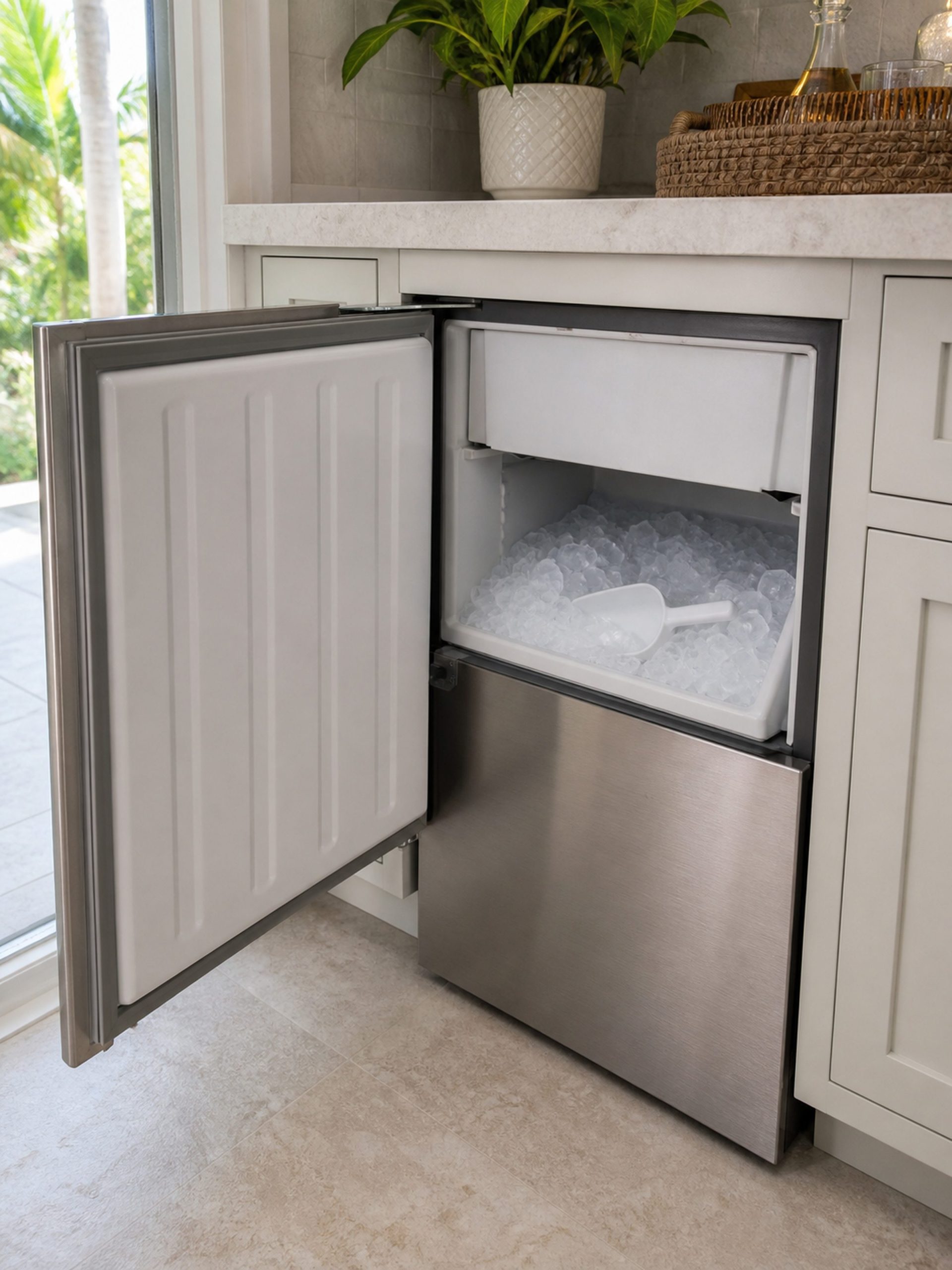
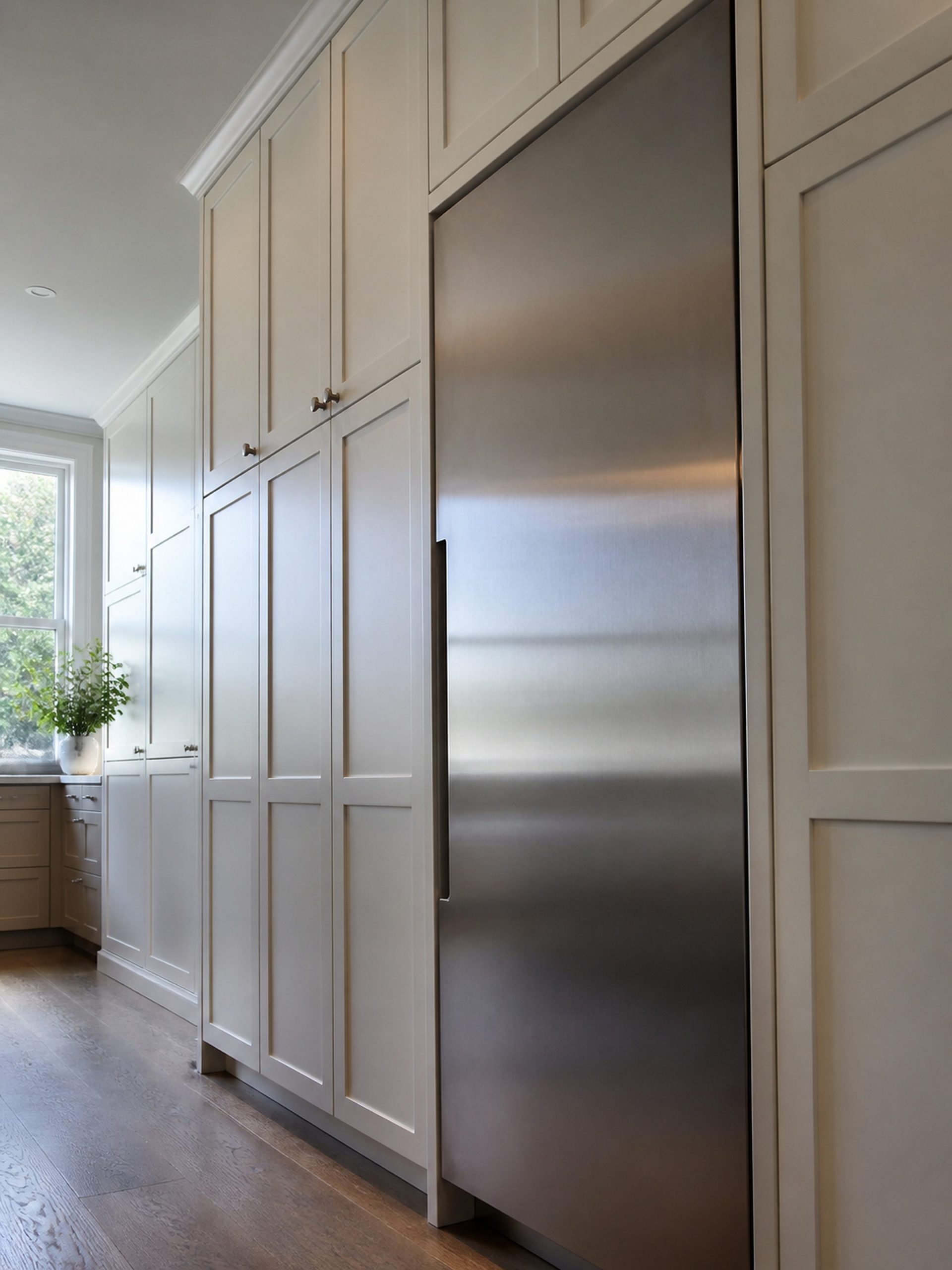
Two different appliances answer to the name, and the reset is not the same for each. On an undercounter ice machine, the reset that matters is the one after a cleaning cycle: the cycle has to be allowed to finish and be acknowledged, the drain has to be clear, and then the machine needs its power cycled at the switch or breaker for two minutes before it will go back to making ice. On an ice maker module inside a refrigerator, start with the shut-off arm or switch, then check for a frozen fill tube and an overdue water filter, and only then cycle power to the cabinet. On both machines, allow a full cycle — around ninety minutes to a few hours — before deciding a reset did not work.
The full guide
How to Reset KitchenAid Ice Maker Modules and Undercounter Machines
Two completely different appliances answer to the name "ice maker," and the reset is not the same for either one. Before anything else, work out which of these you own.
An ice maker module inside a refrigerator. A small machine bolted into the freezer compartment or the door of a cabinet. It has no drain. It gets its water from the same line and the same filter that feed the dispenser, and almost everything that stops it is about water arriving rather than the module itself.
A standalone undercounter ice machine. Fifteen or eighteen inches wide, making twenty-five or thirty-five pounds a day, with its own water line, its own drain and its own cleaning cycle. This is a real ice machine, and in a South Florida bar area or covered terrace it works harder than anything else in the house.
Same words. Different appliance. Different procedure.
The undercounter machine after a cleaning cycle
This is our commonest ice call, and it is almost never a failure. A machine gets cleaned, it is put back, and then it sits there doing nothing at all — which reads as a machine that was fine until somebody cleaned it and is now broken.
What has usually happened is that the sequence was not completed. Work through it in order:
- Let the cleaning cycle finish. These cycles run for a long time and it is tempting to decide it is done and switch off. A cycle interrupted partway leaves the control sitting in the middle of a routine it cannot resume.
- Clear whatever the machine is holding. If there is a clean indicator or a message on the panel, acknowledge it. Until it is acknowledged, the machine may not consider itself back in service.
- Check the drain is genuinely running. A cleaning solution that will not leave the machine stops the next cycle before it starts. On a gravity drain, put your hand on the line and confirm it is warm and moving; on a pump, confirm the pump is running.
- Then power-cycle it. At the machine's own switch, or the breaker. Two minutes.
- Walk away. The first harvest after a clean takes noticeably longer than a normal one, because the machine is starting from an empty, warm evaporator plate.
Give it a couple of hours before you conclude anything. Deciding at fifteen minutes that the reset failed is the single easiest way to turn a working machine into a service appointment.
The reset on an ice maker inside a refrigerator
Here the power cycle is the last of four checks, not the first, because three cheaper things stop these modules far more often.
The shut-off arm or switch
Every one of these has a way of telling itself to stop. On older modules it is a wire arm that rides up as the bin fills; on newer ones it is a switch or an optical sensor across the bin.
The arm has to be down and free to move. A cereal box, a bag of peas or a badly seated bin holding the arm up stops ice production completely and looks exactly like a dead module. This costs nothing to check and it is the answer more often than people expect.
The fill tube
The small tube that delivers water to the mold can develop a plug of ice, usually after the water was slow to arrive for some other reason. Once it is plugged, no water reaches the mold at all — and the plug hides the original reason.
You can see it with a flashlight. Clearing it with warm water is straightforward, but a fill tube that plugs again in a week is telling you about water pressure, the inlet valve or the freezer running colder than it should.
The water filter
An overdue cartridge restricts flow, and an ice maker is the first thing in the cabinet to notice, long before the dispenser feels slow. If the filter light has been on for a while, change the cartridge before you reset anything.
Then the power cycle
If all three are fine, cut the breaker to the refrigerator for two minutes and restore it. Some modules also have a small recessed button on the module body that starts a harvest cycle. If yours does not have one, you are not missing a feature — there is no universal reset button on these.
What a reset on either machine cannot do
Being clear about this saves people a second afternoon.
It cannot make water arrive. A closed supply valve, a kinked line, a failed inlet valve or a filter that is choking the flow all survive every reset there is. A machine with no water can be reset all day.
It cannot clear scale. In water this hard, an evaporator plate that has scaled up produces small, cloudy or hollow cubes and eventually stops harvesting them cleanly. That is a cleaning job, and if cleaning does not restore it, a service one.
It cannot fix a slow drain. On an undercounter machine this is the most-forgotten part of the installation. A gravity drain fitted with too little fall never worked properly in the first place, and a machine that stops every few weeks in a bar cabinet is often telling you about the plumbing rather than about itself.
It cannot warm up a freezer that is too cold or cool one that is too warm. An in-refrigerator module needs the compartment in its normal range to harvest properly. A freezer running warm makes soft, slow ice; one running very cold freezes the fill tube repeatedly.
Cubes that are the wrong shape rather than absent
Worth a paragraph, because these people usually do not need a reset at all.
Cloudy ice on a machine that advertises clear ice means the slow, layered freeze is being cut short — water quality or a scaled plate, both fixable.
Small or hollow cubes point at water volume: pressure, the valve, or the filter.
Cubes that form and will not release are a harvest problem rather than a freezing one, which is a different repair and usually the hot-gas valve or the sensor watching the plate.
None of those improves with a power cycle, and all of them are worth catching early — cloudy ice typically shows up months before a machine actually stops.
Older refrigerators
On cabinets that are fifteen or twenty years old, the module is a simpler mechanical device with a thermostat and a motor, and the useful reset is still the same four checks in the same order. What is different is the availability of the module itself, which is worth asking about before anybody spends an afternoon on it.
What to have ready when you call
The model number, whether the machine is undercounter or inside a refrigerator, whether it drains to a pipe or to a pump, when it last had a cleaning cycle, and whether the bin is empty or holding old ice. That last one tells us more than it sounds like it should.
Independent KitchenAid ice machine and refrigerator repair across Miami-Dade, Broward and Palm Beach. We are an independent repair company and are not affiliated with, authorized by or endorsed by any manufacturer.
Questions people ask about this
How do I reset my KitchenAid ice maker after cleaning?
Let the cleaning cycle run all the way to its end rather than switching the machine off partway, clear any message it is holding, and confirm the drain is actually running clear. Then power the machine off at its switch or breaker for two minutes and restore it. The first batch after a clean takes longer than usual, so give it a couple of hours before deciding it has not worked.
How do I reset the ice maker in a KitchenAid French door refrigerator?
Start with the shut-off arm or switch — on a French door cabinet the ice maker is often in the door or the upper compartment, and the arm gets held up by a bag or a box more often than anything else goes wrong. Then check the fill tube for a plug of ice, then the water filter. Cutting power to the whole cabinet for two minutes is the last of the four, not the first.
Is there a reset button on a KitchenAid ice maker?
Some in-refrigerator modules have a small recessed button on the module body, and some have test points that only a technician should be bridging. There is no universal button, and there is no reset button at all on most undercounter machines — the power cycle is the reset. If you cannot find a button, you are not missing anything.
Do I need to reset the ice maker after changing the filter?
The ice maker itself, no. The filter indicator on the refrigerator panel, yes — it runs on a counter and holding the filter key for about three seconds is what clears it. What is worth doing after a filter change is running a few quarts through the dispenser to clear the air, because trapped air causes hollow and misshapen first cubes.
How do I unlock a KitchenAid ice maker?
If the dispenser or the ice maker is refusing to respond, look at the control lock on the refrigerator panel before assuming a failure — the lock disables the dispenser along with everything else. The other kind of lock people mean is the shut-off arm latched in the up position, which is not a lock at all, just a switch telling the module to stop.
Troubleshooting
More guides like this one
-

KitchenAid Error Code F2E1, and What the Two Halves of Any Code Mean
The F names the system that reported and the E names what it reported. Once you know that, an unfamiliar code stops being a mystery string and becomes a subsystem plus a symptom — which is most of the way to an answer.
Read more -
How to Unlock KitchenAid Oven Control Lock — and Every Other Panel It Locks
Nothing responds and nothing is broken. Control lock lives on almost every appliance this maker builds, it is switched on by holding one key, and it is switched on by accident constantly.
Read more -
How to Reset KitchenAid Refrigerator Controls Without Making Things Worse
Four different problems send people looking for the same reset, and only one of the four procedures helps a cabinet that is genuinely warm. Here is how to tell which one you are actually looking for.
Read more
Tell us the model number and what it is doing.
This article is based on:
- Official manufacturer documentation
- Internal repair procedures
- Technician repair history
- Company quality standards