Troubleshooting
How to Force Defrost KitchenAid Refrigerator Coils: What It Proves and What It Doesn’t
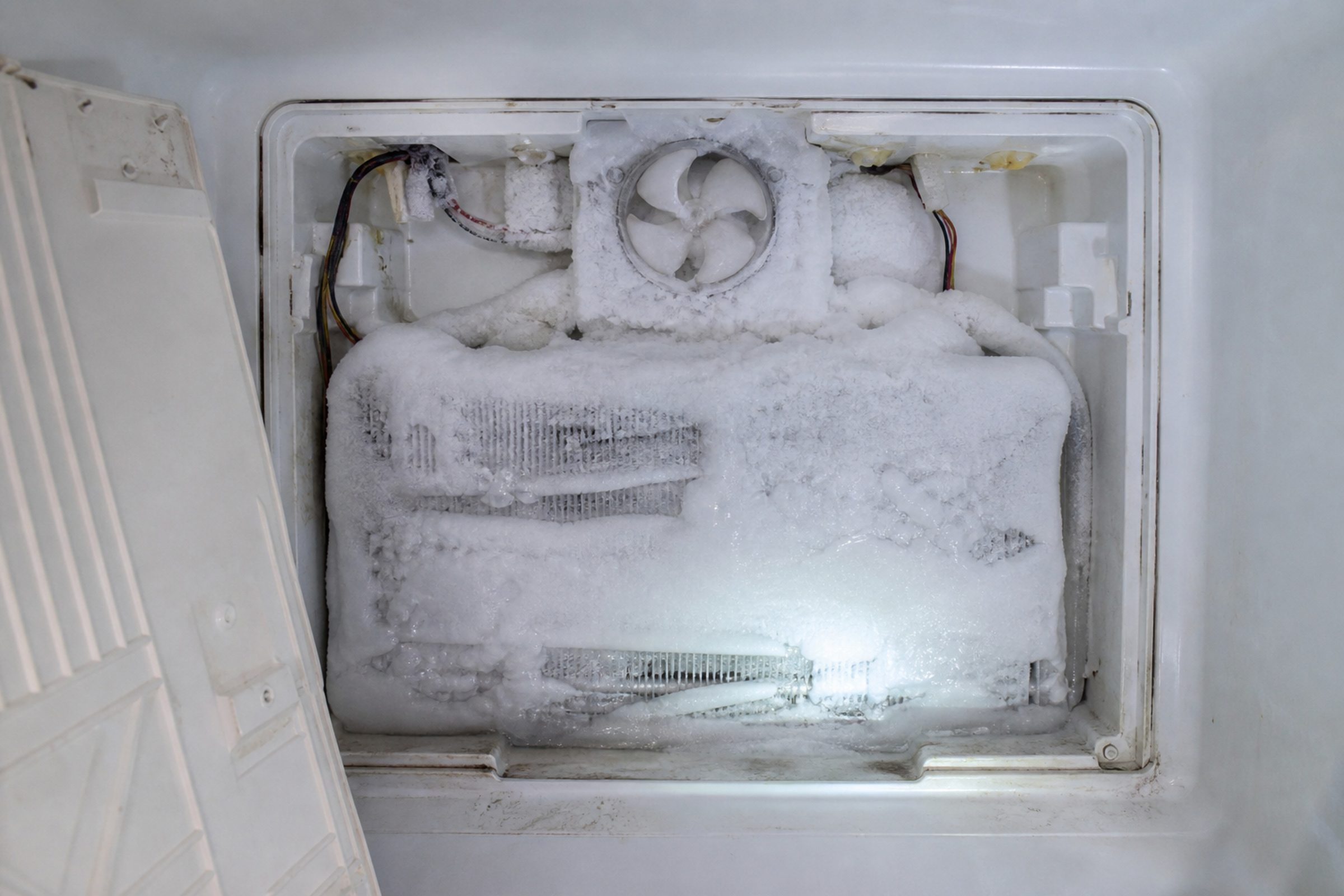
Forcing a defrost on a KitchenAid refrigerator is a diagnostic step rather than a repair. The reliable way to do it is a full manual defrost: empty the cabinet into coolers, switch it off at the breaker, leave the doors open with towels down for 24 to 48 hours, then restore power and watch the temperatures. What you are testing is whether ice on the evaporator coil was blocking the airflow, which is the classic cause of a warm refrigerator with a still-cold freezer. If the cabinet cools normally afterward, the coil was iced and the defrost system is the thing to investigate. If it does not cool even with the coil clear, the problem is elsewhere. Either way the frost returns within days unless the cause is dealt with, because a manual defrost removes the ice and not the reason for it.
The full guide
How to Force Defrost KitchenAid Refrigerator Coils, and What It Actually Proves
Start with the honest framing, because most pages on this subject skip it.
Forcing a defrost is a diagnostic. It is not a repair. You are not fixing anything by doing it. You are answering one question — *was the evaporator coil iced over?* — and that answer is worth having, because it separates a modest, well-understood repair from a much more expensive conversation about the sealed system.
The second honest thing: if the coil was iced, it will ice again within days, because melting the ice does not remove whatever stopped the cabinet clearing it on its own. Anybody who tells you a manual defrost fixed their refrigerator has usually not yet reached the following week.
The symptom this test is for
One pattern above all others.
The refrigerator section is going warm while the freezer is still cold.
In these cabinets the freezer is where the cooling actually happens, and air is moved across into the fresh-food side by a fan. So a cold freezer with a warm refrigerator is almost always about air not getting through — and the commonest reason it does not get through is a block of ice sitting on the evaporator coil behind the freezer back wall, where you cannot see it.
The supporting signs:
- Frost building visibly on the freezer's back wall rather than just a light dusting.
- The cabinet running constantly and never satisfying.
- Ice cream soft while the freezer thermometer still reads cold.
- A fan noise that changed, or stopped, or started sounding like something rubbing.
If instead the whole cabinet is at room temperature with the light on, this is not your test. That is a compressor or sealed-system question and defrosting proves nothing about it.
The method that works, without touching anything you shouldn't
Two days. Plan for it properly and it is easy.
- Empty the cabinet. Freezer contents into coolers with ice or into a neighbor's freezer. A full freezer that stays shut holds for roughly two days, so this is genuinely the constraint on the whole exercise.
- Switch off at the breaker. Not the control panel, which leaves the appliance energized.
- Open both doors. Towels on the floor, a shallow pan on the freezer floor, and the drawer pulled out.
- Leave it 24 to 48 hours. A coil that is genuinely encased in ice takes far longer to clear than the visible frost suggests, and stopping at eight hours is how people get an inconclusive result.
- Speed it up safely if you want to. A box fan pointed into the open compartment roughly halves the time. So does a bowl of hot tap water on a rack. Both are completely safe.
What not to do, and this matters more than anything else on the page: no ice pick, no screwdriver, no knife, no kitchen steamer aimed at the interior. The evaporator tubing sits directly behind that back wall and it is thin aluminum. Puncturing it does not mean a repair — it usually means the end of the appliance. Every technician has seen it, and it is always somebody who was almost finished.
The one repair you can genuinely make while it is open
While the freezer is empty and warm, deal with the defrost drain.
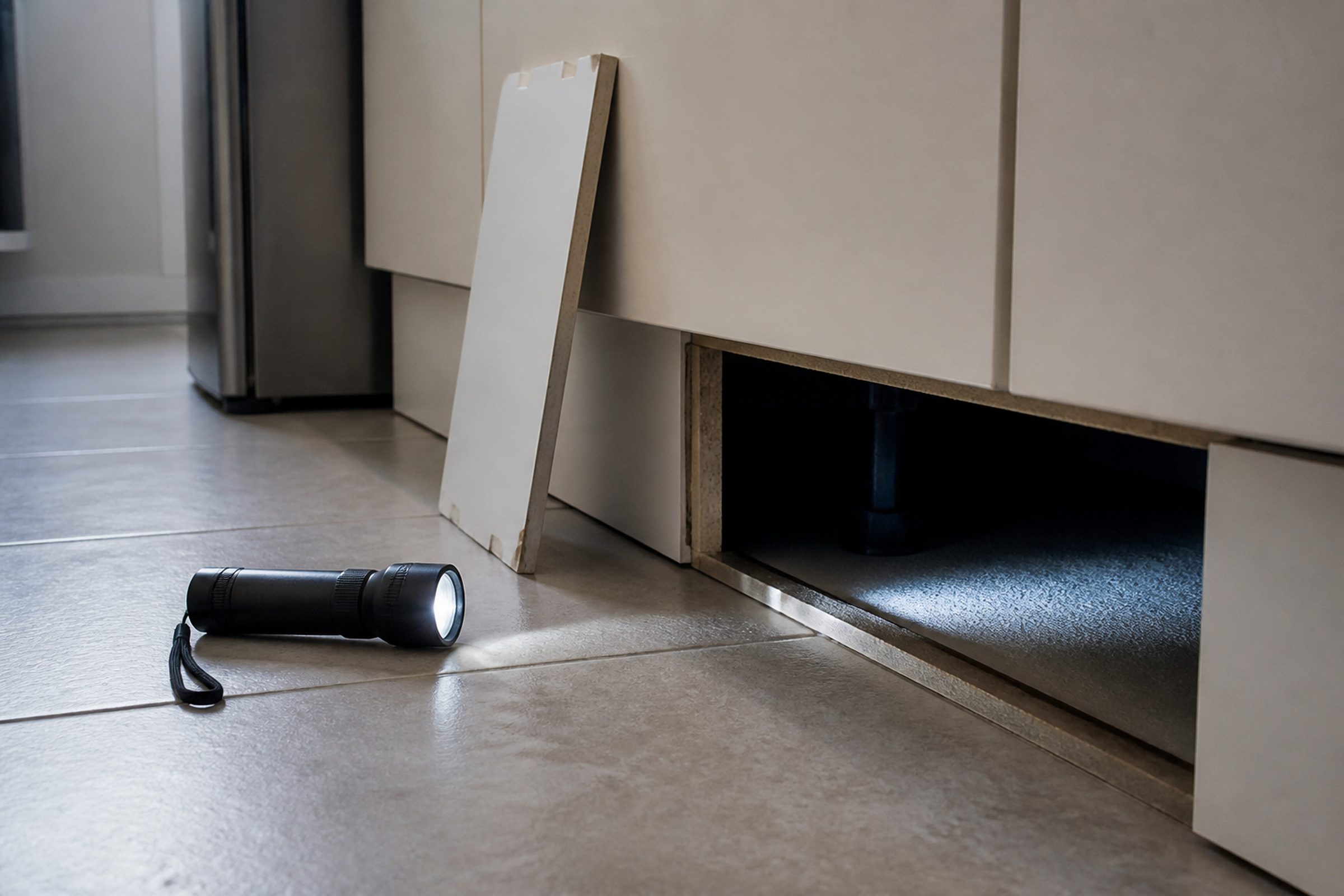
Meltwater from every normal defrost cycle is supposed to run out through a small tube at the base of the freezer back wall and into a pan by the compressor, where it evaporates. When that tube blocks, the water freezes where it sits and builds a sheet of ice under the drawer — which is a different problem from an iced coil, and often accompanies it.
Find the hole behind the lower basket and pour warm water into it slowly. Not boiling: hot enough to melt a plug, cool enough not to distort plastic. It should run through and reach the pan underneath within seconds.
A drain that clears is a real thing repaired. A drain that will not clear with warm water has a plug further along or debris at the outlet, and forcing anything rigid down it is how tubes get punctured.
About service-mode key sequences
You will find people online offering key combinations that put a control board into a diagnostic defrost.
Those sequences exist. They also differ from board to board, they are published in the tech sheet that lives inside that specific cabinet rather than in any universal list, and pressing the wrong combination on a panel changes settings you then have to find and undo. Guessing at them on somebody else's model number is not a shortcut.
The manual defrost above reaches exactly the same answer, and it does it without anybody putting a control into a state they cannot get it out of.
Reading the result — this is the whole point
Restore power. Put a thermometer on a middle shelf in the fresh-food section. Read it at four hours and again at twelve.
The cabinet cools normally. The coil was the blockage. That is a genuinely useful answer, because the causes of a coil that ices up are the defrost heater, the bimetal thermostat, the defrost sensor, or the control that runs them — and those are among the more reasonable refrigerator repairs rather than the expensive ones. It also means the airflow, the fan and the cooling are all doing their jobs.
The cabinet does not cool even with a clear coil. Then ice was not the problem, and you have ruled out an entire branch of the diagnosis for the cost of two days and no parts. Next in line are the evaporator fan, the thermistors, and finally the sealed system.
It cools, and then goes warm again over the next several days. This is the commonest outcome and it is the one to expect. It confirms the defrost system is not clearing the coil on its own. Nothing further is gained by defrosting it again.
Why the frost comes back faster here
Every time a door opens in a South Florida kitchen, the air that goes in carries water with it, and that water ends up on the coil. The defrost cycle in this climate has meaningfully more to remove than the same cabinet in a dry one.
Two practical consequences. A door seal that sits a fraction proud matters more here than it would elsewhere — check yours with the paper test, closing a dollar bill in the door and feeling the drag as you pull it out. And a drawer that is not closing fully because a basket or a bag is fouling it produces frost within days rather than months.
Worth knowing before you conclude anything: the maker itself describes some frost on interior walls and food packages as normal in humid weather, particularly in a home that is not air conditioned, and names switching Energy Saver off as a remedy for moisture. A light dusting in August is not the same event as a coil encased in ice.
When it is the fan rather than the defrost system
Worth ruling out, because it produces a nearly identical symptom for a different reason and it is usually the cheaper of the two.
If the evaporator fan has stopped, no air moves into the fresh-food section even with a perfectly clear coil and a compressor running normally. The tell is that the cabinet does not improve at all after a full manual defrost — it goes warm again almost immediately rather than over several days.
What to have ready when you call
The model number from the upper left interior wall, which compartment is wrong, whether you can see frost on the freezer back wall or ice under the drawer, and what the thermometer read at four and twelve hours after the defrost. That last figure is the one that saves a visit.
Independent KitchenAid refrigerator and freezer repair across Miami-Dade, Broward and Palm Beach. We are an independent repair company and are not affiliated with, authorized by or endorsed by any manufacturer. Exact cost is confirmed after an on-site diagnostic.
If it turns out to be a repair
What this leads to, and what it costs
Every job on this site is priced the same way: an on-site diagnostic first, the figure agreed in writing before anybody starts.
-
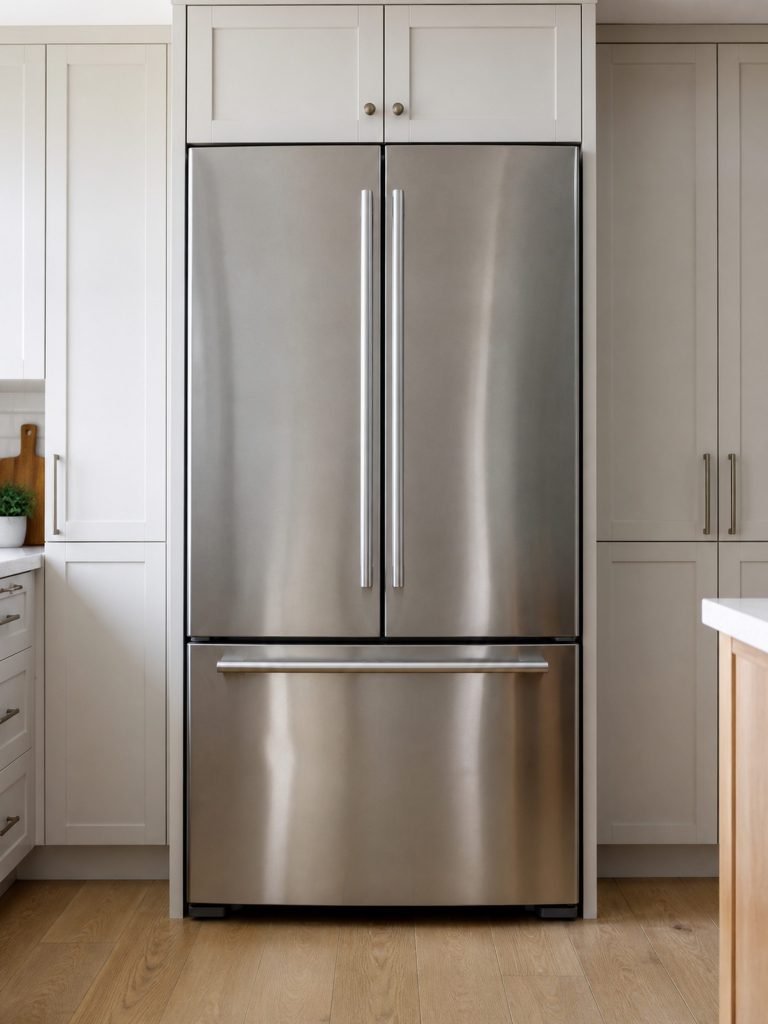
French door · Side-by-side · Bottom mount · Built-in · Counter-depth · 30"–48" Refrigerators
The largest part of this maker's line and the largest part of our phone. French door and side-by-side, freestanding and built into cabinetry, counter-depth and full depth — and one code that South Florida sees more than anywhere else, because it is the one a cabinet shows after the power has been off.
- PO flashing on the display after an outage
- The refrigerator warm while the freezer is still cold
- Water on the floor, or ice on the freezer floor
-
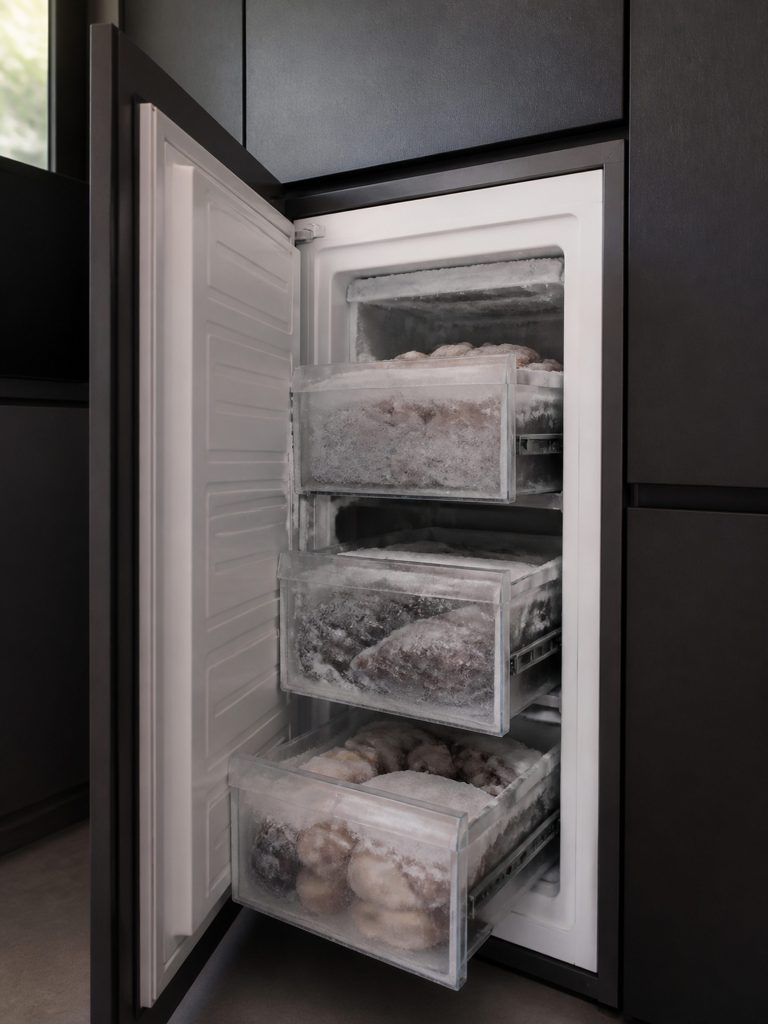
Freezer drawers · Bottom mount · Side-by-side · Ice build-up · Frost Freezers
This make does not sell a standalone freezer, and that is worth saying plainly: the freezer here is the bottom drawer of a French-door cabinet, one column of a side-by-side, or a refrigerated drawer set to freeze. It is still the half people call about, because a freezer that stops is a freezer full of food.
- Frost building on the walls or under the drawer
- Cold, but not frozen — ice cream soft and meat soft
- A drawer that will not close because ice is holding it
Questions people ask about this
Why is there ice building up in my KitchenAid refrigerator?
Either the defrost system has stopped clearing the coil on schedule — heater, bimetal thermostat, sensor or the control running them — or warm humid air is getting in faster than the cabinet can cope with, through a seal that is proud or a drawer that is not closing. Both look identical from the front. In a South Florida kitchen the second one is more common than it would be anywhere drier.
How do I put a KitchenAid refrigerator in defrost mode?
There is no owner-facing defrost mode. Some control boards have a service sequence that starts a defrost, but the sequence differs by board and it is published in the tech sheet inside that specific cabinet, not in a universal list — guessing at key combinations on somebody else's model is how settings get changed by accident. The manual defrost described on this page reaches the same answer without any of that risk.
How do I unclog the defrost drain on a KitchenAid refrigerator?
With the freezer emptied, find the drain hole at the base of the back wall behind the lower basket, and pour warm — not boiling — water into it slowly. It should run through to the pan under the cabinet within seconds. A tube that will not clear this way often has a plug of ice further down or debris at the outlet, and forcing anything rigid into it is how tubes get punctured.
Can I defrost a freezer faster with a hair dryer?
We would rather you did not. A hair dryer near a plastic liner warps it, near a gasket it deforms it, and it is an electrical appliance being pointed at melting water. If you want speed, put a box fan in front of the open compartment and set a bowl of hot tap water on a rack inside. That roughly halves the time with none of the risk.
How do I replace the defrost heater or the defrost thermostat?
On most of these cabinets it means emptying the freezer, taking down the rear evaporator cover, and working around a coil that must not be nicked. The parts themselves are among the more reasonable refrigerator parts, and the labor is where the real cost sits. It is a job worth booking rather than improvising — and worth doing correctly, because a heater replaced while a failed sensor is left in place ices up again.
Troubleshooting
More guides like this one
-

KitchenAid Error Code F2E1, and What the Two Halves of Any Code Mean
The F names the system that reported and the E names what it reported. Once you know that, an unfamiliar code stops being a mystery string and becomes a subsystem plus a symptom — which is most of the way to an answer.
Read more -
How to Unlock KitchenAid Oven Control Lock — and Every Other Panel It Locks
Nothing responds and nothing is broken. Control lock lives on almost every appliance this maker builds, it is switched on by holding one key, and it is switched on by accident constantly.
Read more -
How to Reset KitchenAid Refrigerator Controls Without Making Things Worse
Four different problems send people looking for the same reset, and only one of the four procedures helps a cabinet that is genuinely warm. Here is how to tell which one you are actually looking for.
Read more
Tell us the model number and what it is doing.
This article is based on:
- Official manufacturer documentation
- Internal repair procedures
- Technician repair history
- Company quality standards