Maintenance & Prevention
How to Clean KitchenAid Range Hood Filters — and the One You Cannot Wash
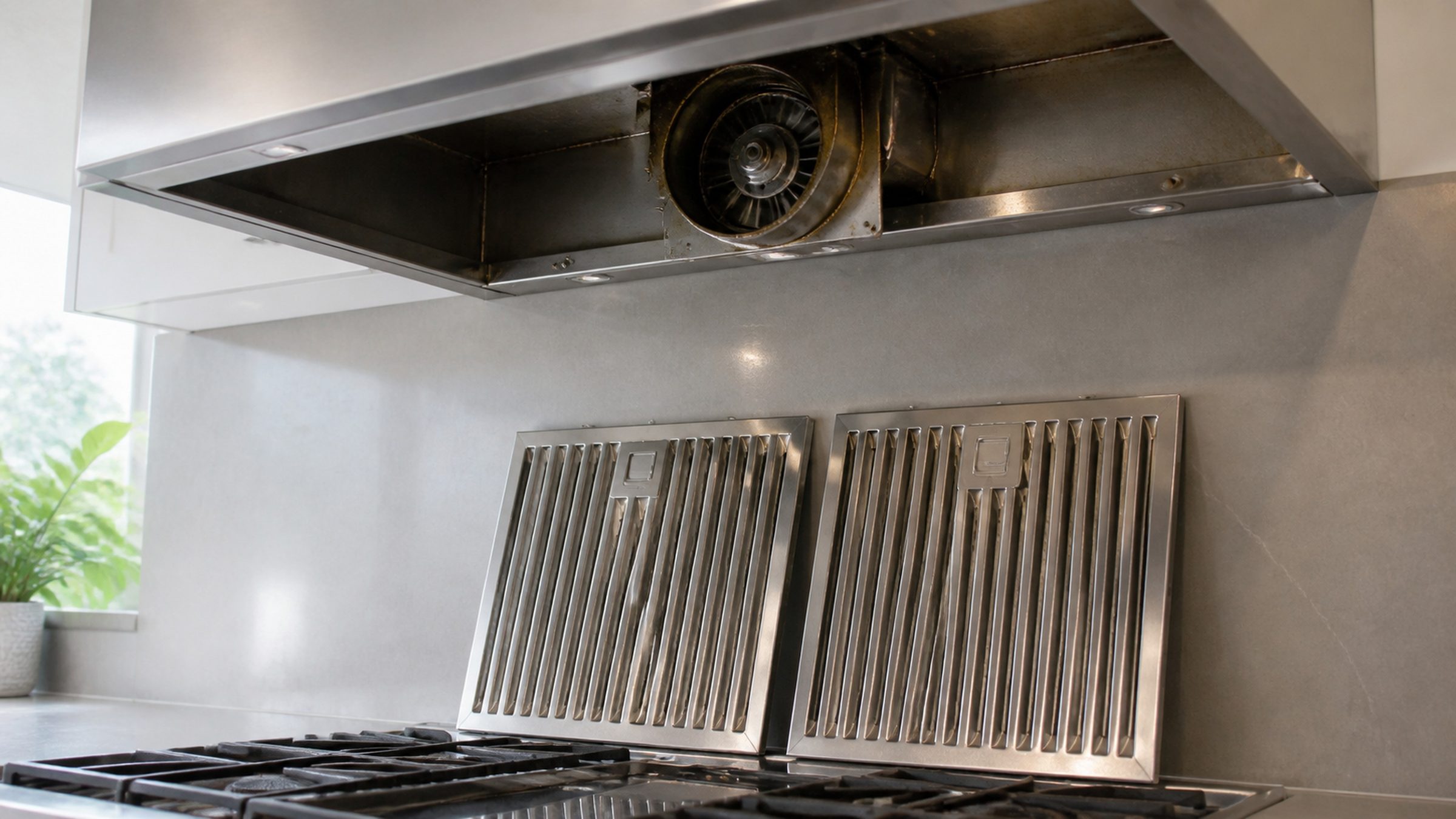
Pull the metal mesh or baffle filters out of a KitchenAid hood about once a month if you cook most days, and wash them in hot water with a degreasing dish detergent or on the dishwasher's hottest cycle. They lift up, tilt down and drop out of their frames with no tools. That is the washable filter. If your hood recirculates rather than ducting outside, there is also a charcoal filter behind or above the metal ones, and that filter is consumable: it is replaced on a schedule, never washed, and a hood that has quietly stopped clearing smoke while the fan still sounds normal is very often a charcoal filter nobody knew was there.
The full guide
How to clean KitchenAid range hood filters, and which filter is which
There are two kinds of filter in a range hood and they have almost nothing in common. One is metal, washable and in front of you every time you cook. The other is charcoal, invisible, consumable, and only exists on some installations — and it is the one behind most of the "the hood does not pull any more" calls we take.
Get the difference straight and the rest of this page takes ten minutes a month.
The metal filter — mesh or baffle — is a grease filter. It catches the oil that would otherwise coat the blower, and it goes back in after washing. The charcoal filter is an odor filter. It exists only when the hood returns air to your kitchen instead of sending it outside, and it is a consumable part with a life, like a water cartridge. Washing it destroys it.
How often should hood filters be cleaned in a Miami kitchen?
About once a month if you cook most days. Every two months if the cooktop mostly boils water and reheats.
That is shorter than the interval a lot of general advice gives, and the reason is what South Florida cooking actually looks like. Frying, searing, a pan of oil for tostones, anything on a high burner with fat in it — that is what loads a filter, and boiling pasta is not. Your cooking sets the interval, not the calendar.
There is a second reason to keep to it. A loaded filter does not simply stop filtering; it restricts. The blower pulls against a partly closed screen, so the hood is louder, moves less air, and the motor runs warmer for a worse result. Every month, ten minutes, is cheaper than a blower.
Taking the metal filters out
No tools. Switch the fan and lights off first and give the hood a minute if you have just cooked, because the filters sit directly over the burners and hold heat.
Then, for each filter:
- Baffle filters — the heavy stainless ones with vertical vanes, standard on the Commercial-Style hoods. There is a small finger pull on the lower edge. Push toward the back of the hood, drop the front edge, and it lifts out.
- Mesh filters — the lighter aluminum ones with a wire loop or a slide catch. Same motion: push against the spring, tilt the front down, and it comes free of its frame.
If it feels like it needs force, you are pulling the wrong edge. Nothing in there unscrews.
While the filters are out, look up into the hood with a flashlight. You are checking two things: whether the blower wheel has a visible coating, and whether there is a second filter behind the metal ones. Both answers are useful.
Washing them
Fill the sink with water as hot as the tap gives, add a good squirt of a degreasing dish detergent, and let the filters sit for fifteen minutes. A spoonful of baking soda in the water helps on filters that have been left far too long.
Then brush both faces — a soft brush along the mesh, or down between the baffle vanes — rinse until the water runs clear, and let them dry completely before they go back. A filter reinstalled wet drips onto the cooktop and marks it.
The dishwasher route works for most of these, laid flat or on edge in the lower rack on the hottest cycle. Check your own use and care guide, because repeated hot cycles can dull or darken aluminum mesh, and never run them in with dishes.
Filters go back the way they came out, with the spring edge toward the rear.
The charcoal filter, and why nobody knows about it
If your hood recirculates — filters the air and gives it back to the room rather than ducting it outside — there is a charcoal filter behind or above the metal ones.
It is not washable. Charcoal works by adsorbing odor into its pore structure, and once those pores are full, they are full; soaking it in hot detergent just fills them with detergent. It is replaced, ordered against the hood's model number, and roughly twice a year is a sane rhythm for a kitchen in daily use.
How to tell which installation you have: look above the hood. Pipe leaving the top or back into the wall, cabinet or ceiling means ducted, and there is no charcoal filter to find. A grille on the front of the upper chimney or on the cabinet face, where air comes back into the room, means recirculating. In condo towers across Brickell, Aventura and Fort Lauderdale the answer is very often recirculating, because the duct route was never the owner's to build.
Write the date on the new filter's frame with a marker. It is the only record that will exist.
If your ventilation is actually a microwave sitting over the range rather than a hood, the charcoal filter is in there too, behind the vent grille at the top, and the same rules apply — that appliance has its own page on this site.
When it is not the filters
Cleaning is maintenance, and maintenance does not fix everything. Come back to us if:
- The fan does nothing on any speed while the lights work. The hood has power, so the suspects are the switch or control, the blower motor, or a thermal cut-out that has tripped after the hood ran hot.
- The hood is loud in a new way — a rumble or a whine that arrived over weeks. That is usually a bearing telling you about itself in advance.
- Clean filters, and it still does not pull. On a ducted hood, check the damper flap where the duct leaves the house. They stick shut with grease and lint, and a stuck damper undoes an entire hood.
- A downdraft will not rise or will not go back down. Do not help it by hand — the gearing is what holds the carriage, and forcing it turns a slow lift into a stuck one.
Independent KitchenAid service across Miami-Dade, Broward and Palm Beach. We are not affiliated with, authorized by or endorsed by any manufacturer.
If it turns out to be a repair
What this leads to, and what it costs
Every job on this site is priced the same way: an on-site diagnostic first, the figure agreed in writing before anybody starts.
-
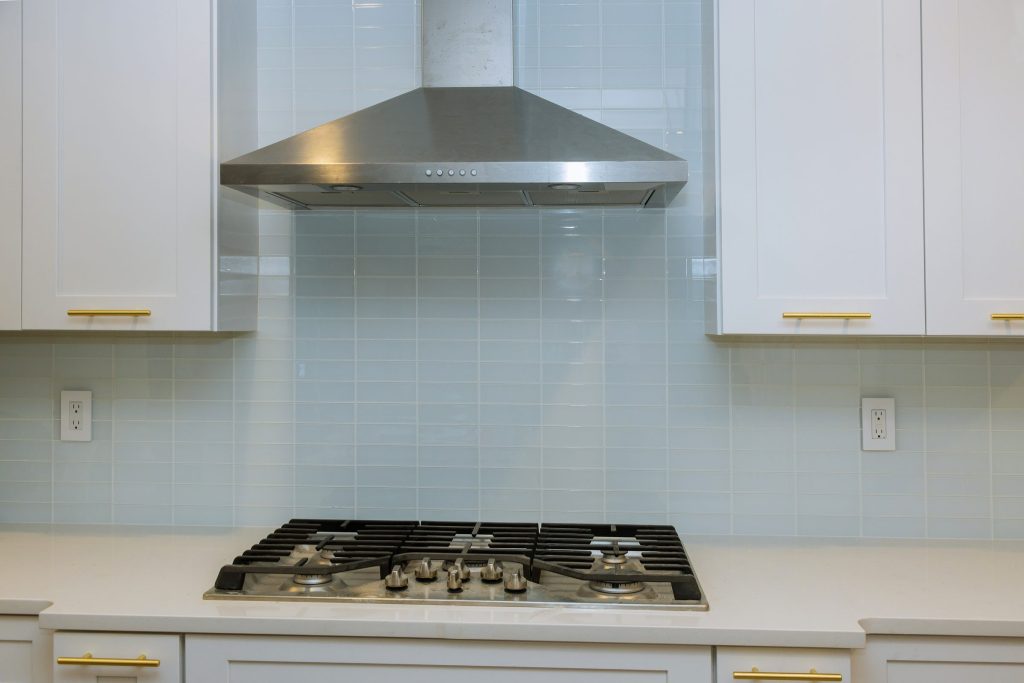
Wall-mount · Under-cabinet · Island · Commercial-Style · Custom liners · Retractable downdraft Range hoods and vents
The appliance that gets attention only when it is silent, and the one whose maintenance is genuinely all an owner needs to do. Wall-mounted canopies, under-cabinet hoods, island hoods, insert liners for custom millwork, and the retractable downdraft that rises out of the counter.
- A fan that does nothing on any speed
- Lights working but no extraction, or the other way round
- A downdraft that will not rise, or will not go back down
-
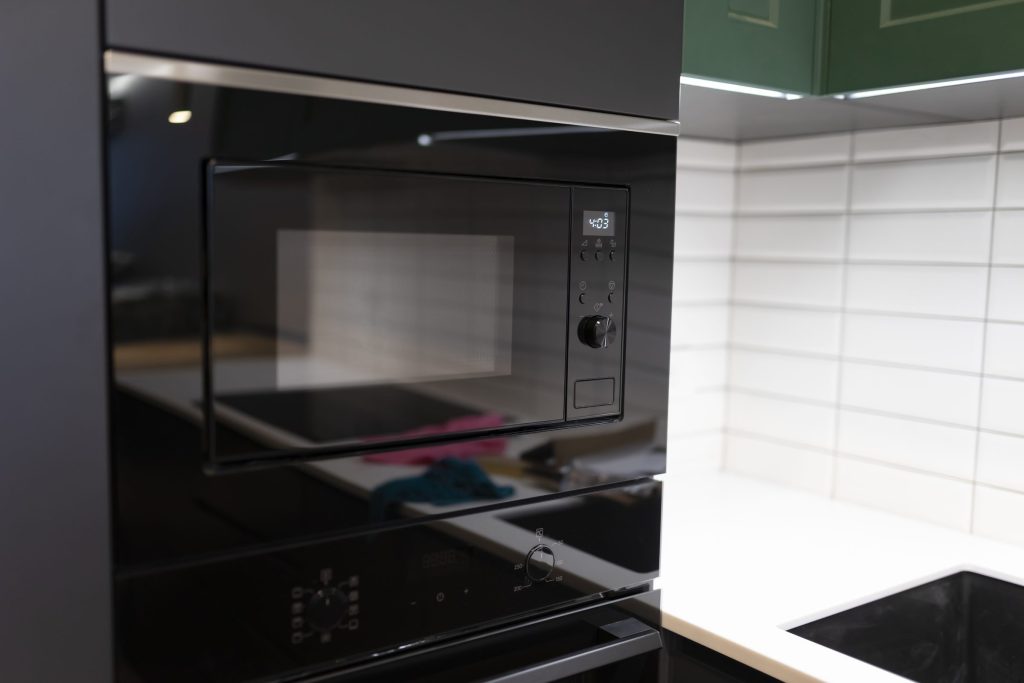
Over-the-range · Built-in · Low profile · Microwave-hood combination · Countertop · Air Fry Microwaves
The appliance nobody thinks about until the light is on and nothing is hot. Over-the-range, built into a cabinet with a trim kit, or the microwave-hood combination that also ventilates your cooktop — and on that last one, a dead microwave means a dead hood as well.
- It runs, the plate turns, and the food stays cold
- Buttons that do nothing, or a panel that has gone dark
- The fan or the light staying on and not switching off
Questions people ask about this
How often should you clean range hood filters?
Monthly is the working answer for a kitchen that cooks most days, and every two months for a household that mostly reheats. Frying, searing and anything with oil in a pan loads them far faster than boiling does, so let your cooking set the interval rather than the calendar. Grease-loaded filters strangle the airflow, which makes the hood louder and less effective at the same time and leaves the motor working harder for a worse result.
Can you clean range hood filters in the dishwasher?
Most KitchenAid metal filters take a hot dishwasher cycle without trouble, laid flat or stood on edge in the lower rack, and it is the easiest route if they are not badly loaded. Two cautions: check your own use and care guide first, because aluminum mesh can dull or darken over repeated cycles, and do not run them alongside dishes, since you are washing grease off metal. A filter that has been ignored for a year is better soaked in the sink first.
How do you remove a KitchenAid range hood filter?
Reach under the hood, push the filter toward the back wall against its spring, then let the front edge drop and pull it out at an angle. Baffle filters usually have a small finger pull on the lower edge; mesh filters usually have a wire loop or a slide catch. Nothing unscrews, and if it feels like it needs force you are lifting the wrong edge.
How do I replace the charcoal filter in a KitchenAid range hood?
Take the metal filters out first, because the charcoal filter sits behind or above them, often clipped to the blower housing or held by two tabs you turn a quarter turn. The replacement is ordered by the hood's model number rather than by size, and it is worth writing today's date on the frame with a marker so the next replacement is not guesswork. Only recirculating hoods have one.
How do I know whether my hood recirculates or ducts outside?
Look above the hood. A ducted installation has round or rectangular pipe leaving the top or the back and going into the wall, the ceiling or the cabinet above. A recirculating installation has a grille on the front of the upper chimney or the cabinet face where the air comes back into the room, and it has a charcoal filter. In an apartment or condo tower the answer is very often recirculating, because the duct is not yours to run.
Maintenance & Prevention
More guides like this one
-
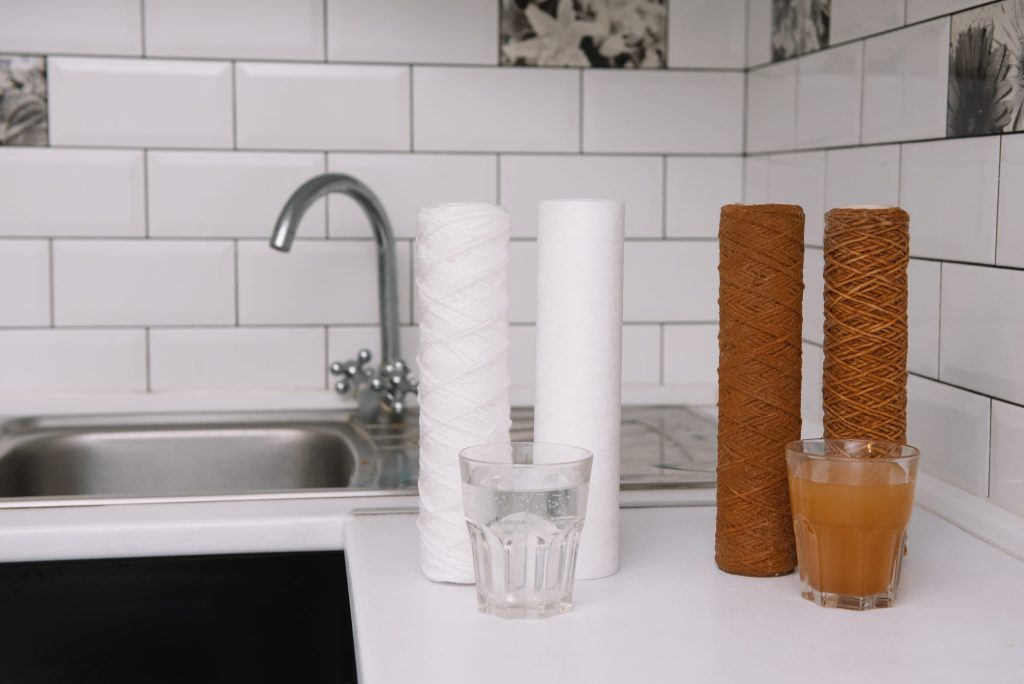
How to Reset KitchenAid Refrigerator Water Filter Light, and Which Cartridge Is Yours
The light is a counter, not a sensor. It is not reporting anything about your water, and it will keep asking until somebody tells it the cartridge was changed.
Read more -
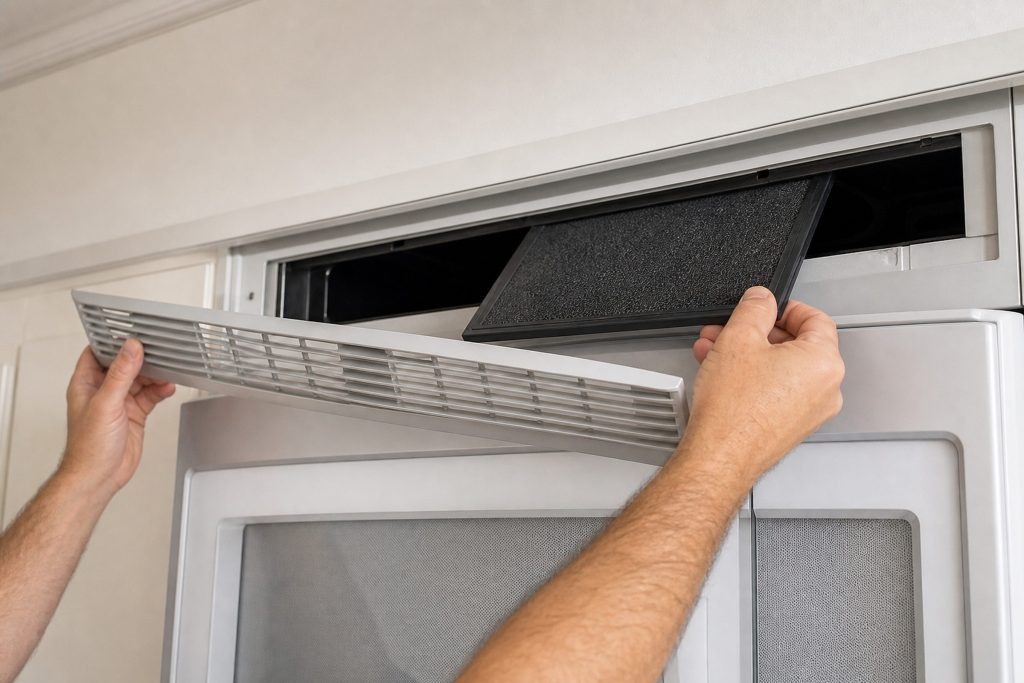
KitchenAid Microwave Charcoal Filter Replacement: The Part Behind the Grille
An over-the-range microwave is two appliances in one box. If it recirculates rather than ducting outside, there is a consumable filter behind the top grille that most owners have never seen.
Read more -
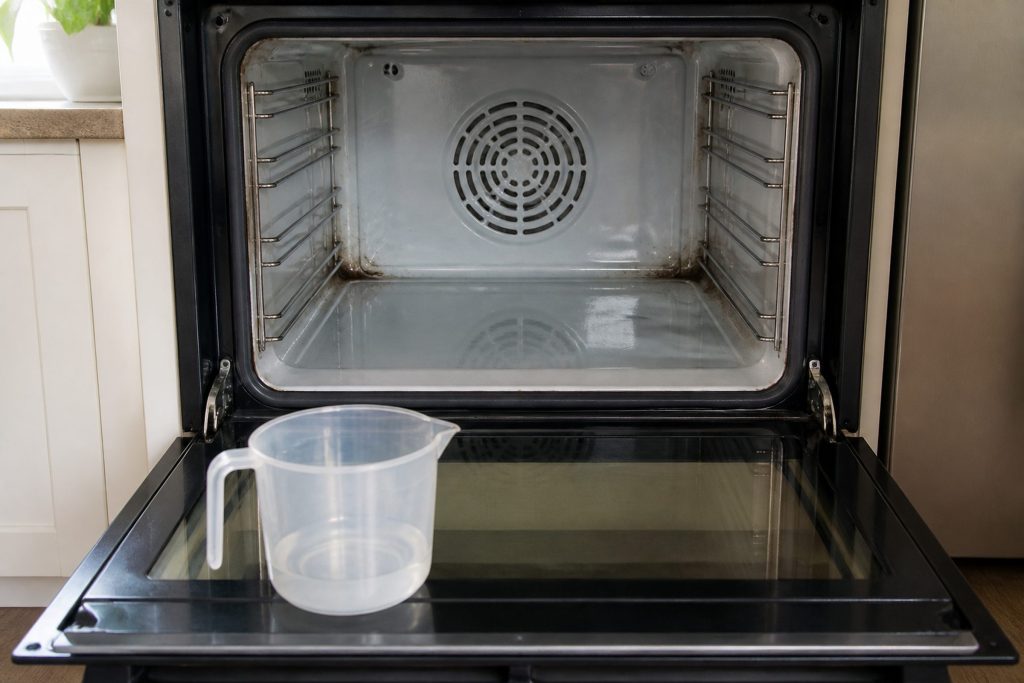
KitchenAid Oven AquaLift Self Clean or High Heat: Which One Do You Have?
One of these cycles runs at low temperature with water on the cavity floor and carries none of the risk of the other. It also will not shift what the other shifts, which is why people decide it is broken.
Read more
Tell us the model number and what it is doing.
This article is based on:
- Official manufacturer documentation
- Internal repair procedures
- Technician repair history
- Company quality standards