Cost Expectations
How Much Does It Cost to Replace a Refrigerator Control Board — and Is It Even the Board?
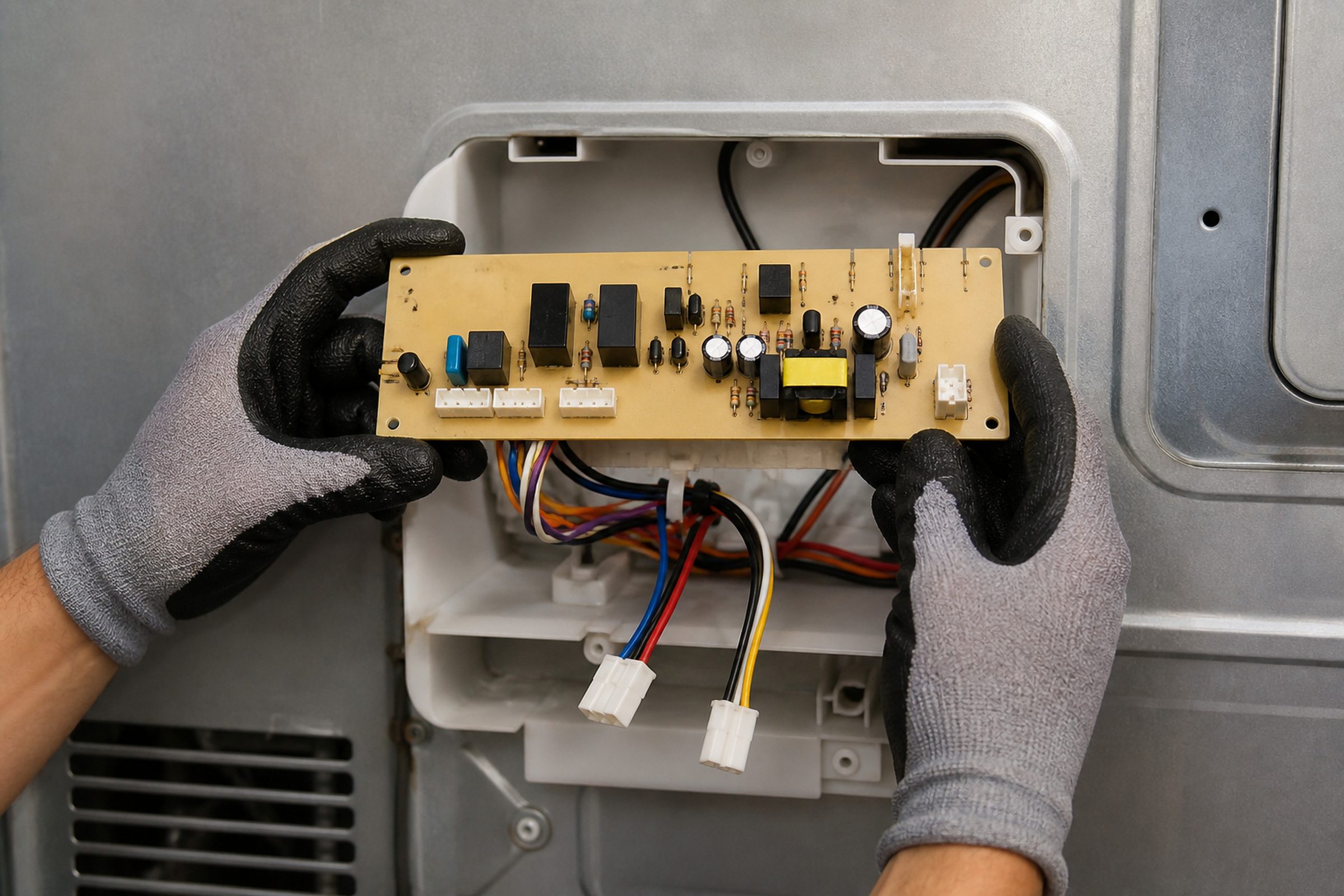
Replacing a refrigerator control board is one of the more expensive non-sealed-system repairs, typically several hundred dollars for parts and labor together, with built-in cabinets at the higher end because they often carry more than one board. The more important part of the answer is that a large share of cabinets diagnosed as board failures are not: a thermistor reading a few degrees off, a failed defrost heater or bimetal, an evaporator fan that has stopped moving air, a stuck damper, or an outage message on the display all make a healthy board look guilty. A board should be reached by elimination and measurement, never by assumption, because once it has been fitted it cannot be returned. Exact cost is confirmed after an on-site diagnostic.
The full guide
How much does it cost to replace a refrigerator control board, and should you?
Several hundred dollars, parts and labor together, for most freestanding French-door and side-by-side cabinets. Built-in units usually sit higher, partly because they often carry more than one board — a main control plus a separate user interface behind the panel — and partly because reaching anything behind a cabinet that is built into a run of cabinetry takes real time.
That is the number people come for, and the exact cost is confirmed after an on-site diagnostic.
Now the part that is worth more than the number: a large share of the cabinets we are called to look at as "board failures" do not need a board. The board is the part people arrive already believing in, because it is the part that explains everything, and that is exactly what makes it a poor first guess.
Why the board gets blamed
A control board is the one component that touches every symptom. It reads the sensors, it decides when to defrost, it runs the fans, it drives the display. So any behavior that feels illogical — a fridge that is warm while the freezer is fine, temperatures that drift, an ice maker that works some days — sounds like a computer problem.
But almost everything a board does depends on what the sensors tell it. A board acting on wrong information behaves exactly like a broken board while being perfectly healthy.
The thermistor, which is the one worth understanding
These cabinets read temperature in several places: fresh food, freezer, evaporator, and on a two-zone wine cabinet one sensor per zone. Each is a thermistor — a small part whose resistance changes with temperature.
Thermistors rarely fail outright. They drift. And a thermistor that is lying by a few degrees does not stop the cabinet; it makes the whole cabinet behave strangely.
Consider what happens when the fresh-food sensor reads three degrees warmer than reality. The board, doing its job correctly, keeps calling for cooling. The compartment gets colder than you set it. Lettuce freezes on the top shelf while the display insists everything is at 37. Now imagine the same sensor drifting the other way: the board stops cooling early, the compartment sits warm, and the display still looks right.
Either way the owner sees a cabinet that "ignores the settings," which sounds like electronics. It is a small part, and it is found by reading the sensor at a known temperature rather than by reading the display — because the display is the thing under suspicion.
The rest of the list that gets called a board
The defrost circuit. Three separate parts: the heater, the bimetal thermostat or sensor that allows it to run, and the control that calls for it. When defrost stops finishing its job, ice builds over the evaporator coils until air can no longer pass. The result is a cold freezer and a warm refrigerator — which is the single most common symptom people describe as a board problem. Two of those three parts are inexpensive.
The evaporator fan. In these cabinets the freezer does the cooling and air is moved across into the fresh-food side. A fan that has stopped moving air produces a warm refrigerator with a compressor running perfectly, and it is a far smaller part than a board.
The damper. The flap that meters cold air into the fresh-food compartment. Stuck shut is a warm fridge; stuck open is a fridge that freezes.
The compressor start relay. A repeating click, hum, click from the back with temperatures rising is very often the relay, not the compressor and not the board.
Condenser airflow. A condenser packed with dust, or a cabinet built tight into cabinetry with no clearance, runs warm in a Miami August in a way it never would elsewhere.
An outage message. On these refrigerators, PO on the display means the power supply was off long enough that the freezer rose to 18°F or higher, with an alert tone, and a Confirm prompt blinking until you acknowledge it. That is the cabinet telling you what happened while you were out, not a failure. In hurricane season we see it constantly, and it needs acknowledging and a recovery period rather than a part.
Condensation and frost in humid weather. The maker itself documents a minimal amount of condensation as normal in high humidity, including moisture on the mullion between French doors and some frost on interior walls, and names switching Energy Saver off as the remedy. Worth knowing before anybody pays for electronics.
What a real board diagnosis looks like
A board is condemned when its outputs do not match its inputs. That means:
- Every sensor read at a known temperature and compared against the specification for that part.
- The defrost circuit tested as three components, not as a concept.
- Voltage confirmed at the board's inputs, and at its outputs when it should be commanding a fan, a heater or a valve.
- Temperatures measured at the shelf over a run rather than read off the display.
- The supply itself checked, because a miswired outlet is a documented cause of electronic complaints on these appliances.
If a sensor reads correctly, the fan has power and does not turn, and the board is commanding it, the fan is the problem. If the sensor reads correctly, the board has power, and it never commands the fan at all, now you have a board.
Why this matters more than it would on another part
A control board cannot be returned once it has been fitted.
Electronic parts are sold as final sale by essentially every supplier, and the reason is straightforward: a board that has been installed cannot be resold as new, and a board that has been powered up in an appliance with an underlying failure may not be intact. Nobody takes that risk back.
So a wrongly ordered board is not a delay — it is money that is gone, and the actual repair still has to be paid for after it. On a part in this price band that is the whole argument for elimination before ordering, and it is why we treat a board as the last stop rather than the first.
One more practical point: some boards for these appliances are supplied unprogrammed or need configuring to the model after fitting. That is not a surcharge, it is part of doing the job properly, and it is another reason the part and the visit belong together.
Repair or replace
If the cabinet is under about eight years old and the board is genuinely the failure, replacing it is usually straightforward economics against a comparable new refrigerator — and on a built-in, it is not close, because the appliance is worth several times the repair.
If the cabinet is older, has already had a sealed-system repair, or needs a board plus something else, ask for both numbers. We will give you the honest one, including when the honest answer is that we would not do this repair.
Book the diagnostic, not the board
Tell us on the phone which compartment is wrong, whether you can see frost on the back wall of the freezer, and what the display is showing including any outage message. That one sentence decides most of what we bring.
We diagnose refrigeration across Miami-Dade, Broward and Palm Beach, with a written figure before anything is ordered.
Independent appliance repair. We are not affiliated with, authorized by or endorsed by any manufacturer.
If it turns out to be a repair
What this leads to, and what it costs
Every job on this site is priced the same way: an on-site diagnostic first, the figure agreed in writing before anybody starts.
-
French door · Side-by-side · Bottom mount · Built-in · Counter-depth · 30"–48" Refrigerators
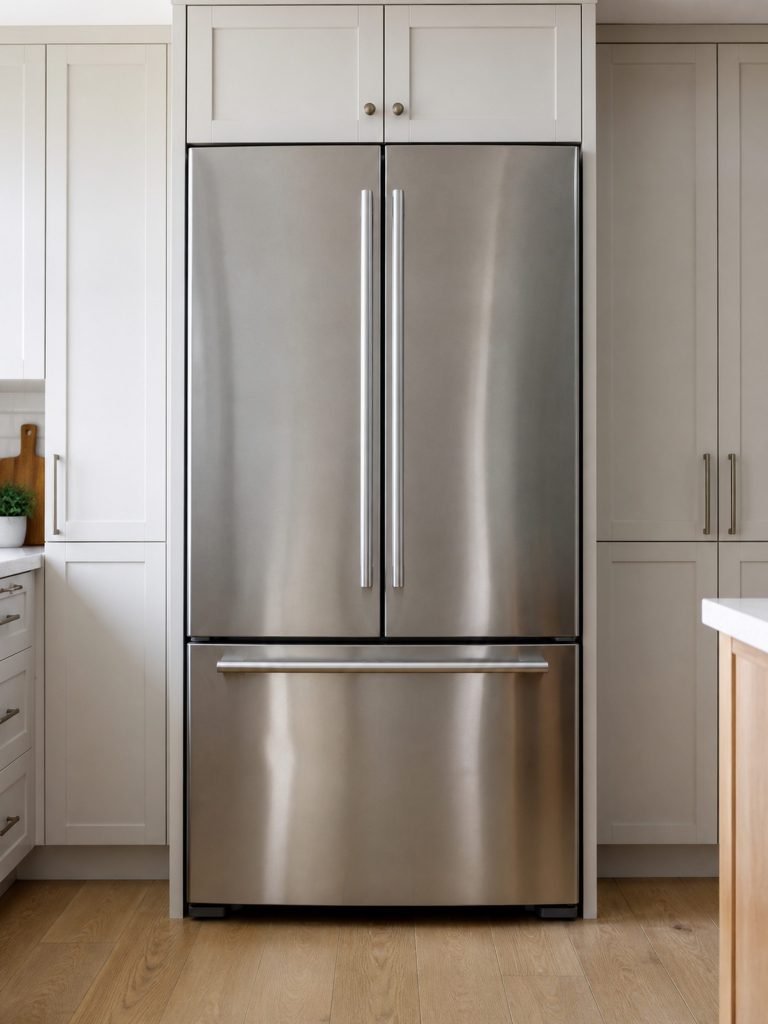
The largest part of this maker's line and the largest part of our phone. French door and side-by-side, freestanding and built into cabinetry, counter-depth and full depth — and one code that South Florida sees more than anywhere else, because it is the one a cabinet shows after the power has been off.
- PO flashing on the display after an outage
- The refrigerator warm while the freezer is still cold
- Water on the floor, or ice on the freezer floor
-
from $95 Diagnostic visit
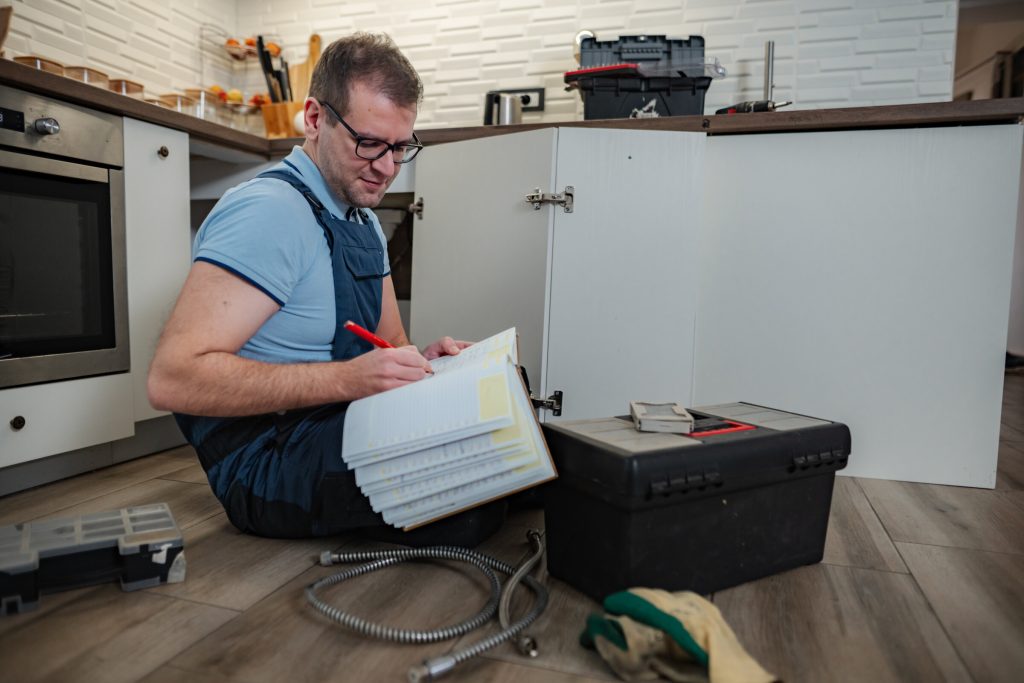
We read what the appliance is reporting — a code on a display, or the flashes on a dishwasher Clean light — then measure before saying anything about the repair. The fee is credited toward the work when you go ahead.
- The code read on site, including blink codes
- Measured rather than guessed
- Credited toward the repair

Questions people ask about this
How much does it cost to replace a refrigerator control board?
Several hundred dollars in most cases, parts and labor together, and higher on built-in cabinets that carry a main board plus a separate user interface. What moves it is which board, whether the model is current, and whether the cabinet has to be pulled out of a run of cabinetry to reach it. Exact cost is confirmed after an on-site diagnostic.
My KitchenAid control board is not working. How would you prove that?
By eliminating everything the board is being blamed for. Every temperature sensor is read at a known temperature, the defrost circuit is tested as three separate parts, the evaporator fan is checked for airflow rather than for noise, and the damper is watched. A board is condemned when its outputs do not match its inputs — not because the cabinet is behaving oddly.
How do I reset an oven control board on an electric stove?
Cut the power at the breaker for a full minute, restore it, and set the clock — several timed functions will not run until the time of day is set, which is why an oven can look dead after an outage and be perfectly well. That breaker cycle is the documented clearing procedure for some codes on these appliances. A board that will not clear after a proper power cycle needs service.
What does a KitchenAid oven or dishwasher control board cost by comparison?
Oven and range boards sit in a similar band to refrigerator boards, and on a wall oven the access adds time because the appliance usually has to come out of its housing. Dishwasher boards are typically lower, unless the board and the touch panel come as one assembly. All three are ranges rather than figures until somebody has seen the appliance.
My refrigerator display says PO. Is that a board failure?
No, and this one matters here. PO is a power outage message: it tells you the supply was interrupted and the freezer warmed to 18°F or higher while it was off, and it sounds an alert. You acknowledge it on the control panel, give the cabinet time to come back down, and check the food. It is the cabinet reporting history, not reporting a failure.
Cost Expectations
More guides like this one
-

KitchenAid Dishwasher Repair Cost in Miami: How Many of These Calls End Without a Part
A real share of these calls end at a filter, an air gap, a disposal plug or a drain loop, and cost a visit and nothing else. This page starts there, then gives ranges for the repairs that do need parts — including the two that get close to the price of a machine.
Read more -
KitchenAid Ice Maker Repair Cost: Three Different Numbers Behind One Question
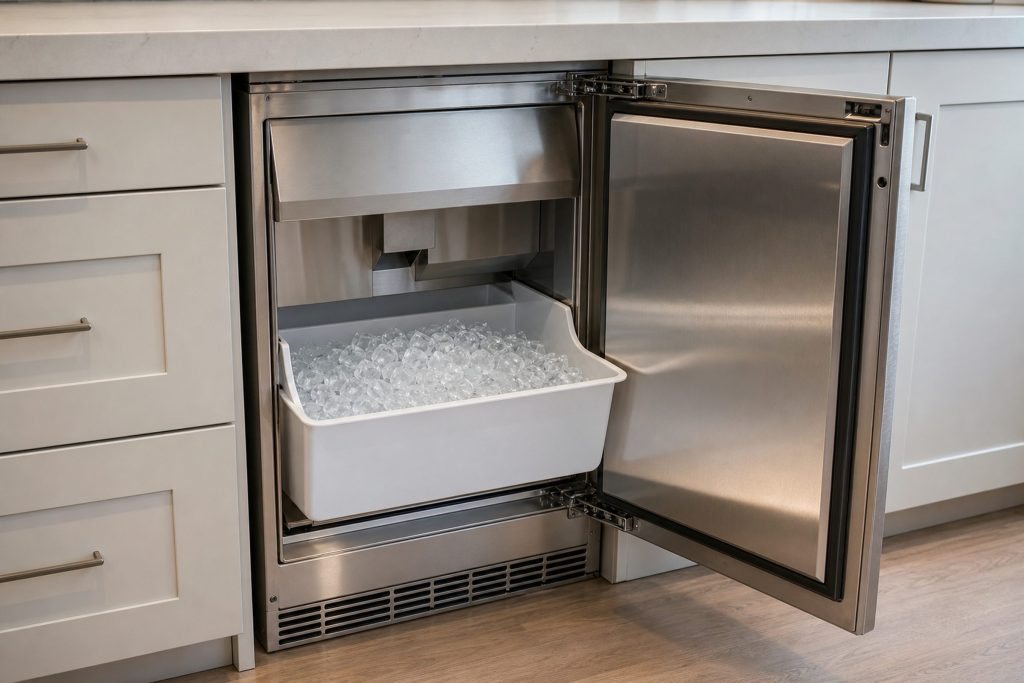
The module inside a refrigerator, an undercounter machine and a water supply problem are three different repairs at three different figures, and they all arrive as the same phone call. Separate them first — then notice that the cleaning which prevents most of this costs less than any of the three.
Read more
Tell us the model number and what it is doing.
This article is based on:
- Official manufacturer documentation
- Internal repair procedures
- Technician repair history
- Company quality standards