Safety & Risks
A KitchenAid Dryer Thermal Fuse That Keeps Blowing Is Telling You About the Duct
A thermal fuse is a one-time safety device that opens permanently when the air inside the dryer gets hotter than it should, and on most of these machines opening it cuts the motor circuit, so the dryer goes completely dead rather than simply losing heat. It blows because heat is not leaving the appliance, and the usual reason is a restricted vent — lint in the duct behind the machine, in the run through the wall, or in the flap outside. Replacing the fuse without clearing the duct restores the dryer and leaves the condition that overheated it, which is why the second fuse tends to blow faster than the first. Clear the whole run to the exterior, confirm the flap opens, then replace the fuse and check the operating and limit thermostats with it.
The full guide
What a KitchenAid dryer thermal fuse is, and what it is really telling you
A KitchenAid dryer thermal fuse is a small, inexpensive, one-time safety device — usually a flat plastic-bodied part clipped to the blower housing or the exhaust duct inside the cabinet. Inside it is a link that opens permanently at a set temperature and never closes again.
It is not a thermostat. A thermostat cycles: it opens when things get warm, closes when they cool, and does that thousands of times over the life of the machine. A fuse acts once, and once it has acted, the part is finished.
So when a technician tells you the thermal fuse is blown, the honest translation is: the inside of your dryer got hotter than the manufacturer decided was acceptable, and the last line of protection did its job. The fuse is the messenger.
That is the whole reason this page exists. The part is cheap enough that people replace it, the dryer works again, and the thing that overheated it is still there.
Why the dryer goes completely dead rather than just cold
This surprises people and it is worth explaining, because it changes what the symptom looks like.
On many of these machines the thermal fuse sits in the motor circuit, not the heat circuit. When it opens, the dryer does not run warm and dry badly — it does nothing at all. Press start and the machine is silent.
That is why "my dryer is completely dead" and "my dryer keeps blowing thermal fuses" are frequently the same phone call, and why people spend an afternoon on the start switch and the door switch first.
The order the safety devices act in, from gentlest to last:
- The cycling thermostat, which is supposed to hold the drum temperature inside a normal band by switching the heat on and off.
- The high-limit thermostat, which cuts the heat circuit when the temperature climbs past what the cycling thermostat should have handled.
- The thermal fuse, which opens permanently and takes the machine out of service.
If the fuse has blown, the two devices in front of it did not stop the climb. Either they failed, or the condition was severe enough to march straight past them. Both possibilities point at the same first suspect.
The duct, which is not part of the appliance
A vented dryer works by one very simple principle: it heats air, blows it through wet clothes, and throws that air outside. Everything about its temperature depends on that air actually leaving.
When the exhaust is restricted, the heated air stalls inside the machine. The element or the burner keeps running because the clothes are still wet, the temperature climbs, and the safety chain does what it was built to do.
Where the restriction actually is, in the order we find it:
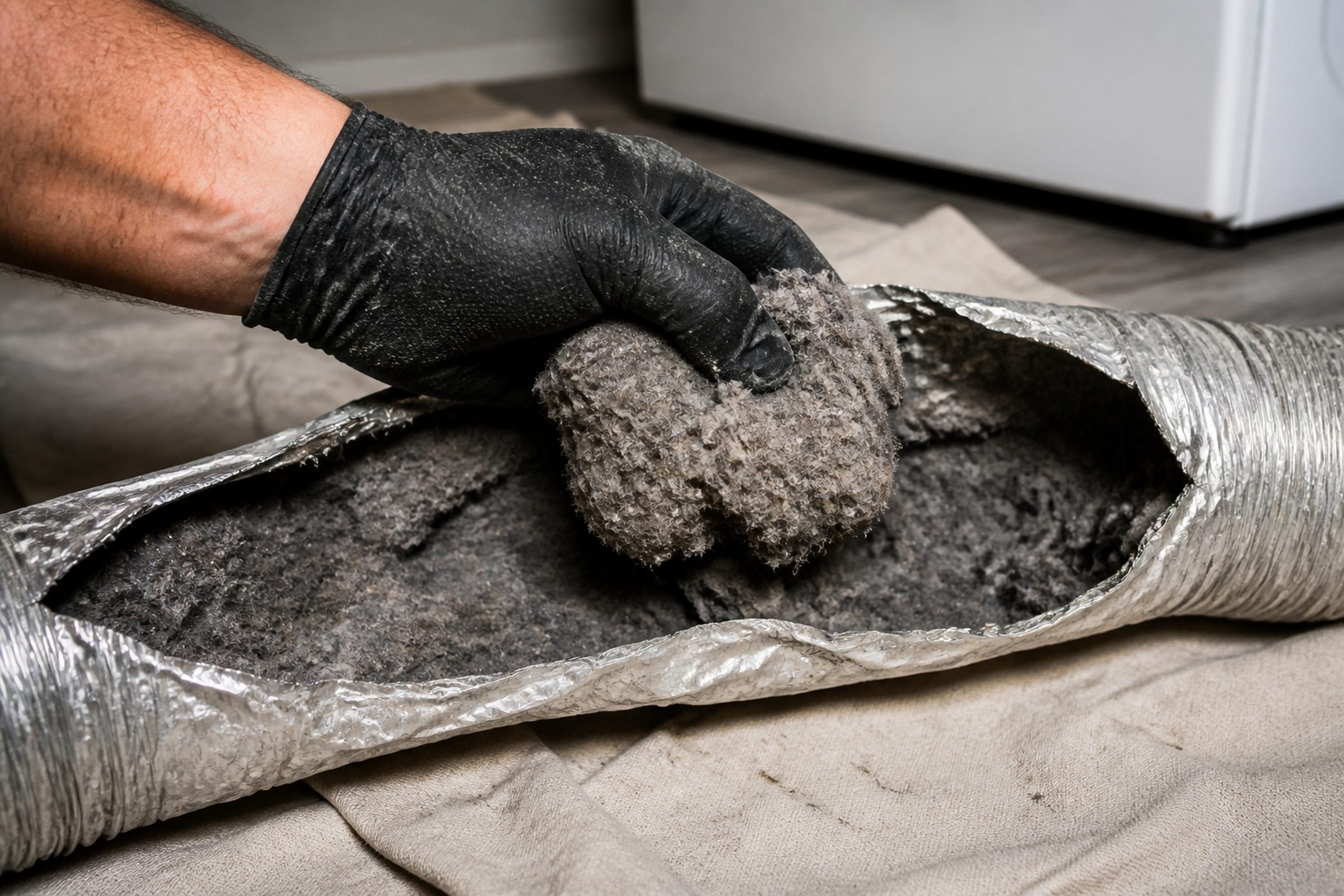
- The flexible duct behind the machine, crushed against the wall when the dryer was pushed back, or full of packed lint at the first elbow.
- The run inside the wall or the ceiling, which nobody has looked at since the house was built and which is usually the worst of it.
- The flap outside, painted shut, blocked by a bird's nest, or fitted with a screen that lint plasters over within a season.
- A run that is simply too long for the machine, with too many elbows, which was a marginal installation from the first day and became a blocked one as it aged.
- The lint screen, which people do clean — and which is the smallest part of the problem. A clean screen with a blocked duct still overheats.
There is also the version of this with no lint in it at all: a dryer venting into a closet with the door shut and no makeup air. The machine cannot exhaust into a room it is also drawing from.
Why South Florida is harder on this than most places
A vented dryer in August is trying to push warm, wet air into air that is already close to saturated. Its margin is thinner here than almost anywhere, and the lint it deposits in the duct arrives damp and packs rather than blowing through.
That is the practical difference. In a dry climate, a partly blocked duct loses efficiency for a long time before it becomes a heat problem. Here the same duct crosses the line sooner, which is why a once-a-year clean of the whole run is the single most useful thing an owner of one of these machines can do.
The other local factor is the machines themselves. KitchenAid stopped selling dryers in the United States, so every one of these still working in a Miami laundry room is an older vented electric or gas machine — a simple, repairable appliance that has had a long time to accumulate lint in places nobody has opened.
Doing this properly, in order
1. Clear the entire vent run, to the outside. Not the screen, not the first three feet. Pull the dryer forward, disconnect the duct, brush the whole run, and go outside and confirm the flap opens freely when the machine runs.
2. Look at what came out. A handful of fluff is normal maintenance. A compacted plug is your answer, and it is worth knowing you found it.
3. Check the duct itself, not just its contents. Flexible foil that has been crushed behind the machine never recovers its shape. Rigid metal duct is what these want.
4. Replace the thermal fuse — with the machine's own part. A fuse is chosen for the temperature at which it opens. A generic part with a different rating is not the same component, whatever the listing says.
5. Test the thermostats at the same time. The cycling thermostat and the high-limit are what should have acted before the fuse did, and a fuse blowing repeatedly with a clear duct usually means one of them has failed closed.
6. Then check what else restricts airflow inside the cabinet. The blower wheel can shed a fin or clog; the internal duct between the drum and the blower packs with lint; the moisture sensor bars in the drum get coated with softener residue and end cycles at the wrong moment.
7. Run a full cycle and feel the exhaust outside. Strong, warm, steady air at the flap is the proof. Nothing else is.
When to stop using the dryer entirely
Some symptoms are worth treating as urgent rather than as a scheduling problem:
- The cabinet is hot to the touch on the outside.
- There is a scorched smell during or after a cycle.
- The dryer stops mid-cycle repeatedly and restarts after cooling.
- You are on your second or third thermal fuse.
Every one of those describes a machine full of lint that cannot shed its heat. Leave it off and book it.
What we do on this call
We clear and inspect the full exhaust path, measure the temperature rise across the drum, test the cycling thermostat, the high-limit and the element or gas valve coils rather than replacing them in turn, and fit the correct fuse. Parts for these machines are usually still available, because they shared platforms with other badges from the same corporate group.
If the honest answer is that the appliance is fine and the wall duct needs work, that is the answer you get, and it is worth the visit on its own.
Independent appliance repair across Miami-Dade, Broward and Palm Beach. We are not affiliated with, authorized by or endorsed by any manufacturer.
If it turns out to be a repair
What this leads to, and what it costs
Every job on this site is priced the same way: an on-site diagnostic first, the figure agreed in writing before anybody starts.
-
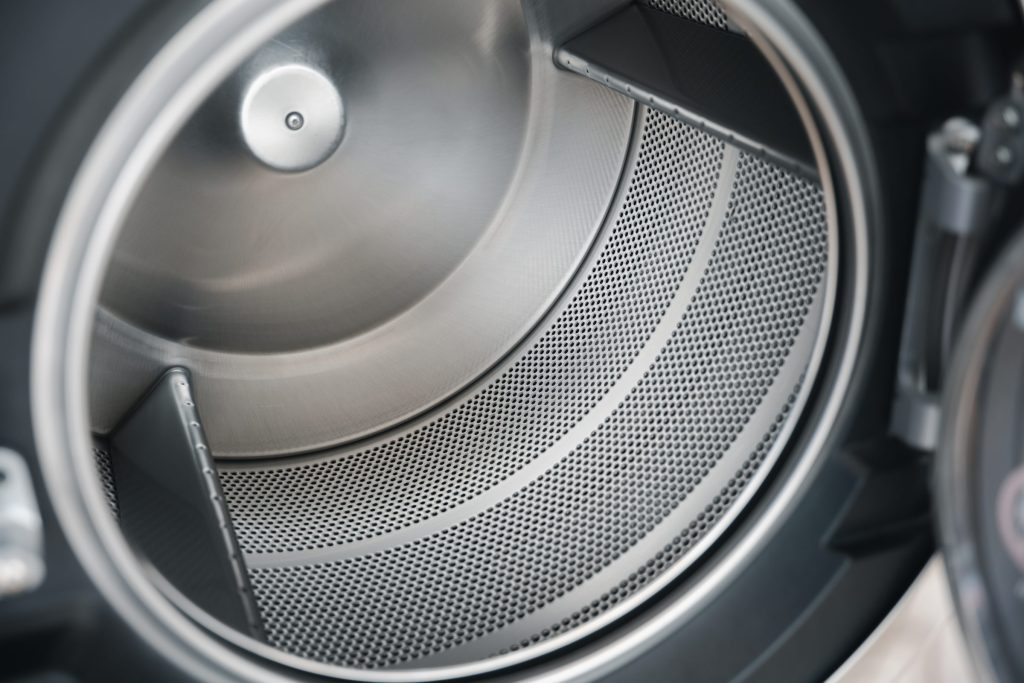
Electric and gas · Vented · Ensemble front-load · No longer manufactured · Still repaired Dryers
The same situation as the washer next to it, and usually the same laundry room. KitchenAid stopped selling dryers in the United States, and the ones still working here are vented electric and gas machines that people search for by model number to this day. A vented dryer is a simple appliance, which is why so many of these calls end well.
- A drum that turns with no heat at all
- A cycle that runs and runs and the clothes stay damp
- A machine that will not start, or stops the moment the button is released
Questions people ask about this
What happens if your KitchenAid overheats?
The safety devices act in order. The cycling thermostat is supposed to switch the heat off and on within a normal band. If the temperature climbs past that, a high-limit thermostat cuts the heat circuit. If it climbs further still, the thermal fuse opens permanently and on most of these machines the dryer stops altogether. Each of those is a layer of protection, and the fuse is the last one.
What to do if your KitchenAid overheats?
Stop the cycle, switch the dryer off, and do not restart it to see whether it does it again. Then check the exhaust: pull the machine forward, disconnect the duct, and look at how much lint is in it and in the wall run. A dryer that is hot to the touch on the cabinet, that smells scorched, or that keeps stopping mid-cycle is describing an airflow problem, and running it again makes that worse rather than proving anything.
My KitchenAid dryer is not heating — is that the thermal fuse?
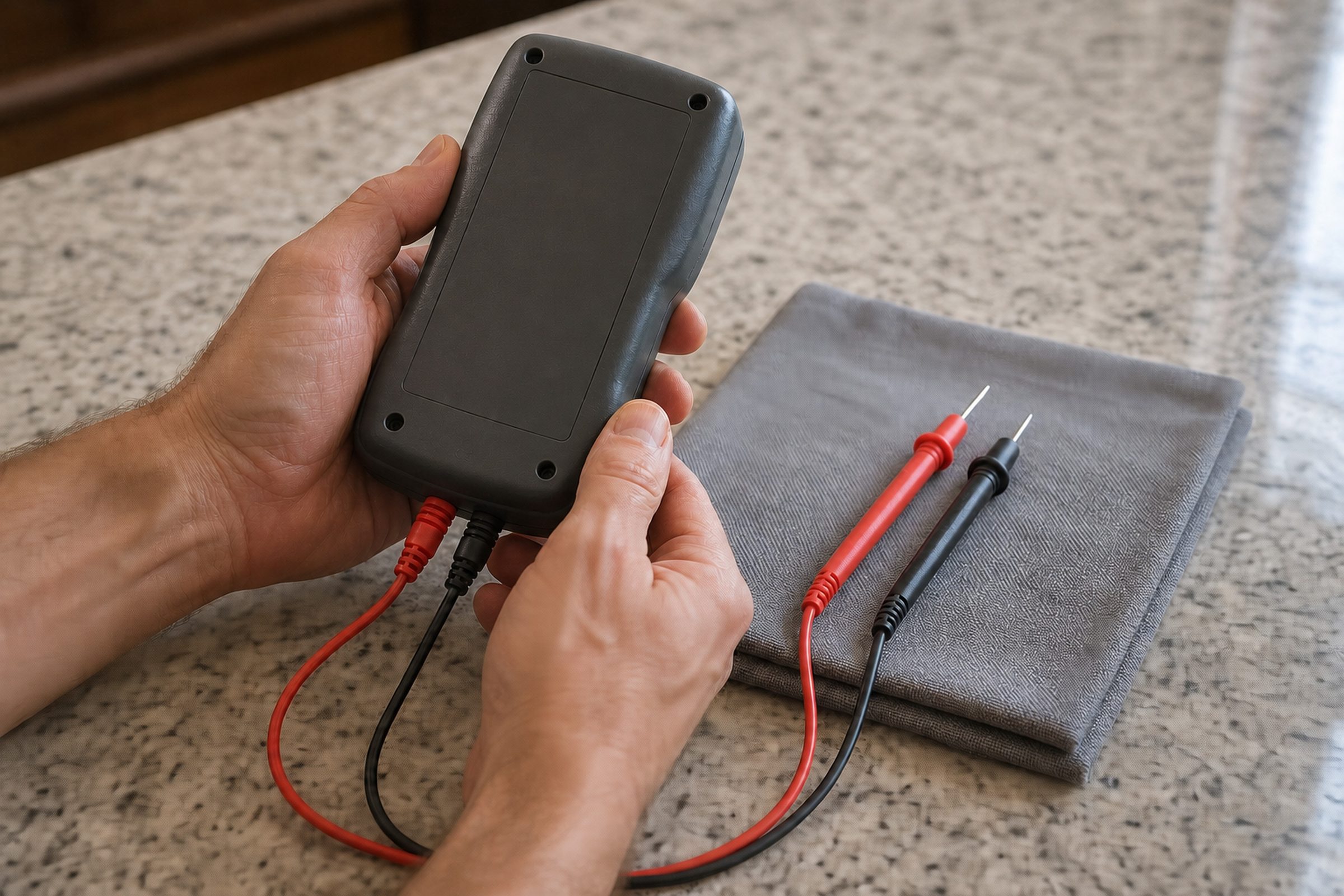
It can be, but check the breaker first on an electric machine. These run on a double breaker and half of it can trip, which leaves the drum turning and the heat gone. On models where the fuse cuts the motor circuit, a blown fuse means a completely dead dryer rather than a warm one. Element, high-limit thermostat and cycling thermostat are the other candidates and they are told apart by measuring.
Can I just fit a new thermal fuse myself and see?
You can, and it will run again for a while. That is exactly the problem. The fuse is a low-cost part and swapping it feels like a fix, but the machine opened it for a reason, and the reason is heat that had nowhere to go — in a cabinet with lint in it. Clear the duct first, then replace the fuse, and have the thermostats checked at the same visit.
How often should the vent be cleaned in South Florida?
At least once a year for the whole run, and more often if the dryer is in a closet with a long duct or several elbows. The air a vented dryer pushes out here is competing with air that is already close to saturated, so a duct that would be survivable in a dry climate fills faster with damp lint that packs rather than blows through.
Safety & Risks
More guides like this one
-
Why Does My Oven Smell Like Burning Plastic? New Oven, or Not New
The whole question is whether the oven is new. The first few uses burn off manufacturing residue and smell exactly like a problem without being one. The same smell on an oven you have had for years is something getting hot that should not be, and that is not a smell to cook through.
Read more -
KitchenAid Burner Not Igniting: It Clicks, Gas Is Flowing, and When to Stop Trying
The clicking is the cooktop trying to light gas that is already flowing. There are two checks worth doing, both free and both at the burner itself — and then there is a hard line: any smell of gas and this stops being a repair question.
Read more -
Can a Cracked Glass Stove Top Be Repaired? No — Switch It Off at the Breaker
The answer is no, and this page says so in the first line because a cracked ceramic or induction surface is a live surface with a path to water and to your hand. Everything after that is the replacement, the cost, and what cracks these tops in the first place.
Read more
Tell us the model number and what it is doing.
This article is based on:
- Official manufacturer documentation
- Internal repair procedures
- Technician repair history
- Company quality standards