Common Problems
KitchenAid Oven Not Heating After Self Clean: The Hardest Hour It Ever Has
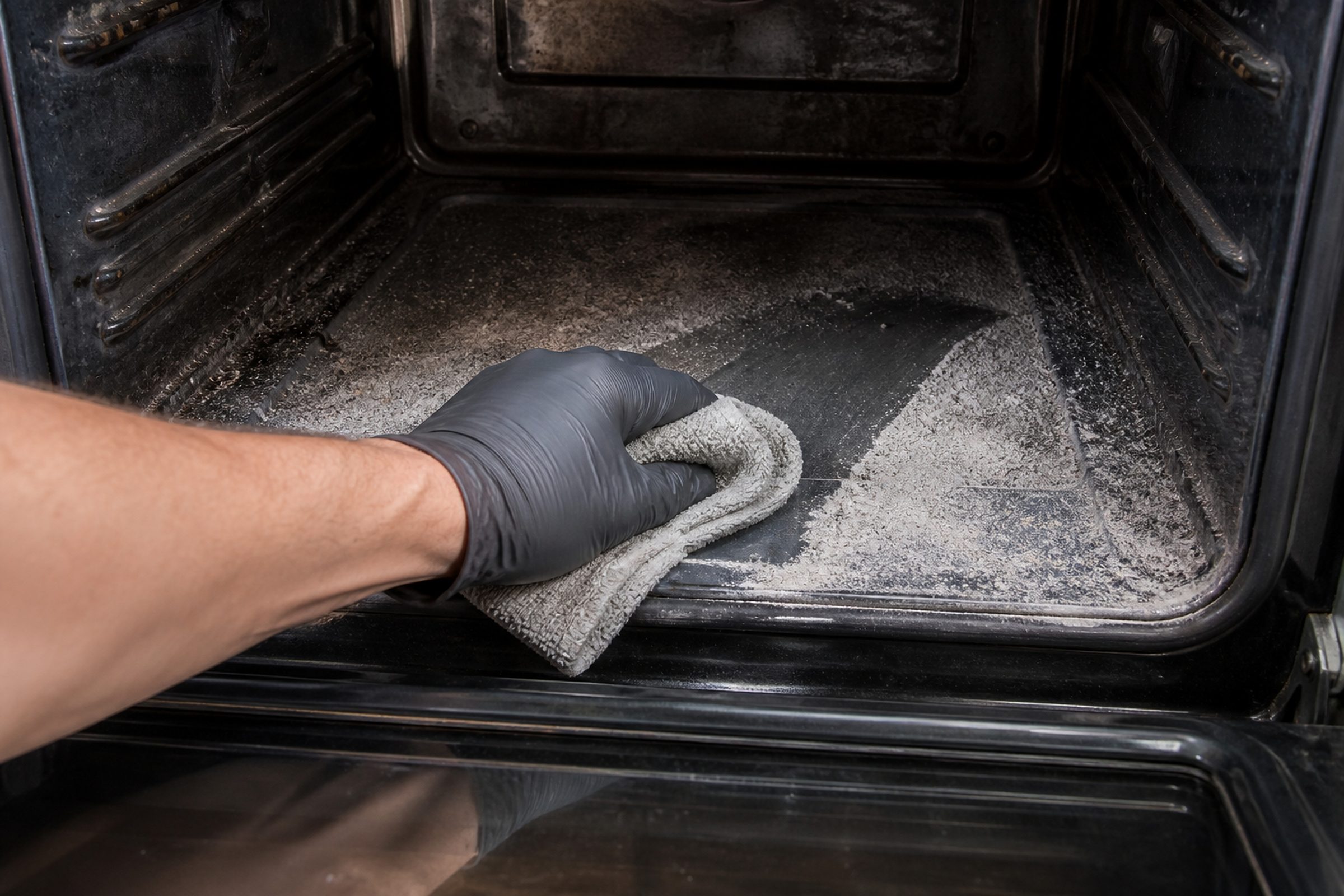
A KitchenAid oven that will not heat after a self-clean has almost always lost one of three things to the heat of the cycle rather than to age. The most common is a thermal fuse or thermal cut-out that opened to protect the appliance and does not reset itself, which leaves an oven with a working display and no heat at all. Next is a bake or broil element that failed under the cycle's temperature, often audibly. Third is the door latch motor or its switch, which can leave the door locked and the control refusing to heat because it cannot confirm the door state. None of these mean the cycle was dangerous. It is simply the hardest hour the oven will ever have, and a component that was close to the end of its life very often ends it there.
The full guide
Why a KitchenAid oven not heating after self clean is the call we expect
Of everything that goes wrong with an oven, this is the most predictable, and it is also the one people find hardest to accept — because the oven was working perfectly the day before, and all they did was run a cycle the appliance offers on its own control panel.
Here is the honest explanation. A high-heat self-clean cycle takes the cavity far hotter than any cooking ever does. That is the entire mechanism: it burns residue to ash rather than dissolving it, and it needs a temperature no recipe would ever ask for. Everything inside the cavity and everything in the walls around it — the elements, the wiring, the sensor, the latch, the insulation, the fuses that protect all of it — spends hours at that temperature.
The cycle is not dangerous and the oven is designed for it. But it is the hardest hour the appliance will ever have, and a component that was quietly near the end of its life very often ends it there. The self-clean did not break the oven so much as ask it a question it could no longer answer.
The three things that usually failed
The thermal fuse or thermal cut-out
The most common single answer, and the most confusing one from the kitchen, because the oven looks entirely alive. The display lights, the buttons respond, the fan may run, and there is no heat at all.
A thermal fuse is a one-time protective device. When the temperature at its location exceeds what it allows, it opens the circuit and stays open. It does not reset when things cool down, and no amount of power cycling brings it back — it is replaced.
One piece of advice worth having: if an oven has blown a thermal fuse after a self-clean, it is worth looking at why rather than only at the fuse. A control that is mis-driving the heating, or an element behaving badly, will take the new fuse out as well, and people do end up replacing the same part twice. A technician who arrives already suspecting that will check the board and the element in the same visit.
An element
A bake or broil element that failed under the cycle. Sometimes this announces itself — a bang, a flash, a smell — and sometimes it simply stops. On a convection oven there is a third element around the fan, and one of the three being dead produces an oven that heats slowly and stalls rather than one that does nothing.
The door latch
The motorized latch that holds the door shut through the cycle. When it fails it usually fails engaged, and the result is a door that stays locked long after the oven is cold, plus a control that will not heat because it cannot confirm the door state.
Give it a couple of hours to cool fully before deciding it has failed. Do not lever a locked door open, ever. A latch is a much smaller repair than a door.
The twist on this make: AquaLift ovens are a different appliance
This is worth knowing before you assume the worst, because a good number of these ovens do not have a high-heat cycle at all.
AquaLift is this maker's low-temperature steam cleaning system. You pour water into the floor of the cavity and run the cycle, and it works by softening residue with steam so it can be wiped away. The cavity never gets hot in the sense a pyrolytic cycle means.
Which means it carries none of the latch-and-element risk described above. If your oven cleans with water in the bottom and it has stopped heating afterward, the cleaning cycle is not the likely cause and we would be looking elsewhere — at the element, the sensor or the control on their own terms.
The trade-off is the obvious one: it will not shift what a high-heat cycle shifts. Heavy carbonized spills need scrubbing after an AquaLift cycle, and that disappoints people who were expecting ash. It is a different tool, not a weaker version of the same one.
What to do before you call
Let it cool completely. Hours, not minutes. Half of the "the door is stuck" calls resolve themselves here.
Write down anything on the display, in full. These ovens use two-part codes — an F number and an E number, like F2E1 — and both halves matter. F2E1 and F2E0 are related; F1E1 has nothing to do with either. The code is the only evidence the oven has produced and clearing it erases it. Note that these codes are shared across the corporate group rather than being this brand's own, so searching the code itself finds more than searching the brand.
Then cut the breaker for one minute and restore it. That is the documented clearing procedure for several of these conditions, and a control that was confused rather than damaged comes back from it. A code that returns is real, and now you know that too.
Do not run the cycle again to see if it works. If something in the heating circuit has partly failed, another self-clean is the worst possible test.
What the repair usually looks like
A thermal fuse is an inexpensive part; the labor is in reaching it, which on a wall oven means bringing the appliance forward out of its housing. An element is straightforward. A latch assembly is moderate. A control board is the one where the figure is worth discussing before anybody orders anything, and on an older oven it is worth weighing against the appliance.
We will tell you which of those you are looking at before any parts are ordered, and exact cost is confirmed after an on-site diagnostic.
Have ready when you call: the model number from the frame inside the door, the full code if there is one, whether the door is locked, and whether the cleaning cycle you ran used water in the bottom of the cavity or not. That last question separates two different appliances and it saves a visit.
Independent KitchenAid service across Miami-Dade, Broward and Palm Beach. We are not affiliated with, authorized by or endorsed by any manufacturer.
If it turns out to be a repair
What this leads to, and what it costs
Every job on this site is priced the same way: an on-site diagnostic first, the figure agreed in writing before anybody starts.
-
Single · Double · Combination microwave-oven · 24", 27", 30" · True Convection · Self-clean Wall ovens
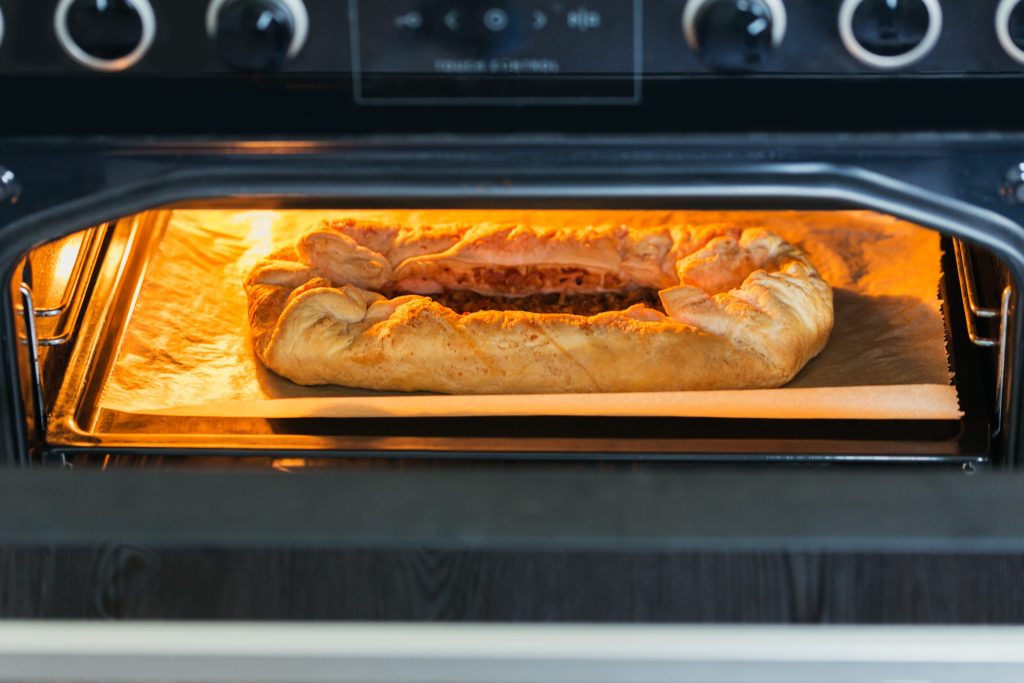
Built into a tall housing, surrounded by cabinetry, and heavy. A wall oven is the appliance where the access is a real part of the job — and the combination units, with a microwave above the oven, are two appliances in one opening that report separately and fail separately.
- An F code and a letter E on the display, with the oven refusing to start
- An oven that heats but never reaches the temperature it is set to
- A door locked after a self-clean, hours after it cooled
-
Commercial-Style · Slide-in · Freestanding · Double oven · Downdraft · Gas, electric, dual fuel, induction Ranges
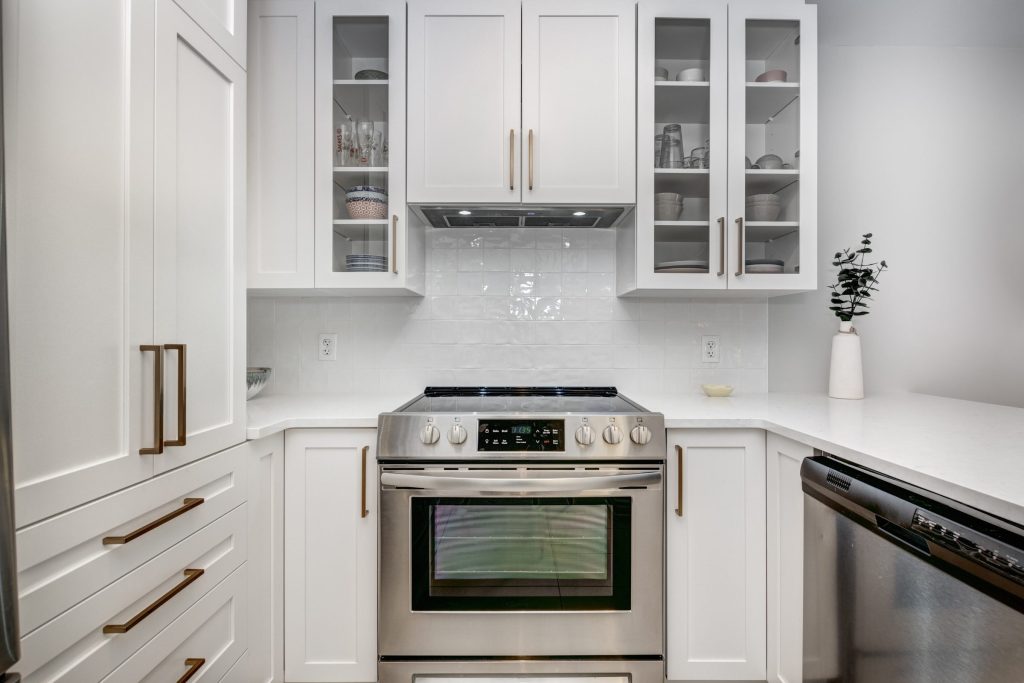
One appliance and two systems that fail independently. More than half of this maker's current ranges are the Commercial-Style machines — heavy, knob-controlled, gas or dual fuel or induction — and the rest are slide-ins and freestanding ranges, including a downdraft model with the ventilation built into the appliance itself.
- The oven not reaching temperature, or running far out
- A surface burner that clicks and never lights
- A door still locked hours after a self-clean
Questions people ask about this
How long does a KitchenAid oven take to self clean?
It depends entirely on which cleaning system your oven has, and the manual for your model gives the figure. A high-heat pyrolytic cycle runs for hours and then needs a long cool-down before the latch will release, so plan on losing the oven for most of a day. The low-temperature steam cycle this maker calls AquaLift is far shorter and is a different kind of job altogether. Check which one you have before you set aside the time.
My KitchenAid oven door is locked after the self-clean and will not open.
Give it a couple of hours to cool completely first — the lock is designed to hold until the cavity is safe, and impatience is the usual explanation. If it is stone cold and still locked, cut the breaker for a minute and restore it. If it is still locked after that, stop and call. Do not lever it: the latch motor or its switch has failed with the door shut, and forcing it turns a latch problem into a door problem.
The oven works but everything comes out underdone since the clean.
That points at the temperature sensor rather than at the heat. A sensor that has drifted after the cycle makes the oven believe it has arrived at temperature before it has, so the element stops early and everything runs cool. Consistently cool and wildly swinging are different problems — the first is usually the sensor, the second is more often the element cycling or the control.
Should I ever use self-clean again?
Sparingly, and never the night before you need the oven. Wipe out the worst of the spills by hand first so the cycle has less to burn off, run it when you can spare the appliance for a day, and do not interrupt it partway. On an oven with AquaLift the calculation is different — that cycle is low-temperature and carries none of this risk, though it also will not shift what a high-heat cycle shifts.
My KitchenAid oven stopped working after a power outage, not a self-clean.
Different problem, easier answer. Set the clock first: several timed functions will not run until the time of day is set, which is why an oven can look dead after a storm and be perfectly well. PF on the display, or a flashing time of day, both simply mean a power failure occurred. If it still will not respond, cut the breaker for a full minute and restore it.
Common Problems
More guides like this one
-
KitchenAid Refrigerator PO Code: What It Means After a South Florida Outage
PO is not a failure. It is the cabinet telling you it lost power long enough for the freezer to get warm, and asking somebody to acknowledge it. The decision it is really asking you to make is about the food.
Read more -
KitchenAid Microwave Not Heating: Why Everything Else Looks Normal
The turntable turns, the light is on, the fan runs, and the food is cold. That is exactly what this failure looks like, because the heat comes from a circuit that shares nothing with any of it — and that circuit is the reason this page has no checklist.
Read more -
KitchenAid Ice Maker Not Working: Which of the Two Machines Is Yours
Two completely different appliances share this phrase — the module bolted inside a refrigerator and the undercounter machine with its own water line and its own drain. The checks have almost nothing in common, so start by deciding which one you own.
Read more
Tell us the model number and what it is doing.
This article is based on:
- Official manufacturer documentation
- Internal repair procedures
- Technician repair history
- Company quality standards