Common Problems
KitchenAid Dishwasher Clean Light Flashing: That’s a Code, Not a Complaint
A flashing Clean light on a KitchenAid dishwasher is the machine reporting an error code, not a reminder about the dishes. On machines with no numeric display the light delivers the same F#E# code a display would print, in two bursts: the first burst is the F number, then a short pause, then the second burst is the E number, then a long pause and the whole thing repeats. Seven flashes, a pause, one flash is F7 E1. Count both bursts and write both numbers down before you cancel or cut the power, because canceling clears the code and the machine then has nothing left to tell anybody.
The full guide
What a KitchenAid dishwasher clean light flashing is actually telling you
It is an error code. Not a reminder, not a stuck indicator, not the machine being temperamental — a real, specific, two-part code, of exactly the kind a dishwasher with a numeric display would print on its screen.
Most KitchenAid dishwashers have no screen. The control panel is a row of cycle names and a set of indicator lights, and there is nowhere for a number to appear. So the machine flashes it instead, using the one light everybody looks at.
That is the whole trick, and it is also why so much of what you find about this is unhelpful. Almost every page on the subject tells you to count the blinks. Counting the blinks is half of the instruction, and it is the half that loses the diagnosis, because the code has two numbers in it and the light delivers them one after the other.
The two-burst reading, which is the part everybody skips
Stand in front of the machine and watch a complete repeat before you touch anything. Here is what the pattern is doing:
- First burst — a run of flashes. Count them. This is the F number, the function.
- A short pause.
- Second burst — another run of flashes. Count these too. This is the E number, the error.
- A long pause, noticeably longer than the first one.
- Then it starts again from the top.
So seven flashes, a pause, one flash, a long pause, and repeating means F7 E1. Two flashes, a pause, one flash means F2 E1. The manufacturer documents this reading procedure itself; it is not a trick somebody worked out in a forum.
The mistake to avoid is counting straight through the pause. If you read seven-then-one as "eight blinks" you have invented a code that does not exist, and every search you run from that point takes you somewhere wrong.
Two practical notes. The long pause is your anchor — start counting from just after it. And watch at least two full repeats, because the first one is always the one where you are still working out what you are looking at.
What the two numbers mean once you have them
The F names the function that reported: the water supply, the drain, the heater, the control, the door. The E names what that function reported.
Which means the two halves are not interchangeable and near-misses are not near at all. F2 E1 and F2 E0 are related — same function, different error. F1 E1 is not related to either of them, because it comes from a different function entirely. This is why the second burst is worth as much as the first.
One more thing worth knowing before you go looking: these codes are not KitchenAid's own. They are shared verbatim across the corporate group, and the identical support page exists at the identical address under Whirlpool and Maytag. A single service manual covers all three badges. So if you search the code and land on a Whirlpool page, you have not landed on the wrong page — you have landed on the same page with a different logo, and what it says applies to your machine.
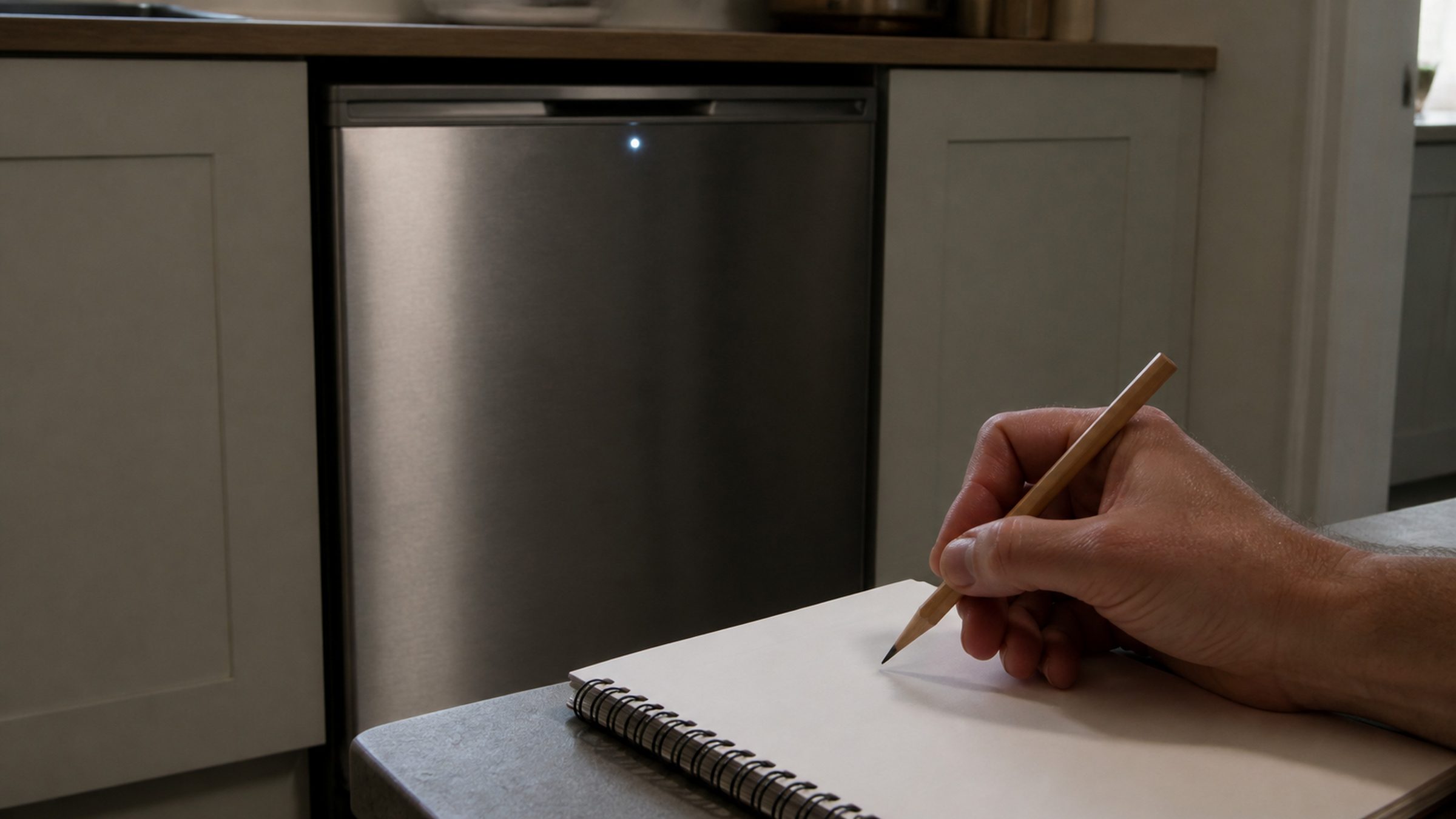
Write it down before you clear it
This is the most useful sentence on this page and it takes ten seconds to act on.
The code exists nowhere but on that light. There is no log, no history screen, no way to recall it later. The moment you press Cancel, or open the breaker, or the machine gives up and stops flashing, it is gone.
We have walked into plenty of Miami kitchens where the machine had already said exactly what was wrong two hours earlier, and the only remaining evidence was somebody's memory of "it was blinking a lot."
So: both numbers, on paper or in your phone. Along with two free observations that narrow things further than anything else on this page:
- Is there water standing in the tub right now, and roughly how much?
- Where in the cycle did it stop — early, mid-wash, or during the drain?
A machine that stopped dry and early is a water-arriving problem. One that stopped with the tub full is a water-leaving problem. That is half a diagnosis, from the doorway, for nothing.
How to reset a KitchenAid dishwasher when the clean light is flashing
Once you have the numbers, the reset is short.
Press and hold Cancel, or Cancel/Drain, until the lights change and the machine begins to drain. Let the drain finish rather than opening the door partway through — the tub may be holding several inches of water and it will not stay in the tub.
If the code comes back, switch the dishwasher off at the breaker for five full minutes, then back on and run the shortest cycle empty. Five minutes rather than thirty seconds: the control holds enough residual charge to keep its state briefly, which is why a quick power flick so often appears to do nothing.
And then read the result honestly. A code that clears and does not return was a control that got confused — which happens here after a brownout more often than people realize, and needs nothing further. A code that comes straight back is real. The reset has not failed; it has told you the condition is genuine, which is exactly what you wanted to know.
The one that is not a code at all
Before you count anything, check whether the machine is simply locked. Control Lock is switched on by holding one pad for a few seconds and it is switched on by accident constantly — by a dishtowel, by a child, by somebody wiping the panel down.
A locked machine will not respond to the cycle pads and can leave an indicator lit in a way that reads as a complaint. Holding the same pad down again for a few seconds unlocks it. It costs nothing to rule out, and it is the single most common reason a dishwasher that is perfectly well appears not to be.
Same category: a cycle that is genuinely finished leaves the Clean light on and steady. Steady is good news. Flashing is the message.
When to stop reading and book it
Some of what these codes report is yours to fix, and we would rather you did — a filter in the tub floor that has not been rinsed in a year, an air gap on the counter that is blocked, a disposal plug that was never knocked out when the dishwasher was installed. Those account for a genuine share of the calls we take, and they end at the sink rather than with a part.
The rest are inside the machine: the drain pump, the inlet valve, the heating circuit, the door latch, the control. Those are worth a technician who arrives already knowing which one, which is precisely what the two numbers buy you.
Have ready when you call: the model number from the sticker on the edge of the door, both halves of the code, and whether there is water in the tub right now.
Independent KitchenAid service across Miami-Dade, Broward and Palm Beach. We are not affiliated with, authorized by or endorsed by any manufacturer.
If it turns out to be a repair
What this leads to, and what it costs
Every job on this site is priced the same way: an on-site diagnostic first, the figure agreed in writing before anybody starts.
-
Integrated control · Front control · Third rack · ProDry · 24" · 39–44 dBA Dishwashers
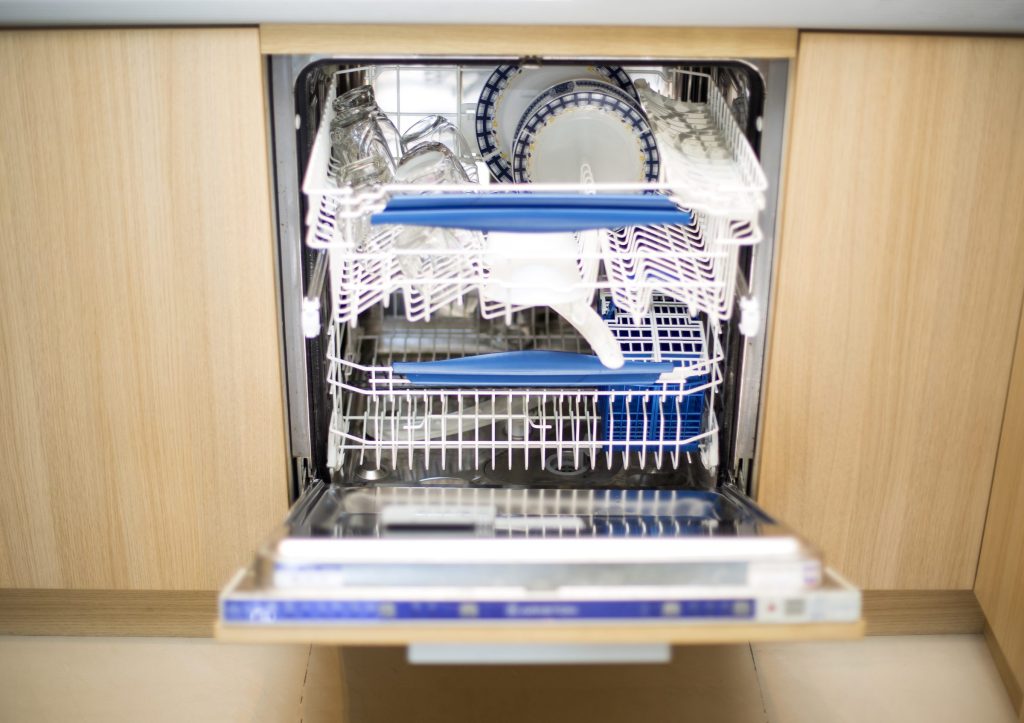
The appliance this name means in a kitchen, and the one that tells you the most before anybody arrives. A KitchenAid dishwasher with no display still reports its code — it flashes it on the Clean light, in two bursts, and those two numbers are a diagnosis you can read from across the room before anybody opens anything.
- The Clean light blinking a set number of times, over and over
- A cycle that finishes with water still standing in the tub
- Dishes coming out gritty, or coming out wet
-
from $95 Diagnostic visit
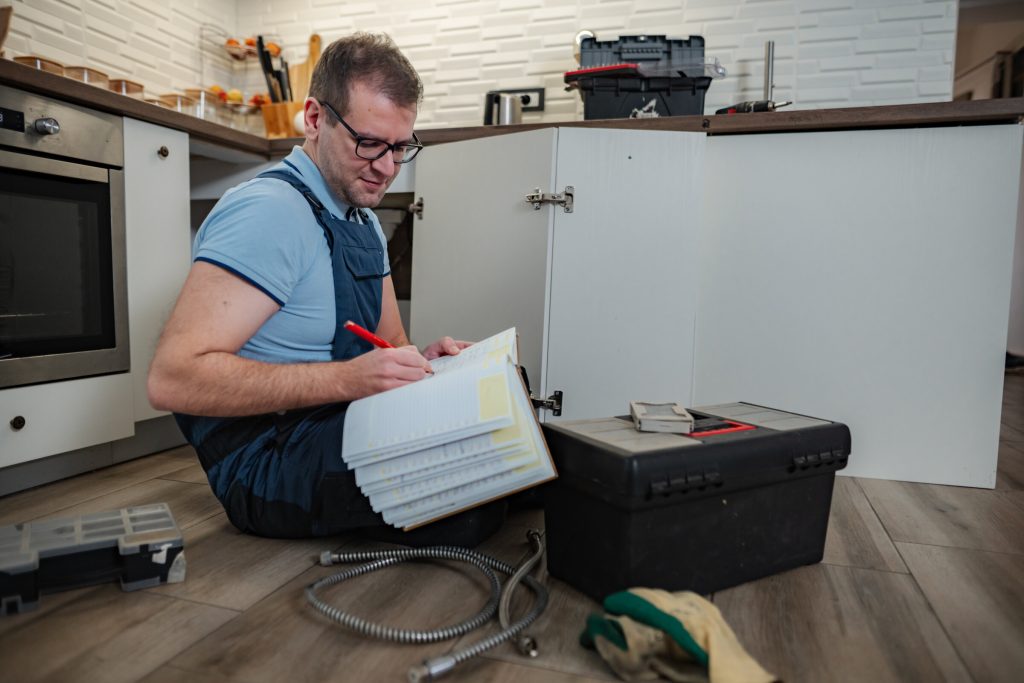
We read what the appliance is reporting — a code on a display, or the flashes on a dishwasher Clean light — then measure before saying anything about the repair. The fee is credited toward the work when you go ahead.
- The code read on site, including blink codes
- Measured rather than guessed
- Credited toward the repair
Questions people ask about this
Why is my KitchenAid dishwasher blinking clean and beeping?
The beep is the attention signal and the blinking is the message. Machines that beep are usually trying harder to get you to the panel, and the flashing pattern is the same two-burst code either way. Stand in front of it, watch through two full repeats, and write down both counts. The beeping stops when the code is cleared, but so does the code.
How do I reset my KitchenAid dishwasher when the clean light is blinking?
Hold the Cancel or Cancel/Drain pad until the machine starts to drain and the lights change, let it finish, then switch the dishwasher off at the breaker for five minutes if it comes back. That is the whole reset. Do it after you have the numbers, never before — the reset is a test of whether the condition was real, and it only works as a test if you know what it cleared.
Why does my KitchenAid dishwasher keep beeping clean and then stop?
Some machines alert in cycles rather than continuously, which is why people describe it as coming and going. It is the same code underneath. If the light stops blinking entirely and the machine runs a normal cycle afterward, the condition was momentary and it is worth noting the date rather than acting on it.
My KitchenAid dishwasher won't start and the clean light is blinking.
That combination is normal for a machine that has reported something it will not run through. The control has decided it cannot safely complete a cycle and is holding the code up instead. Reading the code is the fast path here, because a machine that will not start for a water-supply reason and one that will not start for a control reason look exactly alike from the kitchen.
Is the code a KitchenAid code?
No, and this matters when you go looking it up. These F#E# codes are shared across the corporate group — the same code page sits at the same address under Whirlpool and Maytag as well, and one range service manual carries three logos on its cover. Search the code itself rather than the brand and you will find more, and all of it applies.
Common Problems
More guides like this one
-
KitchenAid Refrigerator PO Code: What It Means After a South Florida Outage
PO is not a failure. It is the cabinet telling you it lost power long enough for the freezer to get warm, and asking somebody to acknowledge it. The decision it is really asking you to make is about the food.
Read more -
KitchenAid Microwave Not Heating: Why Everything Else Looks Normal
The turntable turns, the light is on, the fan runs, and the food is cold. That is exactly what this failure looks like, because the heat comes from a circuit that shares nothing with any of it — and that circuit is the reason this page has no checklist.
Read more -

KitchenAid Oven Not Heating After Self Clean: The Hardest Hour It Ever Has
It is the most predictable service call there is and the one people are most surprised by. A high-heat cleaning cycle takes the cavity far hotter than cooking ever does, and the latch, the element and the control are what give out under it.
Read more
Tell us the model number and what it is doing.
This article is based on:
- Official manufacturer documentation
- Internal repair procedures
- Technician repair history
- Company quality standards