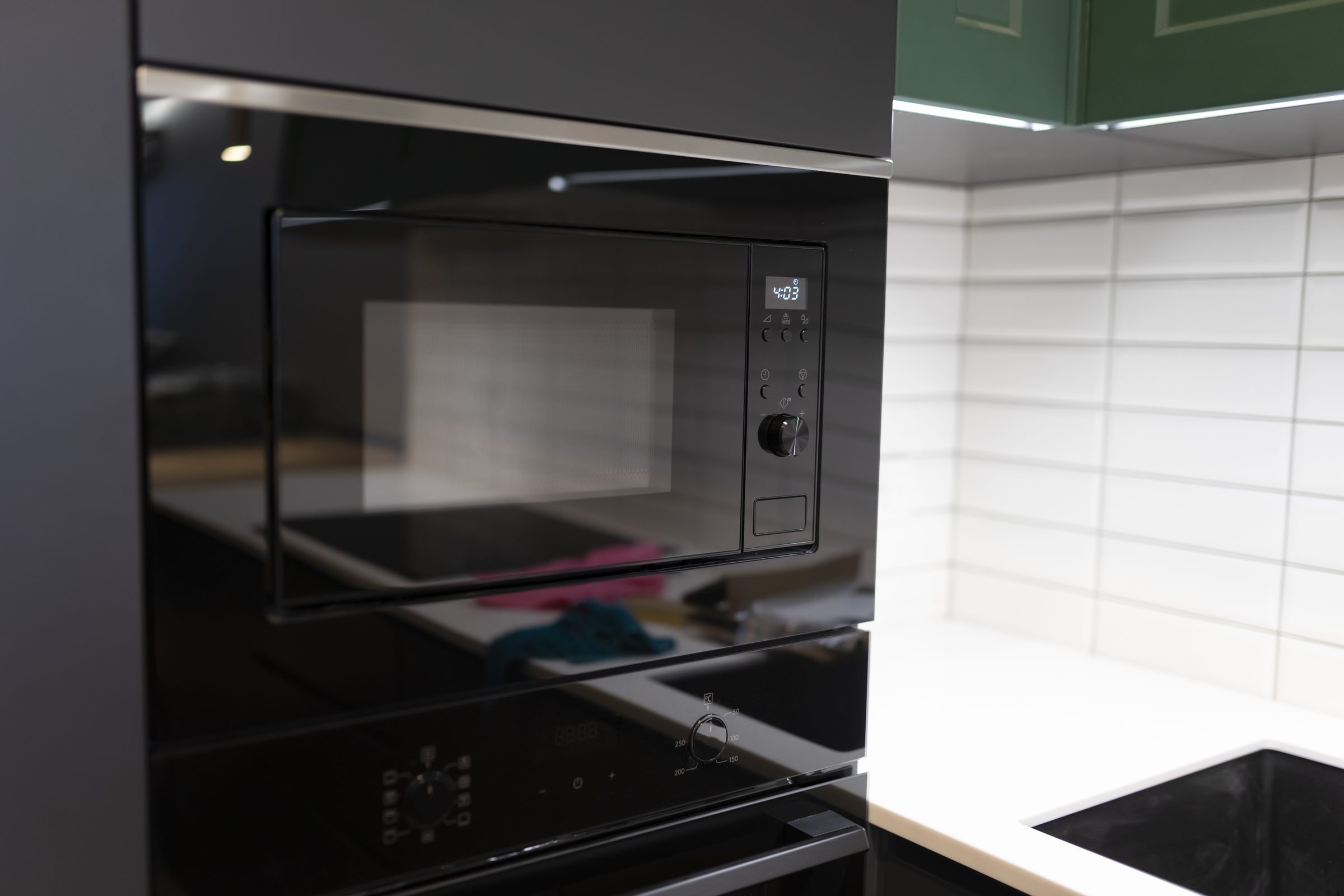
Error code
KitchenAid over-the-range microwave error code F1E4
KitchenAid over-the-range microwave error code F1E4: The oven could not execute the function. There may a problem with the Appliance Control Board, or the associated wiring. What the code narrows down, what the maker publishes for it, and why the same number means something else on another KitchenAid appliance.
- From $95 diagnostic, credited to the repair
- 59 cities and neighborhoods covered
- OEM parts available on order
- In writing the price, before anything is opened
What we can confirm
Code F1E4, from the manufacturer's own documentation
A code is only meaningful together with the machine showing it — the same digits mean different things on different equipment.
The code
F1E4
The oven could not execute the function. There may a problem with the Appliance Control Board, or the associated wiring
or call (305) 306-1328
What it narrows down to
Appliance Control Board
What you are probably seeing
Diagnostic
From $95, credited to the repair
What it looks like from the kitchen
The symptom this code usually arrives with
A code names the subsystem; the symptom is what sent you to look at the display in the first place. That page says what it usually turns out to be, cheapest cause first.
-

Or says to close the door The microwave will not start
A machine that lights up and refuses to run, or one that insists the door is open when it plainly is not. This is nearly always the door interlocks, and there is a reason the appliance is so uncompromising about them.
- A message asking you to open and close the door
- You press start and nothing happens
- The turntable turns and the timer does not count
On the same appliance
What else belongs to the microwaves
On this make a code belongs to the appliance rather than to a product line. These are the other conditions this machine can display, and the models that can show this one — a display often has more than one thing to say, and the model number decides what any of it costs to put right.
Other codes this appliance can display
Keypad (User Interface)
Appliance Control Board
Heater · Appliance Control Board
Thermal Sensor · Gas Sensor
Relay Control Board
The same digits mean different things on different equipment. Search the full code list
In more detail
About KitchenAid over-the-range microwave error code F1E4
What KitchenAid publishes for F1E4 on a over-the-range microwave
The oven could not execute the function. There may a problem with the Appliance Control Board, or the associated wiring. That sentence is KitchenAid's own, read off its published support page for this condition on a over-the-range microwave rather than worked out from the outside. Everything under it is ours, written from what this equipment does in Miami kitchens.
The useful part of that is the noun: Appliance Control Board. A published cause on this platform names a circuit rather than a component, which is the single most useful thing to know before anybody orders a part — it tells you which side of the appliance a technician starts on, and it does not tell you which piece of that circuit has moved out of range.
F1E4 is two numbers, not one
Read it as F1 and E4. The F names the function that reported the problem; the E names what it reported. So F1E4 and F1E0 are neighbors, and F1E1 is not related to either of them despite looking almost the same on a display.
Across this whole archive, F1 conditions whose meaning the maker states name the control board more often than anything else — 13 of the 20 that carry one. That is not a rule KitchenAid publishes; it is what its own pages add up to, and it is worth knowing before you read the E digit as the whole answer.
The other F1 conditions published for the over-the-range microwave: F1E1. If your display has cycled through two of those, they are almost certainly one problem rather than two.
The power cycle is a test, not a repair
The whole of what KitchenAid publishes to do about F1E4 on a over-the-range microwave is a one-minute cycle at the breaker — on the same page that says the condition points at the appliance control board. Do it, and read the result rather than the instruction. Cutting power clears the stored code and makes the control re-read every circuit from cold. If the condition was a one-off — a control interrupted mid-write, a reading that went out of range once — the code does not come back and there is nothing to repair.
If it comes back, the reset has told you something. The condition is live, the circuit is still reporting, and a second power cycle will not change that. From there it is a diagnosis rather than a procedure.
KitchenAid's own steps, in its order
- Power unit down by turning off the circuit breaker(s) for one (1) minute.
- Power unit up by turning on the circuit breaker(s).
- Monitor the microwave for one (1) minute to ensure the error code does not display again.
- Verify microwave operation.
Then what
F1E4 is also published for the wall oven on this make, and it does not mean the same thing there. Read the page for the machine that is actually showing it — that is why every title in this archive names an appliance.
One more thing worth saying plainly: this code is not this badge's alone. KitchenAid shares its control platform with the other names in the same group, and the same page for F1E4 sits at the same address under more than one of them. That is useful rather than awkward — it means the code names the subsystem and the model number names the machine, so the plate on the door frame is half of every answer here.
The full KitchenAid code archive holds the rest, searchable. Tell us the model number and exactly what the display is showing and we will tell you what it points at before anybody is booked. We repair this equipment across Miami-Dade, Broward and Palm Beach.
This article is based on:
- Official manufacturer documentation
- Internal repair procedures
- Technician repair history
- Company quality standards