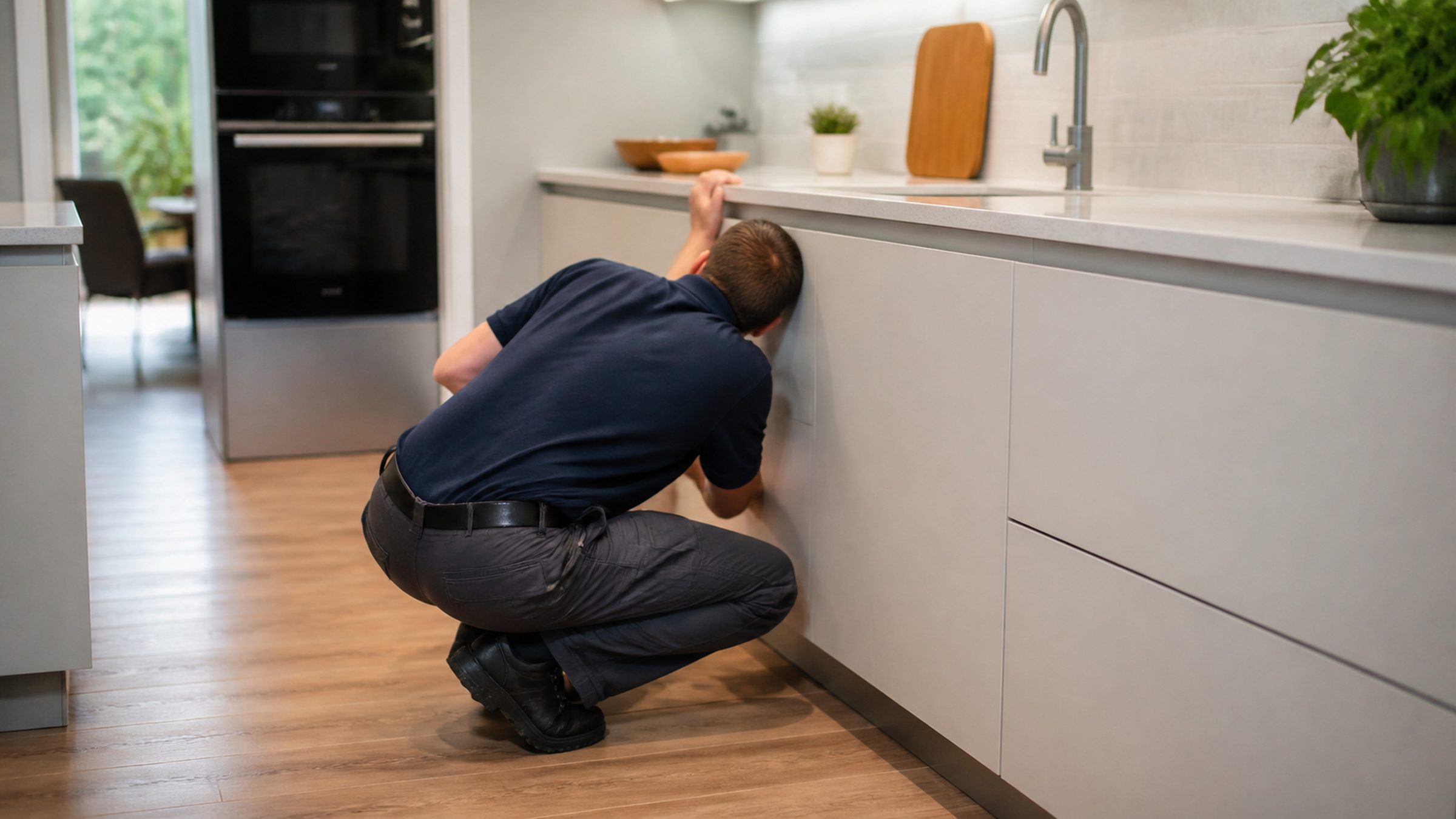
- “A hum or a buzz that was not there before”
- “A squeal that comes and goes”
- “A clicking every few minutes with nothing else wrong”
Symptom
KitchenAid it has started making a new noise
A new sound is a real signal rather than a nuisance, and it is usually the earliest warning you get. Caught while it is only a noise, most of the causes on this page are small; left until it stops, several of them are not.
- From $95 diagnostic, credited to the repair
- 59 cities and neighborhoods covered
- OEM parts available on order
- In writing the price, before anything is opened
Five ordinary causes
What this usually turns out to be
Cheapest and commonest first, which is also the order we check them in. They sit hundreds of dollars apart, and only the unit settles which one is yours.
-
A fan with something touching it
Condenser or evaporator on refrigeration. A buzz or a ticking that changes when the door opens is the classic, and it is usually cheap.
Refrigerator defrost & cooling repair from $245 -
A compressor trying to start
A hard click every few minutes, sometimes with a hum, and a cabinet that is not getting cold. This one is worth calling about rather than watching.
Sealed system & compressor repair from $650 -
Something loose in a sump or a drum
A coin, a bone, a piece of glass. Free to find and worth finding early, because what it grinds against is not free.
Diagnostic visit from $95 -
Bearings or rollers
Rising with the spin on a washer, or a steady squeal on a dryer. The noise that gets worse rather than staying the same is always this kind.
Washing machine drive & spin repair from $265 -
A grease-packed blower
On a range hood, a motor that has become loud is telling you it is working harder than it should. It is the warning before it stops.
Range hood blower & switch repair from $165
In five minutes
Before you call anybody
None of it needs tools, and all of it makes the visit shorter.
-
01
Record ten seconds of it
On a phone, close to the appliance. It is genuinely useful to us and it captures a noise that will inevitably be silent on the day of the visit.
-
02
Note when it happens
All the time, at one point in the cycle, only under load, only after the machine has been running a while. That timing is half the diagnosis.
-
03
Check the easy mechanical causes
A machine that is not level, something loose in a drum, a spray arm catching, an item touching the back wall of a refrigerator. All free, all common.
-
04
Then book the visit
Tell us what kind of noise it is — hum, buzz, click, squeal, rattle, grinding — and when it happens. Those two words save a great deal of time.
How it shows up
What people describe when they call

In more detail
About KitchenAid it has started making a new noise
The fastest diagnosis is a ten-second recording
Record it on your phone, and note when it happens — all the time, only during one part of the cycle, or only when the machine has been running for a while. Those two things narrow a noise more than any description can, and a recording is something we can listen to before anybody is dispatched.
Noise is the cheapest warning you get
Almost nothing in a kitchen fails silently. Blower motors get loud, dryer rollers squeal, washer bearings rumble on the spin, refrigerator fans buzz when something touches them. All of those give weeks or months of notice, and all of them are smaller repairs while they are still only a noise. That is the whole argument for calling about a sound rather than waiting for a failure.
Describe it in two words
Hum, buzz, click, squeal, rattle, grinding — plus when it happens. That is a more useful sentence than a paragraph, and it maps onto different parts: a hum is usually electrical or a motor under load, a click is a switch or a relay or a compressor, a squeal is nearly always a bearing or a belt, and a rattle is usually something loose that costs nothing to remove.
This article is based on:
- Official manufacturer documentation
- Internal repair procedures
- Technician repair history
- Company quality standards

Before you book
Questions about KitchenAid it has started making a new noise
Some refrigerator noises are normal, right?
Plenty of them. Water running and gurgling after a defrost cycle is normal, so is a fan changing speed and so is the occasional pop from the cabinet expanding. What is worth attention is a new sound that has appeared and stayed, or one that is getting louder week by week.
It only does it sometimes and never when you would be here.
Which is exactly why a recording is worth making. Intermittent noises are the hardest thing to diagnose on a single visit, and ten seconds of audio plus a note of when it happens frequently settles it before anybody drives out.
Is a noisy appliance urgent?
Rarely urgent, usually worth booking. The exception is a hard click every few minutes on a refrigerator that is also losing temperature — that combination is a compressor struggling to start, and it is better looked at sooner than later.
Where we do it
Across Miami-Dade, Broward, and Palm Beach
Same terms everywhere we go: an on-site diagnostic first, the price agreed in writing, and the exact figure confirmed once we have seen the unit.
Neighborhoods people ask for by name