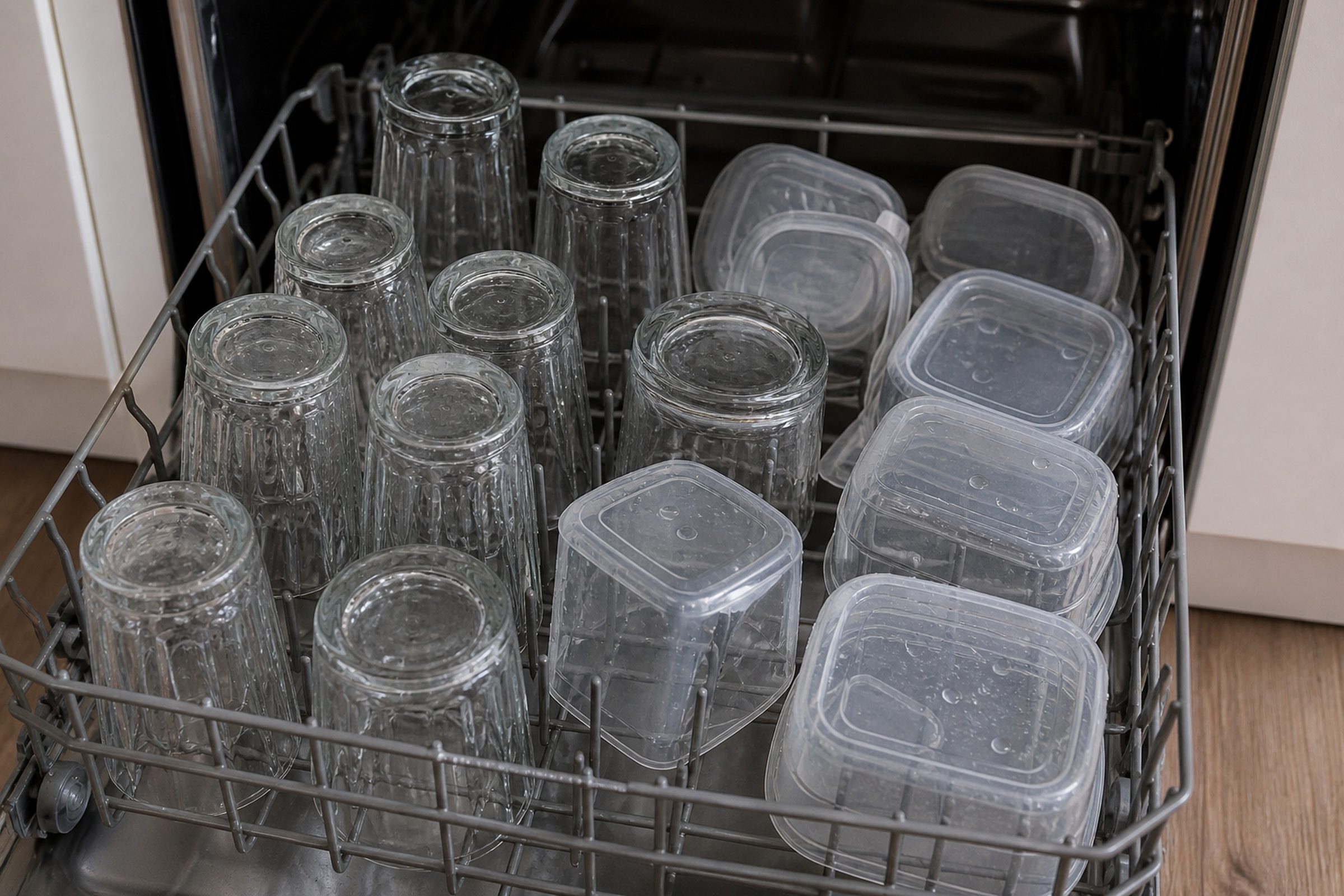
- “Plastics wet, everything else nearly dry”
- “Water pooled in the bottom of upturned cups”
- “It dried fine until a few weeks ago”
Symptom
KitchenAid everything is clean and nothing is dry
One of the few pages here that mostly exists to save you a service call. These machines dry with a fan and residual heat rather than by baking the load, and three of the four usual causes are free to fix at the sink.
- From $95 diagnostic, credited to the repair
- 59 cities and neighborhoods covered
- OEM parts available on order
- In writing the price, before anything is opened
Five ordinary causes
What this usually turns out to be
Cheapest and commonest first, which is also the order we check them in. They sit hundreds of dollars apart, and only the unit settles which one is yours.
-
The rinse-aid dispenser is empty
Or set too low. Rinse aid makes water sheet off rather than bead, and this drying system depends on that. The factory setting is adjustable upward.
-
The cycle chosen has no dry
Quick and eco cycles frequently skip it. If drying stopped the week somebody discovered the express button, that is the whole story.
-
How the load is stacked
Plastics hold heat badly and anything with an upturned lip holds a puddle. A flat-stacked plastic container will be wet at the end of a perfect cycle.
-
The vent or fan on the drying system
When everything is wet, glass included, and the rinse aid is full, the drying hardware itself is the place to look.
Dishwasher wash & filter service from $145 -
The heater circuit or its sensor
A machine that never reaches wash temperature will not dry either, and that usually shows up as poor cleaning at the same time.
Dishwasher wash & filter service from $145
In five minutes
Before you call anybody
None of it needs tools, and all of it makes the visit shorter.
-
01
Fill the rinse aid and turn it up
The dispenser sits next to the detergent cup in the door. There is a setting dial inside it; the factory position is low and it is meant to be adjusted for your water.
-
02
Look at what is actually wet
Plastics only is normal on this drying system. Glass and china wet as well is not, and that difference is the most useful thing you can tell us.
-
03
Check which cycle is running
And whether it includes a drying option at all. Also open the door at the end rather than an hour later — a sealed tub full of steam re-wets what it dried.
-
04
Then book the visit if it is everything
Tell us whether the dishes come out hot. A cool load at the end of a cycle points at heat, and that is a different repair from a drying one.
How it shows up
What people describe when they call
In more detail
About KitchenAid everything is clean and nothing is dry
If you are looking up kitchenaid dishwasher not drying, this is the page: everything is clean and nothing is dry, what it usually turns out to be, and the check worth doing before anybody is called out in Miami.
The fastest diagnosis is the code
Check the rinse-aid reservoir. Residual-heat drying depends on rinse aid far more than a heated-dry machine does, and an empty dispenser is the most common single reason a KitchenAid dishwasher stops drying. Then check the cycle you are running actually includes the drying option — the fast cycles on these machines often do not.
How this machine actually dries
There is no bank of glowing elements baking your dishes. A KitchenAid dishwasher finishes the rinse hot, and then a fan moves air while the load gives up its own heat. That is quieter and gentler on plastics, and it has one dependency people are not told about: rinse aid, which makes the water sheet off instead of standing in droplets. Without it the same machine dries visibly worse.
When it is worth a visit
When the rinse aid is full and turned up, a drying cycle is selected, and glass and china are still coming out wet. At that point it is the drying system or the heat, and both are real repairs — but we would rather you spent five minutes on the first list, because most of these end there.
This article is based on:
- Official manufacturer documentation
- Internal repair procedures
- Technician repair history
- Company quality standards

Before you book
Questions about KitchenAid everything is clean and nothing is dry
Why are my plastics always wet?
Because they hold almost no heat. Residual-heat drying works by leaving the load hot enough to evaporate its own water, and a plastic container comes out of the rinse barely warm. This is normal behavior rather than a problem, and rinse aid improves it more than anything else will.
Is there a heated dry setting?
Many of these machines have a heat-assist or extended-dry option and the fast cycles usually leave it off. It is worth finding it in the manual for your model rather than assuming the machine is not doing it.
Everything is soaking, not just the plastics.
That is worth looking at. With rinse aid full and a drying cycle selected, a load that comes out wet all through points at the drying hardware or at the wash never getting hot in the first place. Tell us whether the dishes are warm when you open the door.
Where we do it
Across Miami-Dade, Broward, and Palm Beach
Same terms everywhere we go: an on-site diagnostic first, the price agreed in writing, and the exact figure confirmed once we have seen the unit.
Neighborhoods people ask for by name