Service
KitchenAid induction cooktop repair
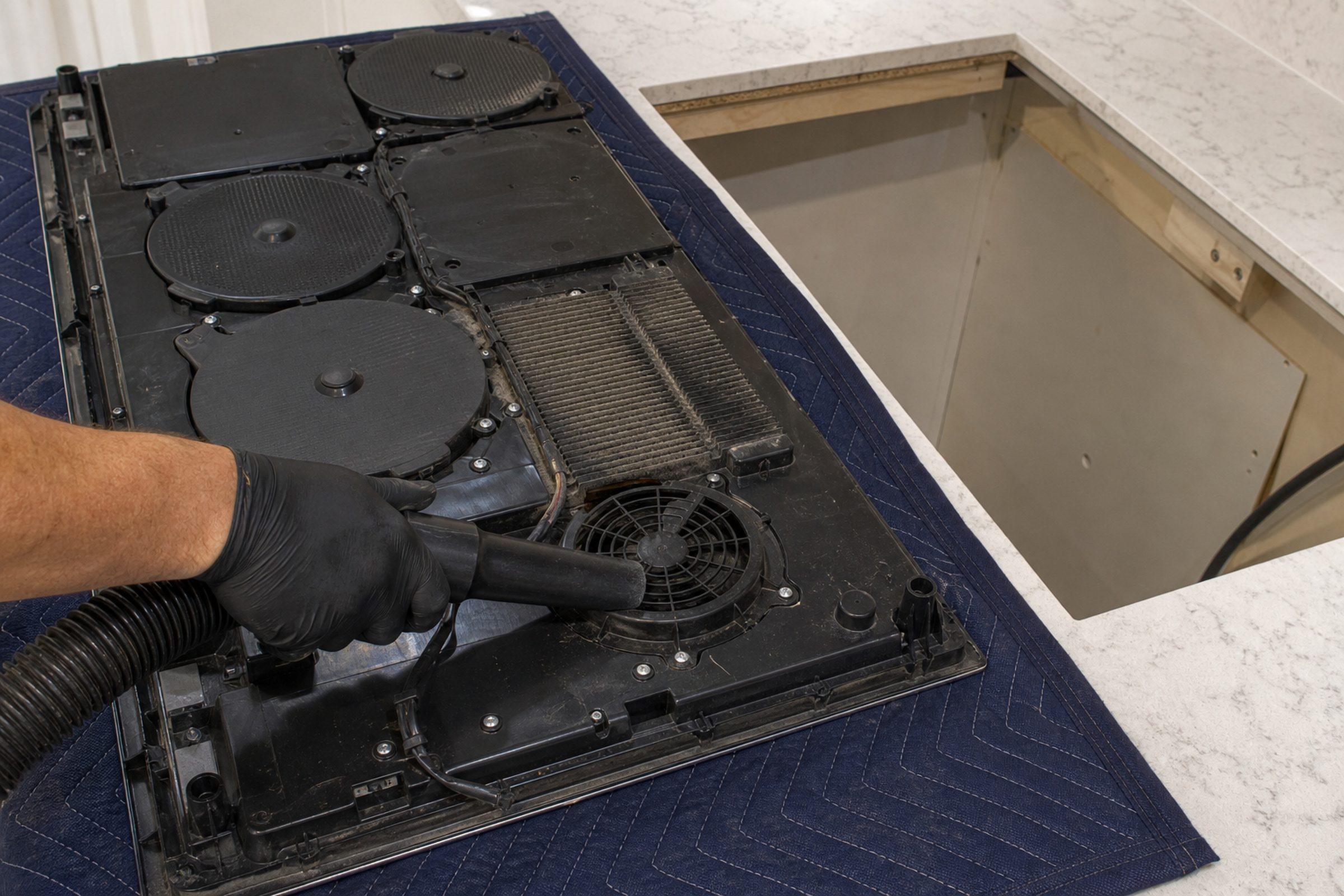
A zone that switches itself off, a top that beeps and shuts down, or a surface that no longer recognizes a pan. Induction electronics live directly under the glass and are cooled by a fan, which in a sealed island in August is the whole story.
- From $95 diagnostic, credited to the repair
- 59 cities and neighborhoods covered
- OEM parts available on order
- In writing the price, before anything is opened
Before you read on
What this job costs and how it is agreed
A starting figure, not a quote. What moves it is the model, how the unit is built in and which part it needs — settled after the on-site diagnostic.
Starts at
from $285
After a diagnostic from $95, which comes off the bill when you go ahead.
or call (305) 306-1328
Diagnostic
From $95, credited to the repair
The price
In writing, before anything is opened
Warranty
On the labor we performed
On the visit
How this visit actually goes
The same order every time, so nothing is opened and nothing is charged before you have seen the figure and said yes.
-
01
One zone or all of them
One zone dropping out points at that zone's coil or its sensing. The whole top shutting down is the generator or its cooling, and that is a different repair.
-
02
Check the air
These breathe through the cabinet, and a drawer fitted tight underneath or an island sealed on every side leaves the electronics nowhere to put their heat. Insufficient ventilation under the appliance is a documented cause of the overheating protection cutting in.
-
03
Then the pan
A base that is not flat, not fully magnetic, or much smaller than the zone makes the electronics work harder for less. It is worth ruling out before anything is called broken.
-
04
Prove the generator
The induction generator is a power supply in its own right and reports separately from the rest of the appliance. It is tested rather than assumed, because it is the largest part on the top.
Applies to
The KitchenAid units we carry this work out on
-
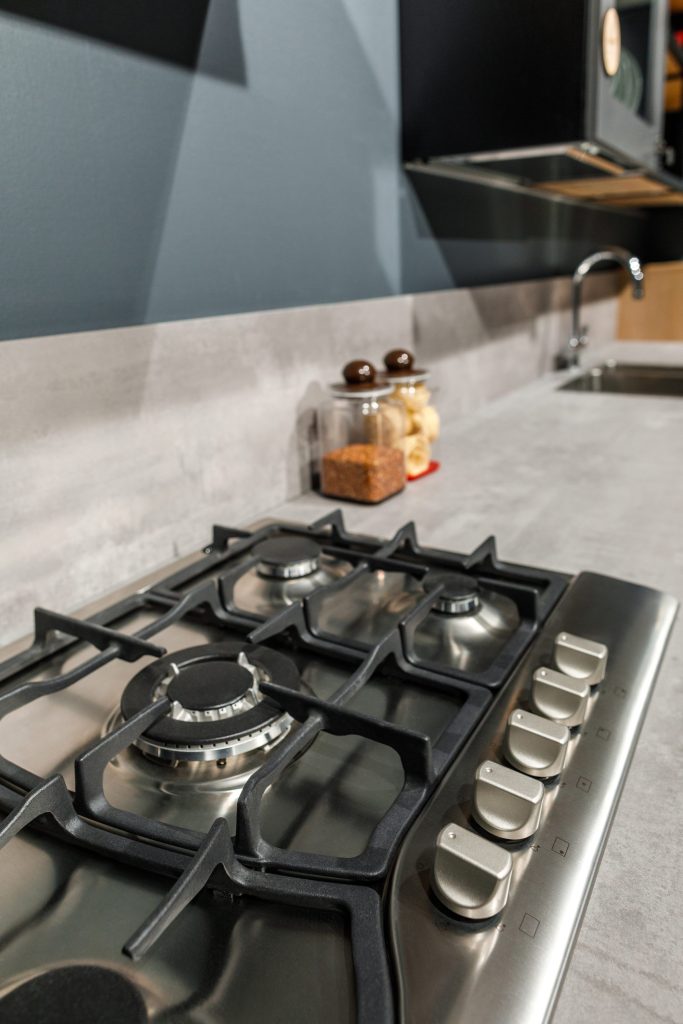
Gas · Gas-on-glass · Electric radiant · Induction · Downdraft · 15", 30", 36" KitchenAid cooktop repair in Miami
Four different appliances under one word. Gas with sealed burners, gas on a glass surface, electric radiant under ceramic, and induction — plus the downdraft versions of two of them, with a blower built into the counter. What has gone wrong is usually obvious once you know which one you are standing in front of.
- One zone or one burner dead while the rest work
- A surface that beeps or shuts a zone down on its own
- A cracked or chipped glass top
-
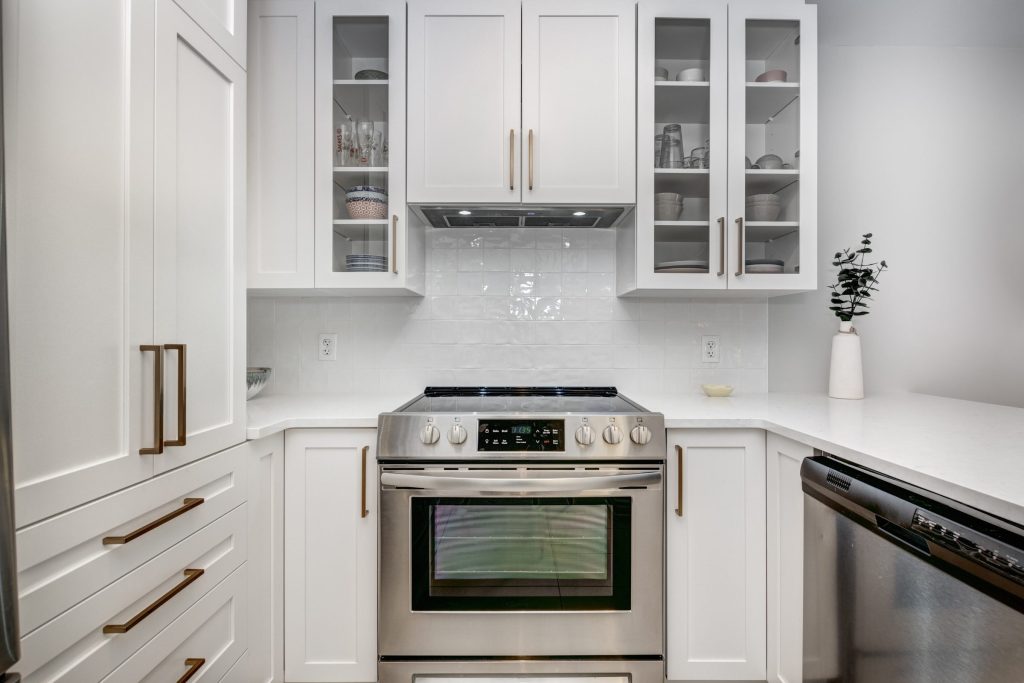
Commercial-Style · Slide-in · Freestanding · Double oven · Downdraft · Gas, electric, dual fuel, induction KitchenAid range repair in Miami
One appliance and two systems that fail independently. More than half of this maker's current ranges are the Commercial-Style machines — heavy, knob-controlled, gas or dual fuel or induction — and the rest are slide-ins and freestanding ranges, including a downdraft model with the ventilation built into the appliance itself.
- The oven not reaching temperature, or running far out
- A surface burner that clicks and never lights
- A door still locked hours after a self-clean
In more detail
About KitchenAid induction cooktop repair
Why induction fails differently
A radiant element is a wire that gets hot. An induction zone is a coil driven by a power supply, with sensors watching the glass and a fan keeping the electronics alive. Nothing on that list minds cooking; what it minds is being asked to work in a cabinet with no air, in a kitchen at 90 degrees, with a warming drawer pressed against it.
What actually goes wrong
- Cooling — the fan, its path, and the cabinet it was fitted into.
- The induction generator, which is where the figure on this job comes from.
- Zone coils and their sensing, on a single zone that misbehaves.
- The touch control, which fails the same way it does on a radiant top.
- The cookware, which is not a repair at all and is worth checking first.
Islands, and the heat that has nowhere to go
Most of the induction we see in South Florida is in an island, and a good share of the protection cut-outs we are called to are a cabinet problem rather than an appliance problem. That is the sort of finding we would rather hand you than a bill for a board, and it is why the airflow gets checked before anything is opened.
What it costs
From $285. The exact cost is confirmed after the on-site diagnostic, and if the answer is the cabinetry rather than the appliance you will hear that instead of a parts list.
This article is based on:
- Official manufacturer documentation
- Internal repair procedures
- Technician repair history
- Company quality standards
Before you book
Questions about KitchenAid induction cooktop repair
My induction top switches a zone off by itself.
That is a protection working rather than a failure, and it is usually heat. The electronics sit directly under the glass and are cooled by a fan that breathes through the cabinet; in a sealed island in August they can reach their limit. If the whole top shuts down instead of one zone, that is worth looking at properly.
It stopped recognizing one of my pans.
Try a magnet on the base. If it does not stick firmly, the pan is the problem rather than the appliance. A base that has warped over time also loses contact in the middle, which shows up as a zone that cycles oddly with one pan and behaves perfectly with another.
Does an induction cooktop really need ventilation?
Yes, and it causes a genuine share of the "broken cooktop" calls we take. The coils and the electronics share their cooling, and a drawer fitted immediately below with no gap is the pattern we see most. It is worth fixing properly, because a top that keeps overheating eventually stops being a protection problem and starts being a parts problem.
What does it cost?
From $285, with a fan or a sensor at the low end and a generator board at the top. The exact cost is confirmed after the on-site diagnostic and agreed before anything is ordered.
Where we do it
Across Miami-Dade, Broward, and Palm Beach
Same terms everywhere we go: an on-site diagnostic first, the price agreed in writing, and the exact figure confirmed once we have seen the unit.
Neighborhoods people ask for by name